
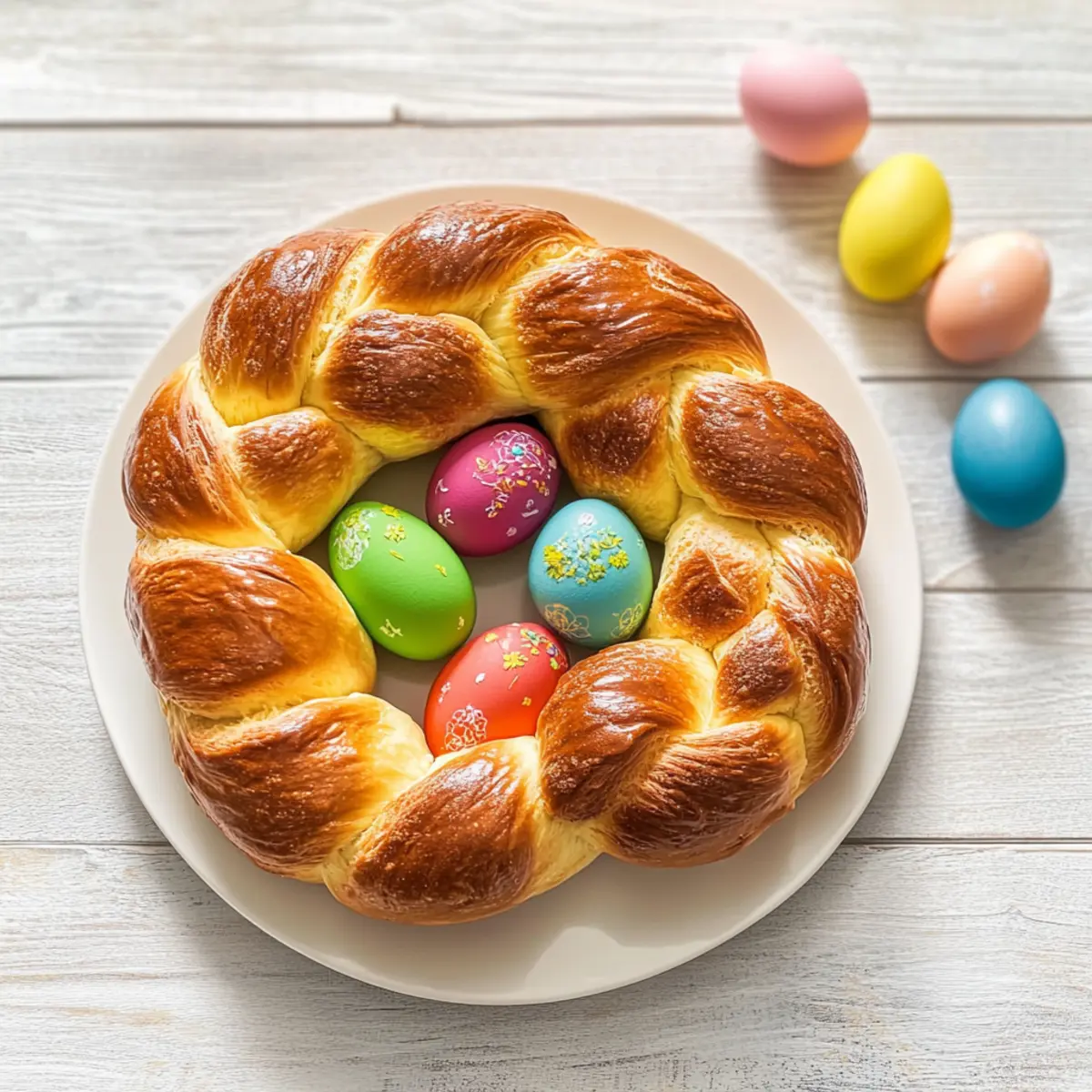
As I rolled out the fragrant dough, memories of past Easters came rushing back, each bite of sweet bread entwined with laughter and warmth. This Traditional Italian Easter Bread, or Pane di Pasqua, isn’t just a recipe; it’s a cherished family tradition that turns our festive gatherings into something truly special. With its delightful braided shape and colorful hard-cooked eggs nestled throughout, this bread serves as both a stunning centerpiece and a delicious reminder that spring has arrived. Not only does this treat require just a few simple ingredients, but its sweet and slightly nutty flavor will have your loved ones reaching for seconds. So, whether you’re looking to impress your guests or simply bring a taste of Italy into your home, let’s get started on crafting this beautiful Italian Easter Bread that promises smiles all around. Ready to create some delicious memories?

Why is This Bread So Special?
Tradition: This Italian Easter Bread is steeped in history, a symbol of rebirth and celebration every spring. Colorful Eggs: The vibrant eggs not only beautify the bread but also represent new life. Versatile Shapes: Whether you create a large braided loaf or charming miniature versions, it’s perfect for any gathering. Crowd-Pleaser: Its sweet, aromatic flavor pleases everyone, making it ideal for family brunches. Pair it with a spot of coffee or serve alongside your favorite Garlic Bread Air for a delightful experience!
Italian Easter Bread Ingredients
For the Dough
• All-Purpose Flour – Essential for structure; use 2-3/4 to 3-1/4 cups to form a soft dough.
• Sugar – Adds sweetness; adjust to taste if you want a less sweet bread.
• Active Dry Yeast – A crucial leavening agent; make sure it’s fresh for the best rise.
• Salt – Enhances flavor; it’s vital for balance, so don’t skip this ingredient.
• 2% Milk – Contributes moisture and richness; almond milk works as a dairy-free substitute.
• Butter – Adds depth of flavor; unsalted is preferred, but margarine can replace it if needed.
• Eggs (3 large, divided) – Provide binding and richness; use room temperature eggs for better mixing.
For the Filling
• Mixed Candied Fruit – Offers flavor and texture; can swap with raisins or sultanas for variety.
• Blanched Almonds – Adds a delightful crunch and nutty flavor; walnuts can be used in place of almonds.
• Aniseed – Provides a unique flavor; use it if you want to enhance the bread‘s profile.
For Decoration
• Dyed Uncooked Eggs (5) – Decorative and symbolic for Easter; ensure to use food-safe dyes.
For the Glaze (optional)
• Confectioners’ Sugar – Sweetens the glaze; adjust for your desired sweetness.
• Vanilla Extract – Adds flavor depth; enhances the overall taste of the glaze.
• Milk – Adjust consistency as needed to achieve the perfect glaze for your bread.
This Italian Easter Bread is more than just a recipe; it’s an expression of love and celebration that joins friends and families around the table. Enjoy making it with your own preferred twists!
Step‑by‑Step Instructions for Italian Easter Bread
Step 1: Prepare Dough
In a large mixing bowl, combine 1 cup of flour, sugar, active dry yeast, and salt. Heat 2% milk and butter until it reaches 120°-130°F, then pour this mixture into the dry ingredients. Stir thoroughly until incorporated, creating a smooth mixture that starts to come together.
Step 2: Beat & Combine
Add in 2 large eggs to the dough mixture, stirring until well blended. Gradually add more flour, about 1/2 cup at a time, until a soft dough forms that pulls away from the bowl’s sides. This stage is crucial for achieving the right texture for your Italian Easter Bread.
Step 3: Knead
Turn the dough out onto a lightly floured surface and knead for 6-8 minutes. The dough should become smooth and elastic—this is essential for the bread‘s structure. Be patient and enjoy the tactile experience as you work the dough into the perfect consistency.
Step 4: First Rise
Place the kneaded dough into a greased bowl, covering it with a damp cloth or plastic wrap. Let it rise in a warm environment for about 1 hour, or until it has doubled in size. You’ll know it’s ready when it feels airy and puffy to the touch.
Step 5: Incorporate Fillings
Gently punch down the risen dough to release any air, then knead in the mixed candied fruit, blanched almonds, and aniseed. This step adds bursts of flavor and texture to your Italian Easter Bread. Allow the dough to rest for about 10 minutes before shaping.
Step 6: Shape Bread
Divide the dough into two equal sections. Roll each section into a long rope, about 24 inches in length. Twist the ropes together to create a beautiful braid, forming a circular shape. Pinch the ends to seal them together, ensuring the braid stays intact during the second rise.
Step 7: Add Eggs
Nestle the dyed uncooked eggs into the spirals of the braided dough. This not only makes the bread festive but symbolically represents new life. Cover the bread loosely with a cloth and set it aside to rise for about 40 minutes, until it’s puffy and inviting.
Step 8: Bake
Preheat your oven to 350°F before brushing the loaves with a beaten egg for extra shine. Place the braided bread in the oven and bake for 30-35 minutes. The Italian Easter Bread should turn a lovely golden brown; check for doneness when it sounds hollow when tapped.
Step 9: Cool & Glaze (optional)
Once baked, remove the bread from the oven and transfer it to a wire rack to cool. If you desire a sweet touch, prepare an optional glaze using confectioners’ sugar, vanilla extract, and milk, and drizzle it over the cooled bread to enhance its festive appearance.
Italian Easter Bread Variations
Feel free to put your own spin on this delightful Italian Easter bread, adding flavors and textures that your family will love!
-
Miniature Loaves: Create individual breads by dividing the dough into 8 pieces instead of 2, placing an egg in the center of each for adorable, personal treats. Perfect for Easter baskets!
-
Nuts Galore: Swap blanched almonds for pecans or hazelnuts for a different nutty flavor that offers delightful crunch. Each bite will bring a unique twist.
-
Fruity Delight: Use dried apricots or cranberries in place of candied fruit to bring a tart sweetness to your bread. The mix of chewy fruit with the sweet dough will make it irresistible.
-
Zesty Twist: Infuse the dough with orange or lemon zest for a bright and refreshing flavor that dances on your palate. This citrusy hint will remind you of sunny spring days.
-
Dairy-Free Dream: Substitute almond milk for the 2% milk and replace butter with coconut oil to create a delicious dairy-free version that still maintains a rich flavor.
-
Extra Sweetness: Glaze the bread with honey instead of confectioners’ sugar for a natural sweetness that enhances both flavor and presentation while providing a gorgeous shine.
-
Spicy Kick: Add a pinch of cinnamon or nutmeg to the dough for a warm and spicy depth that warms the heart, especially perfect for the festive season.
Feel inspired? You can also explore remarkable pairings like serving your Italian Easter Bread alongside some delicious Garlic Bread Air or a comforting bowl of Italian Penicillin Soup for a memorable meal!
Expert Tips for Italian Easter Bread
-
Knead Well: Ensure to knead the dough enough until it feels smooth and elastic, which is crucial for a light-textured Italian Easter Bread.
-
Room Temperature Eggs: Using eggs at room temperature helps them incorporate more easily into the dough, promoting a better rise.
-
Fresh Yeast: Always check that your active dry yeast is fresh; expired yeast can lead to poor rising and a denser bread.
-
Monitor Baking Time: Keep an eye on the bread during the last few minutes of baking; checking for a golden-brown hue helps prevent over-baking.
-
Use Food-Safe Dyes: If dyeing the uncooked eggs, ensure you are using food-safe dyes to keep them safe for decoration and consumption.
-
Cool Properly: Allow the bread to cool on a wire rack to prevent sogginess, making sure it stays fluffy and delicious for your festive gathering!
What to Serve with Traditional Italian Easter Bread
Serving Italian Easter Bread is all about creating a vibrant and joyful feast that captures the essence of spring and celebration.
-
Creamy Mashed Potatoes: Their buttery richness balances the sweet notes of the bread, adding a comforting touch to your meal.
-
Herbed Roasted Vegetables: Fresh, roasted veggies bring a beautiful crunch and flavor contrast, making each bite delightful.
-
Spring Salad: A crisp salad featuring mixed greens, strawberries, and a light vinaigrette offers a refreshing counterpart to the sweet bread.
-
Lemon Tart: This zesty dessert rounds off the meal perfectly, cutting through sweetness and providing a refreshing finale.
-
Coffee or Espresso: A warm cup of aromatic coffee or espresso pairs beautifully with the bread, enhancing its flavors for a cozy brunch.
-
Fruit Platter: Vibrant, fresh fruits add a necessary lightness to your dessert table, making for a bright and cheerful setup.
Each pairing celebrates the festive mood of Easter and complements the unique flavors of Italian Easter Bread, ensuring every bite brings joy!
Make Ahead Options
These delightful Italian Easter Bread loaves are perfect for meal prep, making your festive celebrations a breeze! You can prepare the dough up to 24 hours in advance; simply mix and knead it, then place it in a greased bowl and refrigerate. To maintain quality, let the dough come to room temperature and rise for about an hour before shaping. Additionally, the filling with mixed candied fruits and nuts can be prepped ahead and stored in an airtight container for up to 3 days. When ready to serve, shape and bake the bread as directed, nestling in the dyed eggs for that signature look. Enjoy the ease of this time-saving approach, and savor the deliciousness that awaits!
How to Store and Freeze Italian Easter Bread
Room Temperature: Store leftover Italian Easter Bread in a sealed bag or airtight container at room temperature for up to 3-5 days for optimal freshness.
Fridge: If you expect to keep it longer, wrap the bread tightly and store it in the fridge for up to a week, though this may slightly alter the texture.
Freezer: For extended storage, slice the bread and wrap portions tightly in plastic wrap before placing them in a freezer bag. It can be frozen for up to 3 months; just thaw at room temperature when ready to enjoy.
Reheating: To reheat, warm individual slices in the microwave for about 10-15 seconds or toast lightly to regain that fluffy texture and delicious taste.

Italian Easter Bread Recipe FAQs
What is the best way to select ripe ingredients?
When making Italian Easter Bread, choose ingredients that are fresh and at their peak. Opt for all-purpose flour free from clumps, vibrant mixed candied fruits with no dark spots, and fresh eggs that are clean and free from cracks. For the milk and butter, make sure they are within their expiration dates for optimal flavor and texture.
How should I store leftover Italian Easter Bread?
To preserve the freshness of your Italian Easter Bread, store it in a sealed bag or airtight container at room temperature for up to 3-5 days. If you’d like it to last longer, you can refrigerate it wrapped tightly for up to a week, though this may alter the texture slightly. It’s ideal to remove any hard-cooked eggs before storage.
Can I freeze Italian Easter Bread?
Absolutely! For freezing, slice the bread into individual pieces for easy use. Wrap each slice tightly in plastic wrap, then place them in a freezer-safe bag. You can freeze the bread for up to 3 months. When you’re ready to enjoy it, simply thaw the slices at room temperature or for a quick option, microwave them for about 10-15 seconds.
What should I do if my dough didn’t rise?
If your Italian Easter Bread dough doesn’t rise, it could be due to inactive yeast. First, ensure your yeast is fresh—try proofing it in warm water with a pinch of sugar for about 5-10 minutes before adding it to your ingredients. Also, be mindful of the rising environment; it should be warm and draft-free, as cold temperatures can slow yeast activity significantly.
Are there any dietary considerations I should keep in mind?
Yes, if you’re preparing the Italian Easter Bread for guests with allergies, it’s important to note that it contains gluten and dairy products. For a dairy-free version, you can substitute almond milk for 2% milk and use dairy-free butter or margarine. Be sure to choose gluten-free flour if necessary, remembering that this can affect the texture and rise of the bread.
How can I modify the recipe to make mini versions?
To create delightful miniature versions of the Italian Easter Bread, simply divide the dough into 8 equal pieces instead of the traditional two. Roll each portion into shorter ropes and braid them similarly. Nestle a dyed egg in the center of each mini braid. This not only looks charming but also allows for fun individual servings during your Easter celebration!

Delicious Italian Easter Bread with Colorful Eggs
Ingredients
Equipment
Method
- In a large mixing bowl, combine flour, sugar, yeast, and salt. Heat milk and butter until it reaches 120°-130°F, then pour into dry ingredients and stir until smooth.
- Add 2 large eggs to the mixture and stir until blended, then gradually add more flour until a soft dough forms.
- Knead the dough on a lightly floured surface for 6-8 minutes until smooth and elastic.
- Place the kneaded dough in a greased bowl, cover, and let rise in a warm place for about 1 hour.
- Punch down the risen dough, knead in candied fruit, almonds, and aniseed, and let it rest for 10 minutes.
- Divide the dough into two sections, roll into ropes, twist them together, and shape into a circle.
- Nestle the dyed uncooked eggs into the braid and let the bread rise for another 40 minutes.
- Preheat oven to 350°F, brush loaves with a beaten egg, and bake for 30-35 minutes.
- Once baked, cool on a wire rack and prepare optional glaze to drizzle over.