
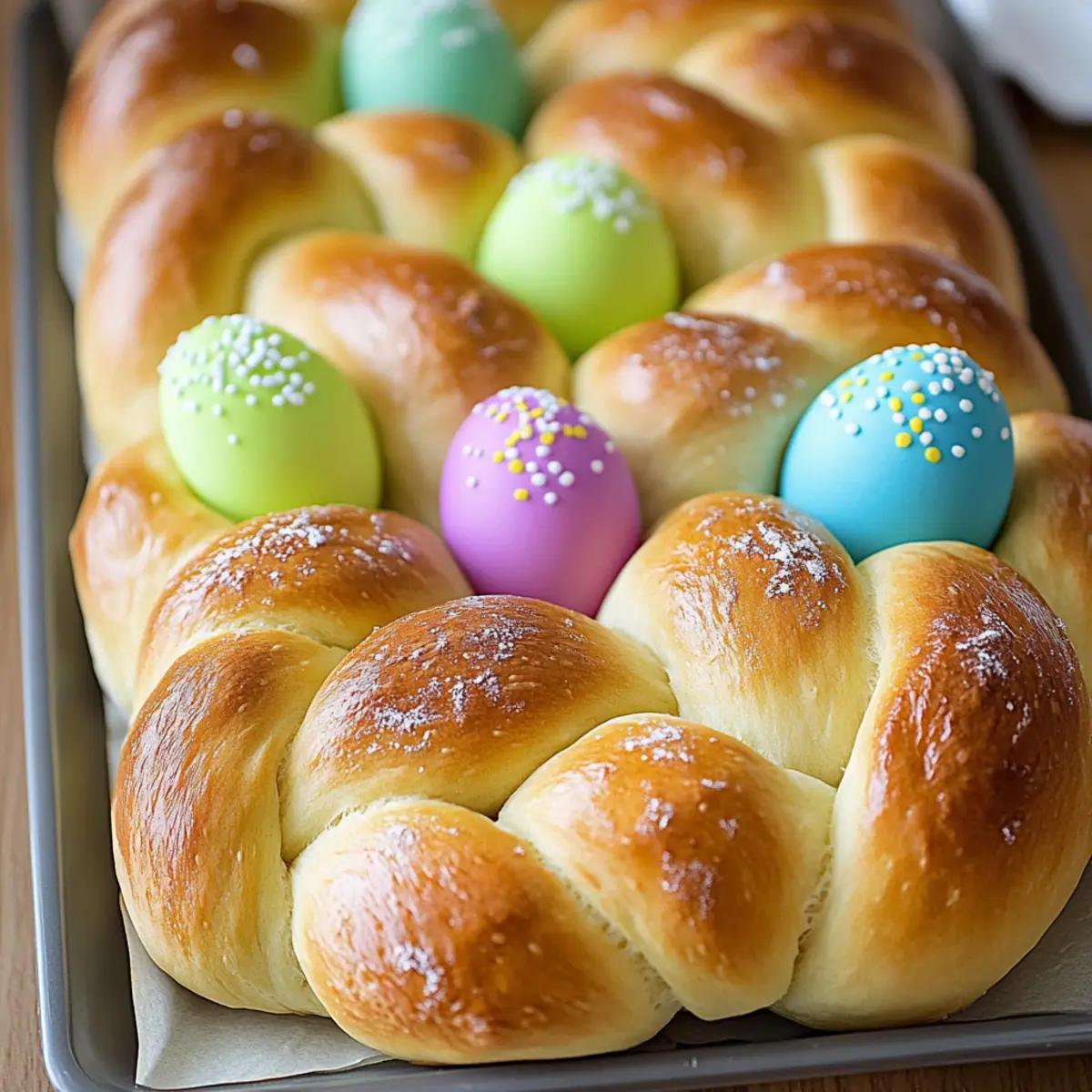
As the sweet, warm scent of freshly baked bread wafts through the kitchen, my heart dances a little. There’s something truly special about Italian Easter Bread that transforms any gathering into a celebration. This lovely braided loaf, adorned with colorful Easter eggs, not only looks stunning but also invites everyone to partake in a tradition that carries generations of joy. With its soft texture and inviting sweetness, it serves as the perfect centerpiece for festive brunches or family feasts. Plus, it’s surprisingly simple to make—ideal for both seasoned home chefs and those looking to infuse a little homemade magic into their holidays. Are you ready to create your own enchanting loaf of Italian Easter Bread and make this celebration unforgettable?

Why is Italian Easter Bread Special?
Tradition, This vibrant loaf is steeped in cultural significance, symbolizing new beginnings and joy during Easter celebrations. Visual appeal, The colorful eggs nestled within the braided bread create a stunning centerpiece that’s sure to impress your guests. Flavorful texture, With its soft and slightly sweet interior, this bread pairs beautifully with butter or jam. Easy to customize, Experiment with different flavors or egg styles, allowing for personal touches that reflect your family’s preferences. Fun for all ages, Involve your kids in decorating and dyeing eggs for a delightful bonding activity, making memories while baking.
Italian Easter Bread Ingredients
• For the Bread
- Instant Yeast – Creates a delightful rise and light texture; you can also use active dry yeast with a slight process adjustment.
- Warm Milk – Activates the yeast while adding richness; ensure it’s warm, not hot, to keep the yeast alive.
- Salt – Enhances flavor and strengthens gluten; it’s essential for balancing the sweetness.
- Butter – Provides moisture and flavor, making the bread tender; unsalted butter offers better control over seasoning.
- Eggs – Adds structure and richness to the dough; remember to beat them lightly before mixing.
- Sugar – Sweetens the loaf and aids in browning; adjust to your taste for that perfect sweetness.
- All-Purpose Flour – The foundation of the bread; start with 3 ½ cups and add more as needed for the right consistency.
• For the Egg Wash
- Egg Wash – (1 beaten egg with 1 teaspoon water) gives your bread a beautiful, shiny finish before baking.
• For Decorative Touches
- Dyed Uncooked Easter Eggs – These symbolically represent new life; use unrefrigerated eggs or opt for hard-boiled if preferred.
- Sprinkles – Optional; a fun way to add color and festivity to the bread‘s surface.
With these ingredients, you’re on your way to crafting a delightful Italian Easter Bread that will surely become a beloved family tradition!
Step‑by‑Step Instructions for Italian Easter Bread
Step 1: Mix Ingredients
In a large mixing bowl, combine the instant yeast, warm milk, salt, butter, lightly beaten eggs, and sugar. Stir until the mixture is well blended and the butter melts into the warm milk. Gradually add 3 ½ cups of all-purpose flour, mixing until a dough begins to form. This initial step is crucial for creating the soft texture of your Italian Easter Bread.
Step 2: Knead the Dough
Once the dough has formed, switch to a dough hook or knead by hand on a floured surface for about 8-10 minutes. You’re aiming for a smooth and elastic texture that springs back when pressed. If the dough is sticky, add more flour, a little at a time, until it’s manageable. This important step ensures that your bread will rise beautifully.
Step 3: Let the Dough Rise
Transfer the kneaded dough to a lightly oiled bowl, turning it to coat with oil. Cover the bowl with a clean kitchen towel and place it in a warm area. Allow it to rise for about 1 hour, or until it has doubled in size. You’ll know it’s ready when you gently press down and it springs back lightly, indicating proper fermentation.
Step 4: Shape the Dough
After the initial rise, punch down the dough to release excess air. Divide it into 12 equal pieces. Roll each piece into a 14-inch long rope; this will help maintain that classic braided look. As you shape each piece, be sure to handle the dough gently to preserve the airiness that contributes to the delightful texture of your Italian Easter Bread.
Step 5: Braid and Form Circles
Take two of the ropes and braid them together, pinching the ends to secure. Then, form a circle by bringing the ends together and pinching again, creating a nest for your Easter egg. Repeat this braiding and shaping process with the remaining ropes, placing formed nests on parchment-lined baking sheets for easy transfer to the oven.
Step 6: Second Rise
Cover the braided nests with the kitchen towel and let them rise again in a warm spot for about 1 hour. They should puff up and nearly double in size. This second rise is essential for a light and fluffy texture in your Italian Easter Bread, so resist the temptation to skip this step!
Step 7: Prepare for Baking
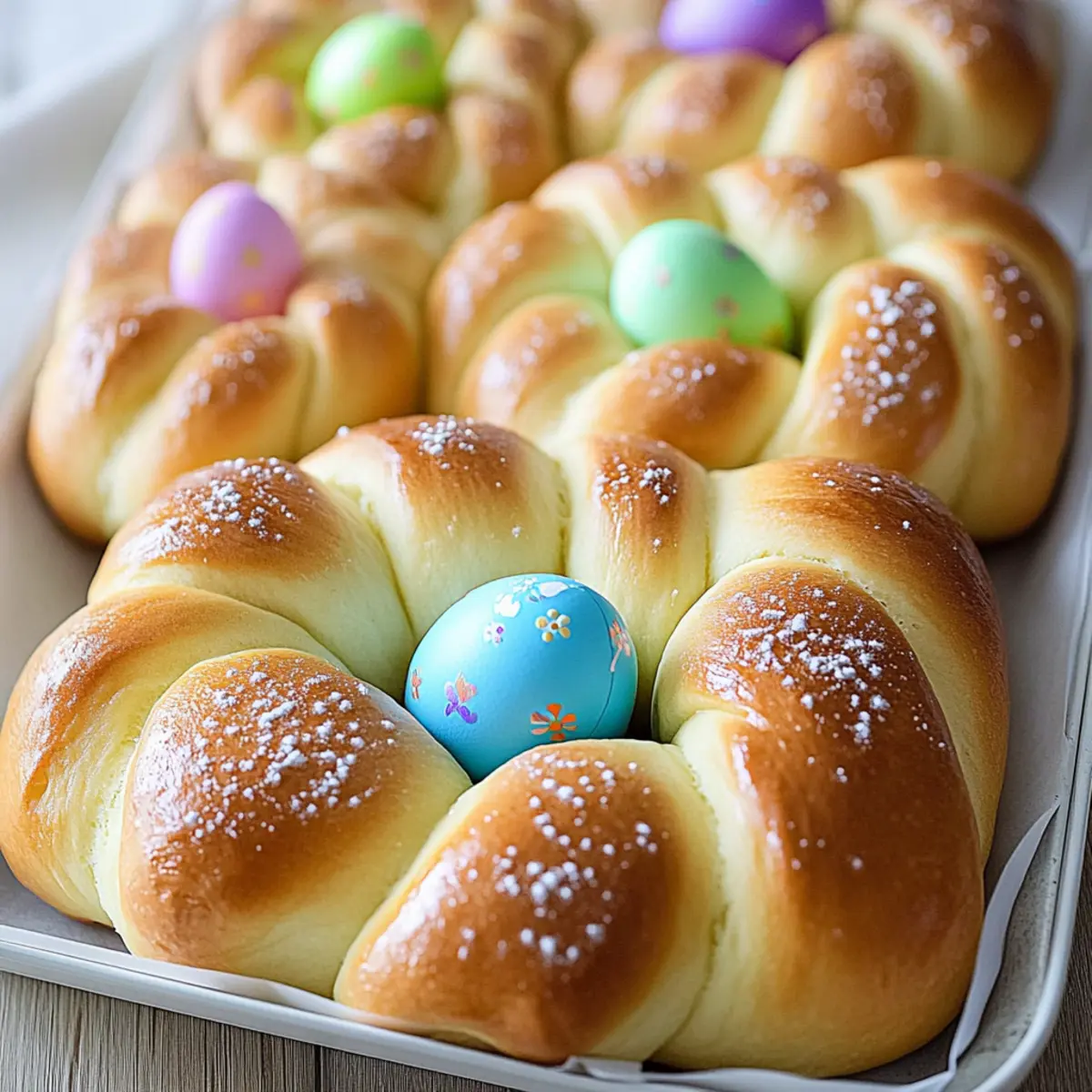
Preheat your oven to 350°F (175°C). While the oven is warming, prepare the egg wash by beating one egg with a teaspoon of water. Brush this mixture over the risen dough to give your Italian Easter Bread a shiny, golden finish. Nestle a dyed uncooked Easter egg into each dough nest, adding a festive touch.
Step 8: Bake the Bread
Place the baking sheets in the preheated oven and bake for 20-25 minutes, or until the bread is golden brown. You’ll know it’s done when it turns a lovely golden color and sounds hollow when tapped on the bottom. Let the Italian Easter Bread cool on wire racks before serving, enhancing its inviting aroma and flavor.
Italian Easter Bread Variations
Feel free to let your creativity shine with these delightful twists on the classic recipe!
-
Braided Styles: Try using three braids instead of two for a more intricate look. It adds a sense of elegance to your festive table!
-
Egg Style: Use soft-boiled eggs baked inside the bread for a fun surprise. Just be sure to adjust your baking time accordingly!
-
Citrus Twist: Incorporate flavored extracts like lemon or orange for a refreshing citrus note that brightens the entire loaf. The aroma is simply irresistible!
-
Nutty Surprise: Mix in chopped almonds or walnuts for a delightful crunch and added depth of flavor. Each slice will be bursting with wonderful texture!
-
Festive Colors: Experiment with different egg dye colors for a lively holiday display. Pastels or vibrant shades can add a beautiful contrast to the golden bread!
-
Seasonal Spices: Include a dash of cinnamon or nutmeg in the dough for a warm, cozy flavor that embraces the spirit of the season. Your kitchen will smell like heaven!
-
Gluten-Free Option: Substitute all-purpose flour with a gluten-free blend to accommodate dietary needs. Just be sure to check for consistent texture!
-
Herb Infusion: Add fresh herbs like rosemary or thyme into the dough for an aromatic twist that complements the sweetness. It’s a flavor adventure for the palate!
For even more culinary inspiration, check out Delicious Garlic Bread Air or try the Allure Chopped Italian for tasty pairings!
What to Serve with Sweet Italian Easter Bread?
Imagine the charming atmosphere of gathering around the table, where the sweet aroma of freshly baked bread mingles with laughter and joy.
-
Butter and Honey: A classic pairing that adds richness and sweetness, enhancing the delightful flavors of the bread.
-
Assorted Jams: Choose your family favorites—from strawberry to apricot—to add a burst of fruity flavor and color to each slice.
-
Creamy Ricotta: Spread a dollop of ricotta on each piece for a smooth, creamy contrast that beautifully complements the bread‘s sweetness.
-
Fresh Fruit Salad: A vibrant mix of seasonal fruits adds a refreshing crispness that balances the soft, sweet bread.
-
Beverages: Pair with warm herbal tea or a glass of sweet Prosecco for a festive touch to your Easter brunch.
-
Cinnamon Sugar Toast: Spread slices with butter, sprinkle with cinnamon sugar, then toast for a delightful breakfast twist.
-
Yogurt Parfait: Serve with layers of yogurt, granola, and fruit for a hearty, nourishing option that pairs well with the bread’s sweetness.
-
Mini Quiches: Offer savory mini quiches alongside, providing a satisfying contrast of flavors and textures.
Each of these pairings not only enhances the experience of enjoying Italian Easter Bread but also creates a joyful celebration of flavors that invites everyone to the table.
How to Store and Freeze Italian Easter Bread
Room Temperature: Store Italian Easter Bread in an airtight container or wrapped in plastic wrap at room temperature for up to 3 days to maintain freshness and softness.
Fridge: If you need to keep the bread longer, refrigerate it for up to a week. Ensure it’s well-wrapped to prevent it from drying out.
Freezer: For longer storage, freeze the bread tightly wrapped in plastic wrap and aluminum foil for up to 3 months. Allow it to thaw in the fridge before bringing it to room temperature.
Reheating: Gently reheat slices in the oven at 350°F for 5-10 minutes or toast them for 2-3 minutes to restore their delightful softness.
Make Ahead Options
This Italian Easter Bread is a fantastic choice for meal prep, making your holiday celebration easier and more enjoyable! You can prepare the dough up to 24 hours in advance; simply mix the ingredients, let it rise, then cover the bowl and refrigerate. When you’re ready to bake, allow it to come to room temperature before shaping and braiding. Additionally, you can shape the nests and freeze them for up to 3 days; just let them thaw and rise at room temperature before baking. To maintain quality, ensure the dough is well-covered to prevent drying out. When it’s time to serve, simply brush with the egg wash, place your Easter eggs, and bake for delicious results that are just as delightful as if made fresh that day!
Expert Tips for Italian Easter Bread
- Dough Consistency: Ensure the dough is not too wet or dry. Add flour gradually, aiming for a smooth, elastic texture for the best Italian Easter Bread.
- Proper Rising: Always allow the dough to double in size during both rises. Skipping this step can result in dense bread.
- Temperature Matters: Keep milk warm (around 110°F) to effectively activate the yeast. Too hot will kill the yeast, while too cold won’t activate it.
- Egg Preference: If using uncooked eggs, opt for unrefrigerated eggs. Alternatively, soft-boil or use hard-boiled eggs for safe baking and serving.
- Fun Variations: Experiment with additional flavorings or spices, like cinnamon or nutmeg, to give your Italian Easter Bread a personal twist!
Italian Easter Bread Recipe FAQs
What type of yeast should I use?
Absolutely! For this Italian Easter Bread, you can use instant yeast for convenience, which doesn’t require activation. If you only have active dry yeast on hand, no problem! Just activate it by dissolving it in the warm milk with a pinch of sugar before mixing with the other ingredients.
How should I store leftover Italian Easter Bread?
To keep your Italian Easter Bread fresh, store it at room temperature in an airtight container or wrapped in plastic wrap for up to 3 days. If you want to keep it longer, refrigerate it for up to a week. Just make sure it’s well-wrapped to prevent it from drying out!
Can I freeze Italian Easter Bread, and how?
Very much! To freeze Italian Easter Bread, wrap it tightly in plastic wrap followed by aluminum foil to protect it from freezer burn. It can be frozen for up to 3 months. To enjoy, simply thaw it in the fridge overnight and then bring it to room temperature before serving.
What should I do if the dough doesn’t rise?
If your dough doesn’t rise, it could be due to yeast that’s too old or water that’s too hot, which can kill yeast. Be sure to use warm milk around 110°F to activate yeast properly. If it’s not rising, try setting it in a warmer place like near an oven or on top of the fridge.
Are there any dietary considerations for making this recipe?
Absolutely! If you’re concerned about allergies, ensure that any decorations or dye you use for the eggs are food-safe. For those with dietary restrictions, using hard-boiled eggs instead of uncooked eggs is a great option. You can also experiment with dairy-free butter or milk alternatives if desired!

Deliciously Soft Italian Easter Bread with Colorful Eggs
Ingredients
Equipment
Method
- In a large mixing bowl, combine the instant yeast, warm milk, salt, butter, lightly beaten eggs, and sugar. Stir until well blended and the butter melts.
- Gradually add 3 ½ cups of all-purpose flour, mixing until a dough begins to form.
- Knead the dough for about 8-10 minutes until smooth and elastic. Add more flour if sticky.
- Transfer the dough to a lightly oiled bowl, cover with a towel, and let it rise for about 1 hour.
- Punch down the dough, divide into 12 pieces, and roll each into a 14-inch long rope.
- Braid two ropes together, pinch the ends, and form a circle for each Easter egg nest.
- Cover the nests and let rise for another 1 hour.
- Preheat oven to 350°F (175°C). Prepare the egg wash and brush over the risen dough.
- Place a dyed uncooked egg in each dough nest and bake for 20-25 minutes until golden brown.
- Let cool on wire racks before serving.