
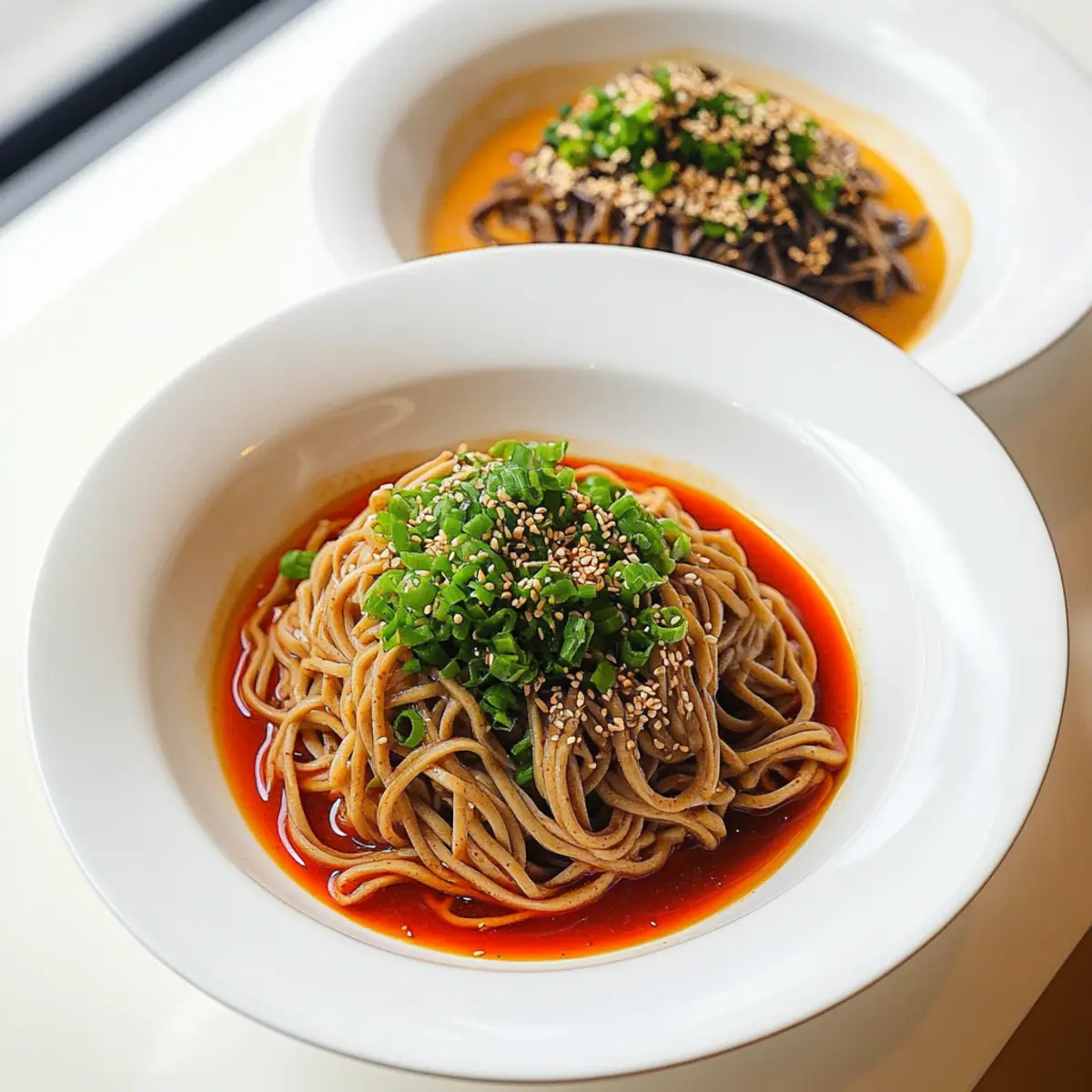
As I twirled the cold soba noodles around my fork, the nutty fragrance of Korean wild sesame oil wafted through the air, transporting me straight to the bustling streets of Seoul. These Easy Korean Sesame Noodles, or Deulgireum Makguksu, are a delightful escape from the mundane, offering a quick and customizable meal that’s perfect for busy weeknights. Whether you prefer the classic version or the fiery twist of the spicy variation, these vegetarian noodles are not just speedily prepared but also packed with refreshing flavors that make every bite a celebration. Curious about how you can make this dish your own? Let’s dive into the magic of these delicious noodles!
Why are these Korean Sesame Noodles a must-try?
Quick and Easy: Preparing these noodles takes only minutes, perfect for those busy nights when you craving homemade goodness without the hassle.
Nutty and Flavorful: The distinct taste of Korean wild sesame oil gives a unique depth, elevating simple ingredients into a culinary delight.
Customizable: Whether you like it classic or spicy, you have the freedom to create your signature dish. Add proteins like tofu or chicken for versatility, or enjoy it as a vibrant side with grilled meats.
Crowd-Pleaser: This dish is ideal for gatherings, satisfying children and adults alike with its appealing flavors and textures, making it a fantastic addition to any meal, just like Cry Baby Noodles are for spice lovers.
Refreshing Comfort: Each bite feels light yet satisfying, with the cold soba noodles complementing the rich sauce perfectly, leaving you revitalized and ready for more!
Korean Sesame Noodles Ingredients
• Dive into this flavorful dish with just the right components!
For the Noodles
- Soba Noodles – The backbone of the dish; choose a high-quality brand for the best texture.
For the Sauce
- Tsuyu (Soup Seasoning Sauce) – Provides an umami boost; mix soy sauce with mirin or dashi if you can’t find tsuyu.
- Korean Wild Sesame Oil (Deul-gireum) – Gives a signature nutty flavor; substitute with good-quality toasted sesame oil if needed.
- Chili Oil (for Spicy Version) – Adds a delightful heat; try Lao Gan Ma or your homemade chili oil for a kick.
For the Toppings
- Green Onion/Chive – Freshness and mild onion notes; scallions work as a great alternative.
- Toasted Sesame Seeds – Adds a beautiful crunch; grinding them offers a different texture experience.
- Toasted Seaweed (optional) – Infuses umami richness; crush it as a topping for added flavor.
Elevate your cooking experience with these easy-to-find ingredients, perfect for whipping up your own Korean Sesame Noodles today!
Step‑by‑Step Instructions for Korean Sesame Noodles
Step 1: Boil the Noodles
Begin by bringing a large pot of water to a rolling boil over high heat. Once boiling, add the soba noodles and cook them according to the package instructions, usually taking about 4-6 minutes. Stir occasionally to prevent sticking. You’ll know they’re ready when they are tender yet slightly chewy; drain and set aside.
Step 2: Prepare the Sauce
While your soba noodles are cooking, take a mixing bowl and combine tsuyu with Korean wild sesame oil for the classic version or add chili oil if you’re making the spicy variation. Use a whisk to blend the ingredients smoothly, ensuring a lovely glossy texture. Set the sauce mixture aside while you work on the next step.
Step 3: Rinse the Noodles
Once the noodles are cooked, carefully drain them and rinse under cold running water for about 1-2 minutes. This step is crucial as it will remove excess starch and cool the noodles, giving them the perfect texture for your Korean Sesame Noodles. After rinsing, let them drain thoroughly in the colander.
Step 4: Combine Noodles and Sauce
In the bowl with your prepared sauce, add the drained soba noodles. Using tongs or a spatula, gently toss the noodles to ensure they are evenly coated with the delicious sauce mixture. Aim for a uniform distribution to enhance each bite’s flavor and fragrance.
Step 5: Add Fresh Toppings
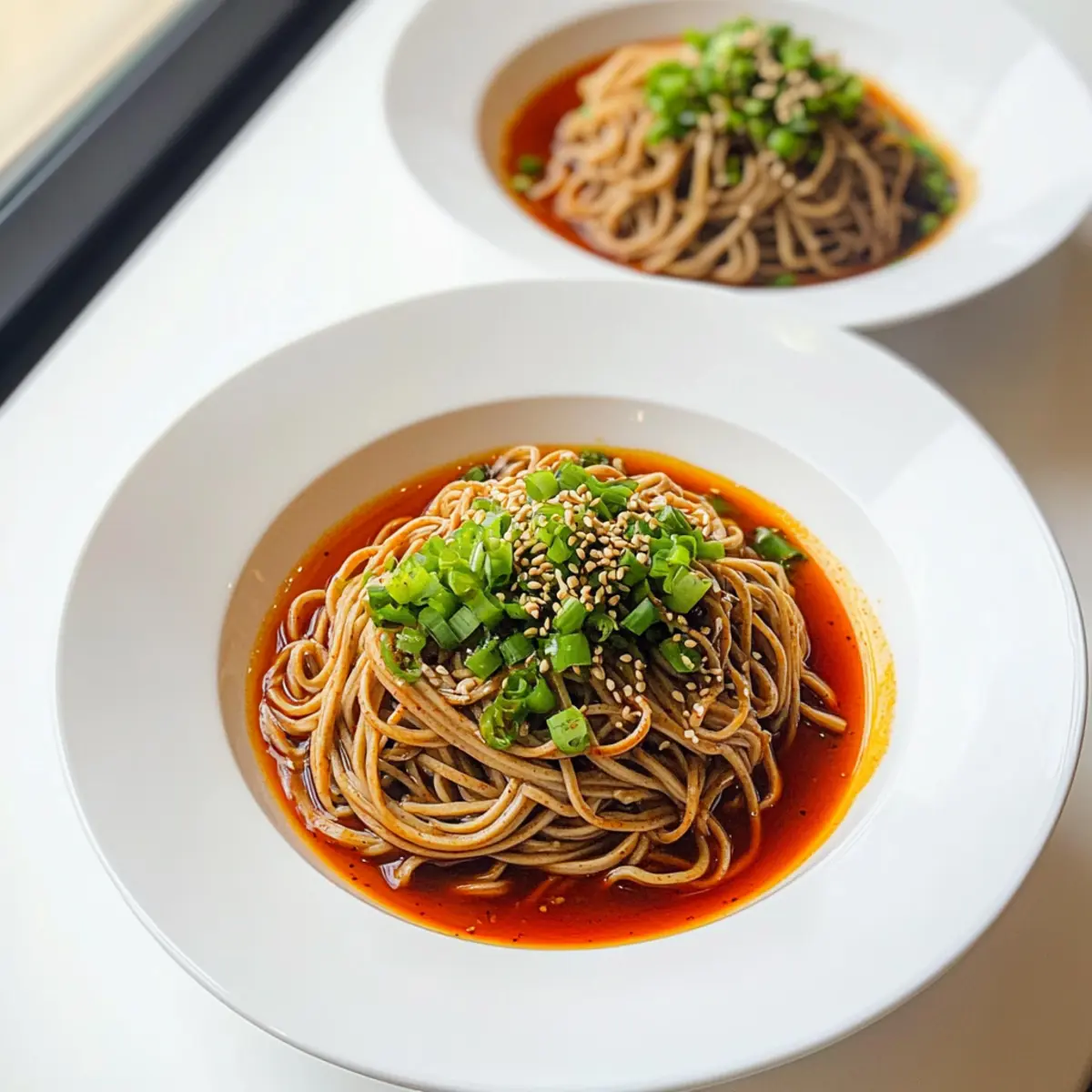
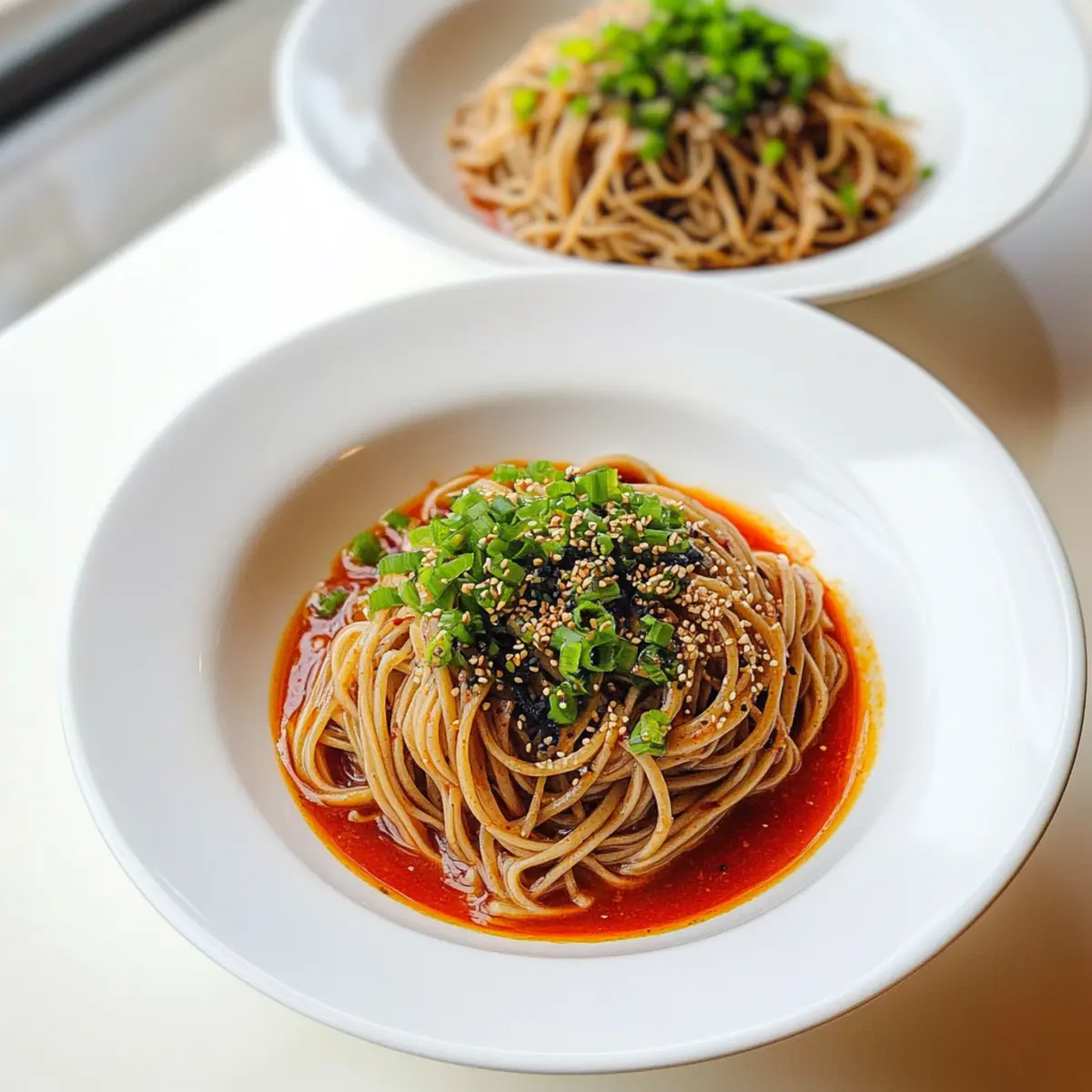
To finish your Korean Sesame Noodles, sprinkle chopped green onions, toasted sesame seeds, and, if desired, some sliced chilis or crushed seaweed on top. These toppings not only add crunch but also infuse the dish with additional layers of flavor. Serve this delightful creation chilled or at room temperature.
How to Store and Freeze Korean Sesame Noodles
Fridge: Store leftover Korean Sesame Noodles in an airtight container for up to 2 days. Keep in mind that the noodles may absorb the sauce and become less flavorful over time.
Freezer: If you want to freeze the noodles, separate the sauce from the noodles. Place each in airtight bags; they can be kept in the freezer for up to 1 month.
Reheating: To reheat, thaw the noodles in the fridge overnight. Gently warm them in a pan with a splash of water or sauce over low heat, ensuring not to overcook.
Serving Cold or Chilled: Korean Sesame Noodles taste delightful served cold or at room temperature, making them a fantastic option for meal prep and easy lunches.
Korean Sesame Noodles: Customize Your Dish
Feel free to explore exciting variations of these Korean Sesame Noodles for a personalized culinary adventure that’ll tantalize your taste buds.
-
Vegetarian Delight:
Make it vegan by using soy sauce instead of tsuyu and skipping any seafood-based ingredients. -
Gluten-Free Twist:
Switch to gluten-free soba noodles or use rice noodles instead for a delicious alternative that respects your dietary needs. -
Heat Level:
For extra heat, incorporate finely chopped fresh chilies or a dash of cayenne pepper to elevate the flavor. -
Nutty Flavor Boost:
Try adding a tablespoon of peanut butter to the sauce for a creamy, nutty richness that perfectly complements the sesame oil. -
Textural Contrast:
Add crisp, julienned cucumbers or carrots on top for a refreshing crunch that enhances the overall dish. -
Flavor Fusion:
Drizzle a bit of hoisin sauce over for a sweet and savory twist that harmonizes beautifully with the sesame and soy flavors. -
Protein Power:
Mix in grilled shrimp or marinated tofu for added protein, turning this quick dish into a filling meal; it’s reminiscent of hearty flavors found in delightful dishes like Cry Baby Noodles. -
Herbal Freshness:
Incorporate fresh herbs like cilantro or mint for an aromatic freshness that contrasts beautifully with the nutty sauce.
What to Serve with Easy Korean Sesame Noodles
Elevate your meal with vibrant sides and delightful complements to make your dinner unforgettable.
-
Grilled Chicken Skewers: Juicy, marinated pieces that add protein and smoky flavor, perfectly balancing the cold noodles’ refreshing taste.
-
Spicy Tofu Stir-Fry: Crisp vegetables and marinated tofu deliver an extra kick, enhancing the boldness of the spicy noodle variation while keeping it vegetarian.
-
Asian Cucumber Salad: Fresh, crunchy cucumbers tossed in a tangy dressing offer a crisp texture that lightens the rich flavors of the sesame sauce.
-
Roasted Brussels Sprouts: Caramelized, crispy sprouts add a nutty depth, contrasting beautifully with the smoothness of the noodles.
-
Miso Soup: A comforting bowl of umami-rich miso soup provides warmth, making it a lovely addition to the chilled noodles.
-
Sesame Seaweed Salad: This dish adds a chewy texture and enhances the sesame flavors, perfectly marrying flavors and keeping your meal aligned with the overall theme.
-
Chilled Sake or Green Tea: Both drinks refresh the palate and enhance the experience, complementing the dish’s savory undertones beautifully.
Expert Tips for Korean Sesame Noodles
• Rinse Thoroughly: Make sure to rinse the soba noodles well under cold water to remove excess starch, which enhances their texture and prevents clumping.
• Adjust Spice Levels: If you’re opting for the spicy version, start with a small amount of chili oil and gradually increase according to your heat preference.
• Protein Boost: For a hearty meal, feel free to add proteins like shredded chicken, tofu, or shrimp to your Korean Sesame Noodles for extra nutrition.
• Fresh Toppings: Don’t skip on the toppings! Fresh green onions, sesame seeds, and seaweed add crunch and flavor, elevating your noodle dish immensely.
• Experiment with Variations: Feel free to play around with additional toppings like julienned vegetables or pickled radishes to make this dish uniquely yours.
Make Ahead Options
These Easy Korean Sesame Noodles are perfect for meal prep fans! You can prepare the soba noodles up to 24 hours in advance, ensuring they’re perfectly cooled and rinsed to maintain their texture. The sauce can also be made ahead of time; just combine the tsuyu with either Korean wild sesame oil or chili oil (for the spicy version) and refrigerate in an airtight container. To keep the components fresh, store the noodles separately from the sauce until you’re ready to serve. When it’s time to eat, simply toss the noodles with the sauce, add your desired toppings, and enjoy a dish that’s just as delicious as if it were freshly made!
Korean Sesame Noodles Recipe FAQs
How do I select the right soba noodles?
When selecting soba noodles, look for a high-quality brand that has a good color and texture. Ideally, you want 100% buckwheat noodles, but many brands blend them with wheat. Choose the one that suits your dietary needs best, considering texture and flavor.
How should I store leftovers?
Leftover Korean Sesame Noodles can be stored in an airtight container in the refrigerator for up to 2 days. Just be aware that they may absorb the sauce, so if you notice them becoming a bit dry, feel free to drizzle in a little extra sesame oil or sauce before serving!
Can I freeze Korean Sesame Noodles?
Yes, you can freeze them! To do this, it’s best to separate the noodles from the sauce. Place each in airtight bags or containers; they can be stored in the freezer for up to 1 month. When you’re ready to enjoy your noodles, thaw them in the fridge overnight, then reheat in a pan over low heat, adding a splash of water or additional sauce to keep them from drying out.
What should I do if my noodles are clumping together?
If you find your noodles are clumping, it’s essential to rinse them thoroughly under cold water after boiling, which helps cool them and remove excess starch. If you didn’t rinse enough, you could also gently toss them with a little extra sesame oil to help separate them before serving.
Are these noodles safe for pets or people with allergies?
These Korean Sesame Noodles are vegetarian and typically safe for most diets. However, be cautious with sesame oil if anyone has a sesame allergy. Additionally, if you’re including proteins or other toppings, always check for cross-contaminants or allergens that may affect guests with food sensitivities.
How can I make these noodles spicier?
For a spicier version, you can simply increase the amount of chili oil you use in the sauce. Start with a small drizzle and taste as you go, adding more until you’re satisfied with the heat level. You might also consider adding sliced fresh chilies or chili flakes on top for added spiciness!
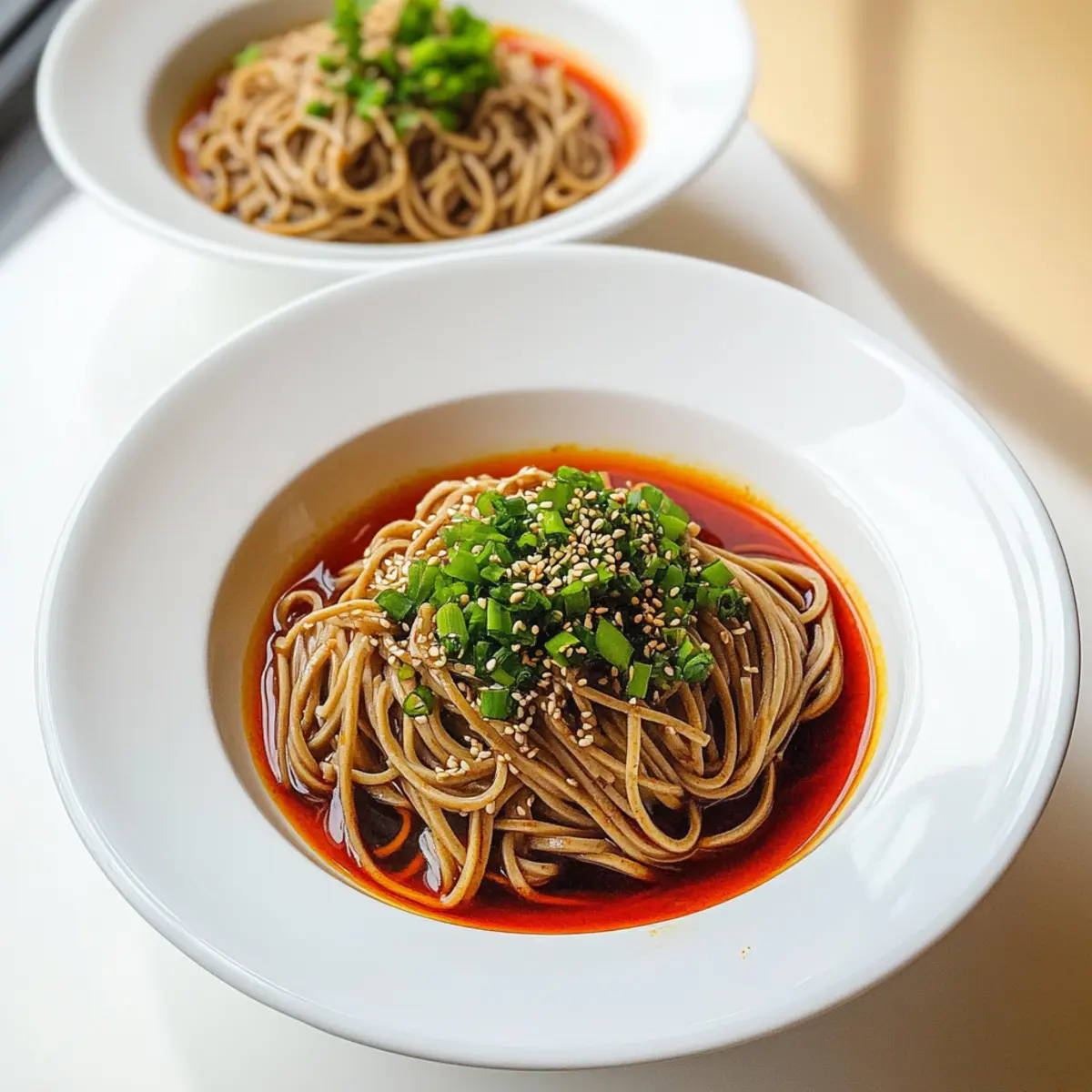
Korean Sesame Noodles: Quick, Nutty Delight with Spicy Twist
Ingredients
Equipment
Method
- Begin by bringing a large pot of water to a rolling boil over high heat.
- Add the soba noodles and cook them according to the package instructions, usually taking about 4-6 minutes. Stir occasionally to prevent sticking. You'll know they're ready when they are tender yet slightly chewy; drain and set aside.
- While your soba noodles are cooking, take a mixing bowl and combine tsuyu with Korean wild sesame oil for the classic version or add chili oil if you’re making the spicy variation. Use a whisk to blend the ingredients smoothly.
- Once the noodles are cooked, carefully drain them and rinse under cold running water for about 1-2 minutes to remove excess starch.
- In the bowl with your prepared sauce, add the drained soba noodles. Using tongs or a spatula, gently toss the noodles to ensure they are evenly coated with the sauce mixture.
- To finish, sprinkle chopped green onions, toasted sesame seeds, and optionally some sliced chilis or crushed seaweed on top. Serve chilled or at room temperature.