
As I stood in my kitchen, the aroma of vinegar bubbling away brought back memories of family gatherings and summer picnics. This Classic Pickled Eggs Recipe transformed an ordinary pantry staple into a tangy snack that captured everyone’s attention. Perfectly low-carb and keto-friendly, these vibrant pickled eggs are not just a delightful treat; they’re also incredibly versatile. Whether you enjoy them straight from the jar, toss them into a salad, or serve them alongside grilled wings, they add a burst of flavor to any meal. Plus, they’re an excellent way to preserve that extra dozen eggs sitting in your fridge! Are you ready to give your taste buds a zesty adventure? Let’s dive into this delicious pickling journey together!
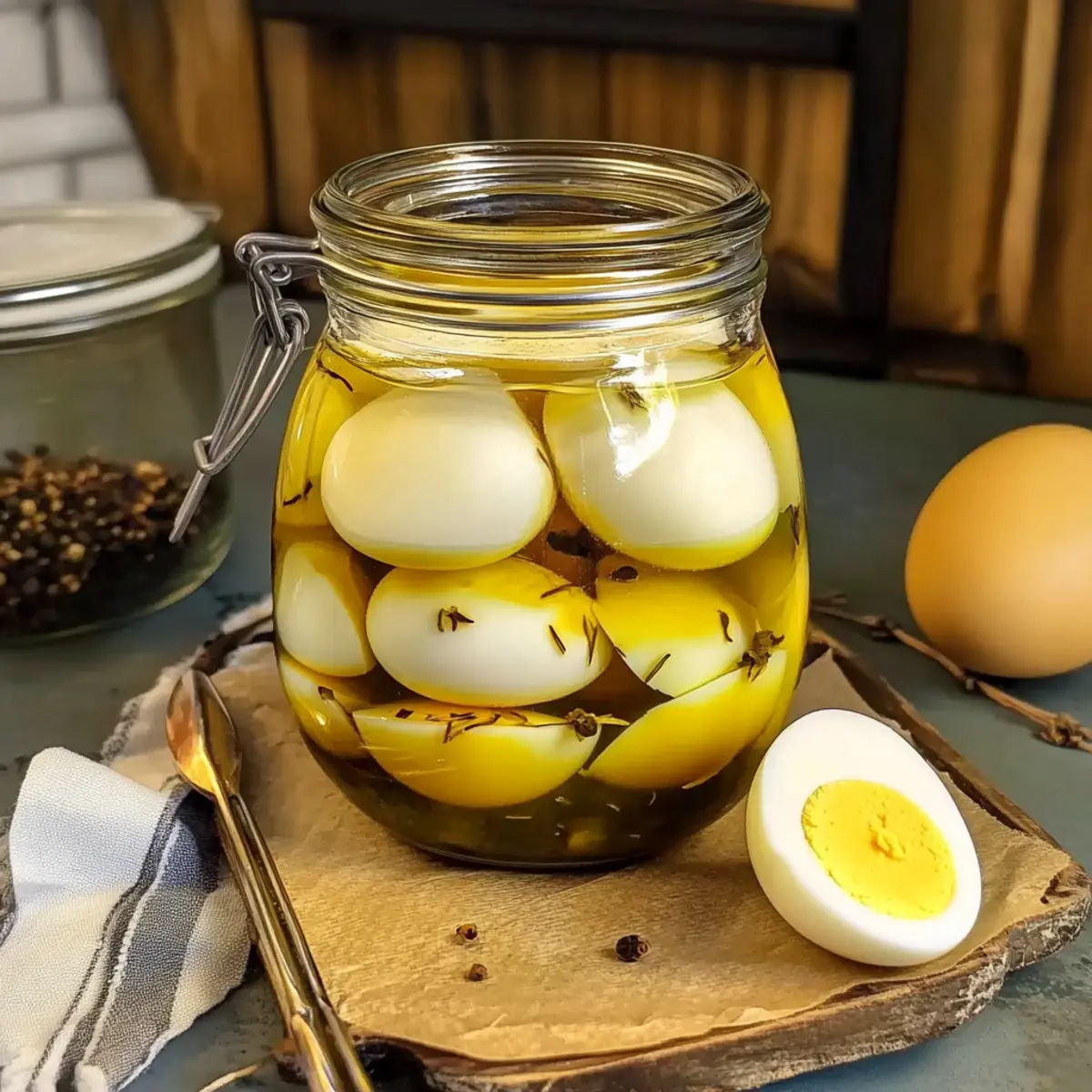
Why Should You Try Pickled Eggs?
Zesty flavors: These pickled eggs are bursting with tangy notes from apple cider vinegar, making them an irresistible snack.
Versatile addition: Perfect for salads or as a side with grilled chicken wings, they can elevate any meal.
Low Carb delight: Enjoyed by keto and paleo dieters, this recipe aligns with various dietary needs.
Easy to make: With just a few ingredients and simple steps, you can create this crowd-pleaser in no time.
Have leftover eggs? Transform them into delicious Pastina Comforting All for a tasty twist!
Pickled Eggs Ingredients
For the Brine
• Apple Cider Vinegar – This gives your pickled eggs that signature tangy flavor; substitute with white wine vinegar for a sharper taste.
• Water – Balances the vinegar, ensuring perfect pickling consistency.
• Salt – Enhances flavor and aids preservation, keeping your pickled eggs fresh longer.
• White Sugar Substitute (Erythritol or Stevia) – Adds sweetness to balance the tanginess of the vinegar for a well-rounded taste.
For the Flavor
• Hard-Boiled Eggs – The star of this pickled eggs recipe, providing proteins; use peeled eggs for the best results.
• Black Peppercorns – Adds a mild spice; you can switch to white peppercorns for a different aroma.
• Garlic – Infuses the brine with depth; shallots can be a lovely alternative for a unique flavor profile.
• Bay Leaf – Contributes earthy notes to the mix; dried thyme can be used instead for a refreshing twist.
Step‑by‑Step Instructions for Pickled Eggs Recipe
Step 1: Prepare Eggs
Begin by boiling large eggs. Place them in a pot and cover with cold water. Bring it to a gentle boil over medium heat, then reduce to a simmer for 10-12 minutes. Once cooked, transfer the eggs to an ice bath for 5 minutes to stop the cooking process. This will make peeling easier.
Step 2: Make Brine
In a medium saucepan, combine 1 cup of apple cider vinegar, 1 cup of water, 2 tablespoons of salt, and 2 tablespoons of a sugar substitute. Heat the mixture over medium heat, stirring gently until the salt and sugar dissolve completely. Once dissolved, add spices like 1 tablespoon of black peppercorns and 1 clove of minced garlic, then bring the brine to a simmer for 5 minutes and remove from heat.
Step 3: Assemble
Carefully peel each egg and place them upright in a clean, sterilized jar. Ensure the jar is wide enough to fit the eggs without breaking them. Pour the hot brine over the eggs until they are fully submerged. The brine should cover the eggs completely, leaving about a half-inch of space at the top of the jar.
Step 4: Refrigerate
Seal the jar tightly with a lid and allow it to cool to room temperature for about 30 minutes. Once cooled, place it in the refrigerator. For the best flavor and texture, let the pickled eggs sit for at least 24 hours. The longer they marinate, the tangier they will become, so don’t rush this step!
Step 5: Enjoy
After a day of marinating, your pickled eggs are ready to be enjoyed! Use a clean fork to remove the eggs from the jar whenever you want a tangy snack. They make a fantastic addition to salads or as an appetizer with your favorite dishes. Keep the jar sealed in the fridge; your pickled eggs will stay fresh for up to four weeks!
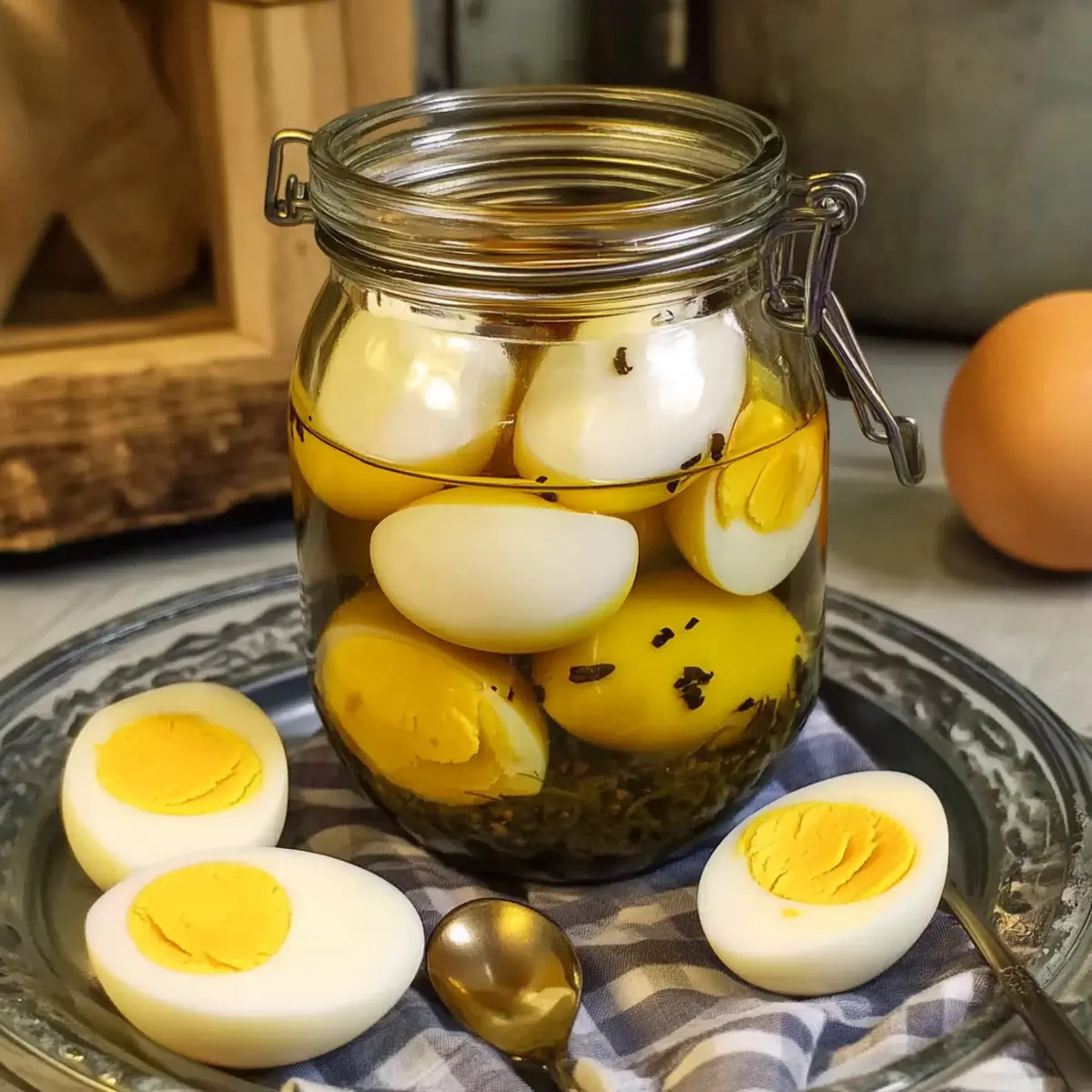
How to Store and Freeze Pickled Eggs
Refrigerator: Store your pickled eggs in the refrigerator where they will stay fresh for up to 3-4 weeks. Always ensure they remain fully submerged in the brine for optimal preservation.
Airtight Jar: Use a clean, airtight glass jar to store your pickled eggs. This prevents contamination and helps maintain their crunch and flavor.
Freezer: Freezing is not recommended for pickled eggs, as freezing may alter their texture and flavor. It’s best to enjoy them fresh.
Serving Tip: When ready to enjoy, use a clean utensil to remove the eggs from the jar. They’re perfect for snacking or as a zesty addition to salads!
Pickled Eggs Recipe Variations
Customize your pickled eggs experience by exploring these delightful twists, each offering a unique taste and texture.
- Spicy Kick: Add sliced jalapeños to the brine for an exciting burst of heat! If you enjoy bold flavors, this variation will satisfy your spicy cravings.
- Garlic Lovers: Increase the garlic by using roasted garlic instead of raw; it will add a creamy sweetness and deeper flavor that elevates your eggs beautifully.
- Herb Infusion: Toss in fresh dill sprigs to the jar for a refreshing, herbal twist. This will give the eggs a bright flavor reminiscent of summer salads.
- Sweet and Savory: For a unique contrast, try adding a small amount of honey or another sugar substitute for a delightful balance of sweet and tangy.
- Citrus Twist: Add slices of lemon or lime zest to the brine for a refreshing citrus aroma. This will brighten the flavors and add a unique dimension to your pickled eggs.
- Smoky Flavor: Include a teaspoon of smoked paprika or chipotle powder to the brine for a wonderful smokiness that complements the vinegar’s tang. This adds depth and intrigue to the recipe.
- Asian Inspired: Replace apple cider vinegar with rice vinegar, and add soy sauce and a dash of sesame oil for an exciting Asian twist. This will fill your taste buds with new and exciting flavors.
- Chili Infusion: Try using dried chili flakes in the brine for added warmth. It’s a fantastic way to elevate the heat and add complexity without overwhelming the flavors.
Discover these variations, and explore how different ingredients can enhance your pickled eggs. If you’re seeking more culinary inspiration, consider trying out delicious Cowboy Soup Seasons. Don’t forget to check out the unique flavors in the Cookies Bake Cookies too!
What to Serve with Classic Low Carb Pickled Eggs?
These pickled eggs bring a delightful zing to your table, making them the perfect centerpiece for a well-rounded meal.
-
Crispy Bacon: The saltiness and crunch of crispy bacon pairs wonderfully with the tangy flavor of pickled eggs, enhancing your snacking experience. Imagine a delightful breakfast platter featuring both, drizzled with a splash of hot sauce for an extra kick.
-
Creamy Avocado Toast: The creamy texture of avocado on toasted bread creates a lovely contrast to the zesty pickled eggs. Together, they offer a nutritious and satisfying option for brunch or a light lunch.
-
Chunky Potato Salad: This hearty side complements the sharp notes of the pickled eggs, with creamy potatoes balancing out the tanginess. It’s a nostalgic match that’s sure to bring back summer BBQ memories.
-
Fresh Garden Salad: Crisp greens tossed with a hint of olive oil and balsamic vinegar provide a refreshing contrast, making your pickled eggs really pop. Add in some cherry tomatoes and cucumbers for a burst of color and crunch.
-
Grilled Chicken Wings: The savory, smoky flavor of grilled wings teamed with pickled eggs creates a crowd-pleasing appetizer. The combo is perfect for game days or casual gatherings, offering a delightful crunch and zing.
-
Zesty Coleslaw: The crunchy sweetness of coleslaw, dressed with tangy mayonnaise, pairs nicely with the acidity of pickled eggs. The duo is reminiscent of classic meals together at family gatherings, pleasing everyone at the table.
-
Refreshing Sparkling Water: For a drink pairing, chilled sparkling water with a slice of lemon or lime adds a refreshing finish, balancing the richness of any accompanying dishes perfectly.
-
Chocolate Mousse: For dessert enthusiasts, following your savory starters with a light chocolate mousse creates a perfect contrast. The creamy sweetness pairs well with the sharp tanginess of the pickled eggs, rounding out your meal in an unexpected way.
Make Ahead Options
These Classic Low Carb Pickled Eggs Recipe is perfect for meal prep enthusiasts looking to save time during busy weeks! You can hard-boil and peel your eggs up to 3 days in advance, storing them in the refrigerator until you’re ready to pickle. Prepare the brine and combine it with spices the morning before you plan to enjoy them. Simply pour the hot brine over the prepared eggs in a sterilized jar and refrigerate. For best flavor, allow the pickled eggs to marinate for at least 24 hours before serving. Keep them tightly sealed in the fridge to maintain their quality, and you’ll have a tangy, delicious snack at the ready with minimal effort!
Expert Tips for Pickled Eggs
- Submerge Fully: Ensure the eggs are completely submerged in the brine to prevent spoilage. Use a weight if necessary.
- Use Clean Utensils: Always use clean utensils when removing eggs to maintain freshness and avoid contamination, extending the shelf life of your pickled eggs.
- Don’t Overcook: Avoid overcooking the eggs to prevent a rubbery texture. 10-12 minutes is ideal for a creamy texture.
- Customize Spice: Feel free to experiment with additional spices or herbs to personalize your pickled eggs recipe and enhance the flavor profile.
- Wait for Flavor: Patience is key! Allow the pickled eggs to marinate for at least 24 hours for the best flavor before indulging.
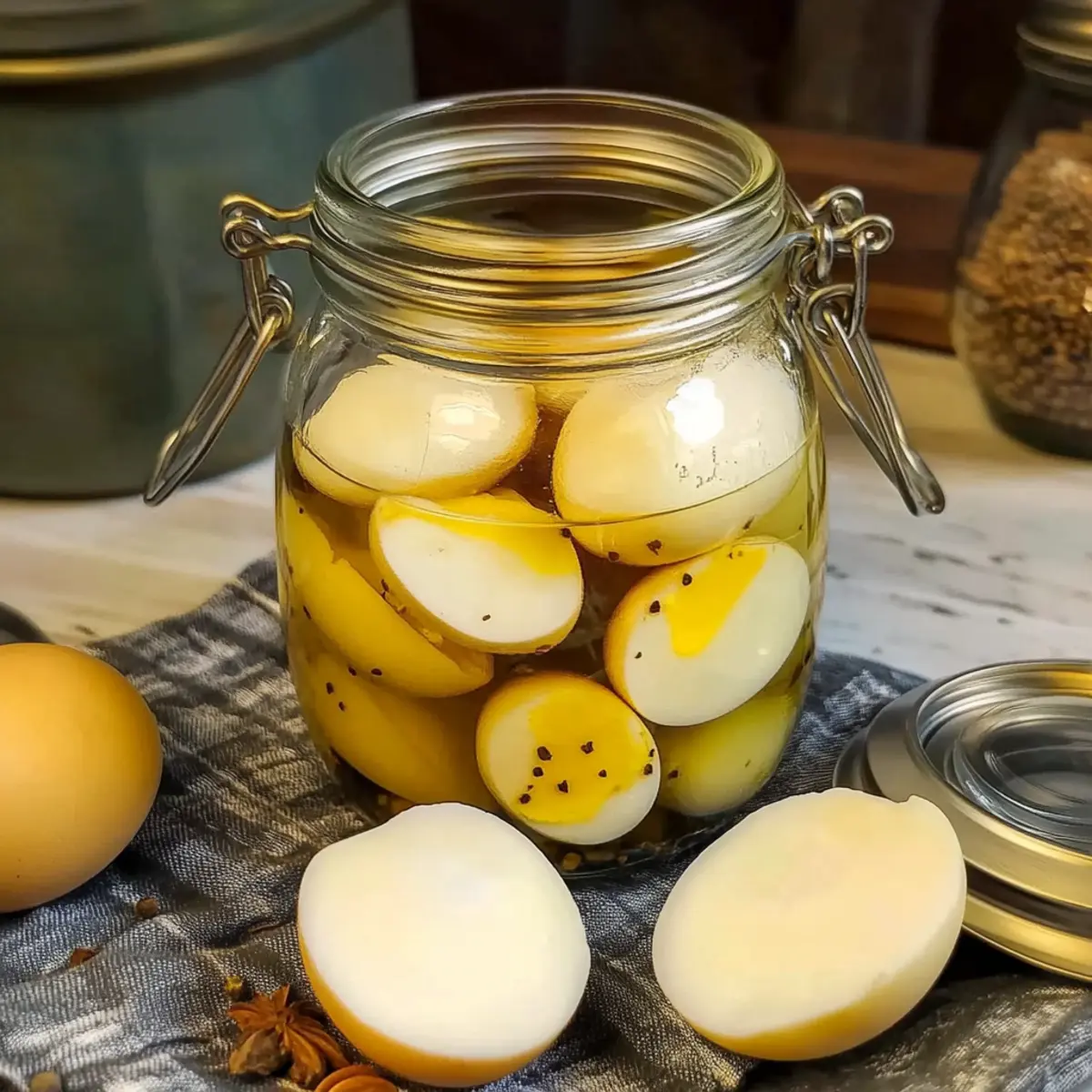
Pickled Eggs Recipe FAQs
What type of eggs should I use for pickling?
Absolutely! Always opt for large, fresh eggs. I recommend using peeled hard-boiled eggs for easy pickling. Older eggs, which are often easier to peel, can yield perfectly pickled results!
How should I store pickled eggs, and how long will they last?
You should store your pickled eggs in a clean, airtight jar in the refrigerator. When kept submerged in the brine, they stay fresh for up to 3-4 weeks. Just ensure that the jar is tightly sealed after each use to maintain their freshness!
Can I freeze pickled eggs?
No, freezing is not advised for pickled eggs. Freezing can alter their texture and flavor significantly, making them less enjoyable. It’s best to savor them fresh instead—trust me; they taste best when enjoyed straight from the fridge!
What if I notice the brine turning cloudy or the eggs have an off smell?
Very important! If your brine turns cloudy or if the eggs have an unusual odor, it’s best to err on the side of caution and discard them. This may indicate spoilage or contamination, so always prioritize safety by using clean utensils during handling.
Are pickled eggs safe for pets or individuals with allergies?
While pickled eggs themselves are safe for most people, they contain vinegar and spices that can be harmful to dogs and other pets. Always consult your veterinarian about food safety for your furry friends. If you have specific food allergies, check the ingredients carefully, especially the brine’s spices and vinegar types!
How can I enhance the flavor of my pickled eggs?
Certainly! To customize your pickled eggs, consider adding spices like cumin, coriander, or even sliced jalapeños for a little heat. I often toss in fresh dill or mustard seeds for added flavor depth. Get creative and make them your own!
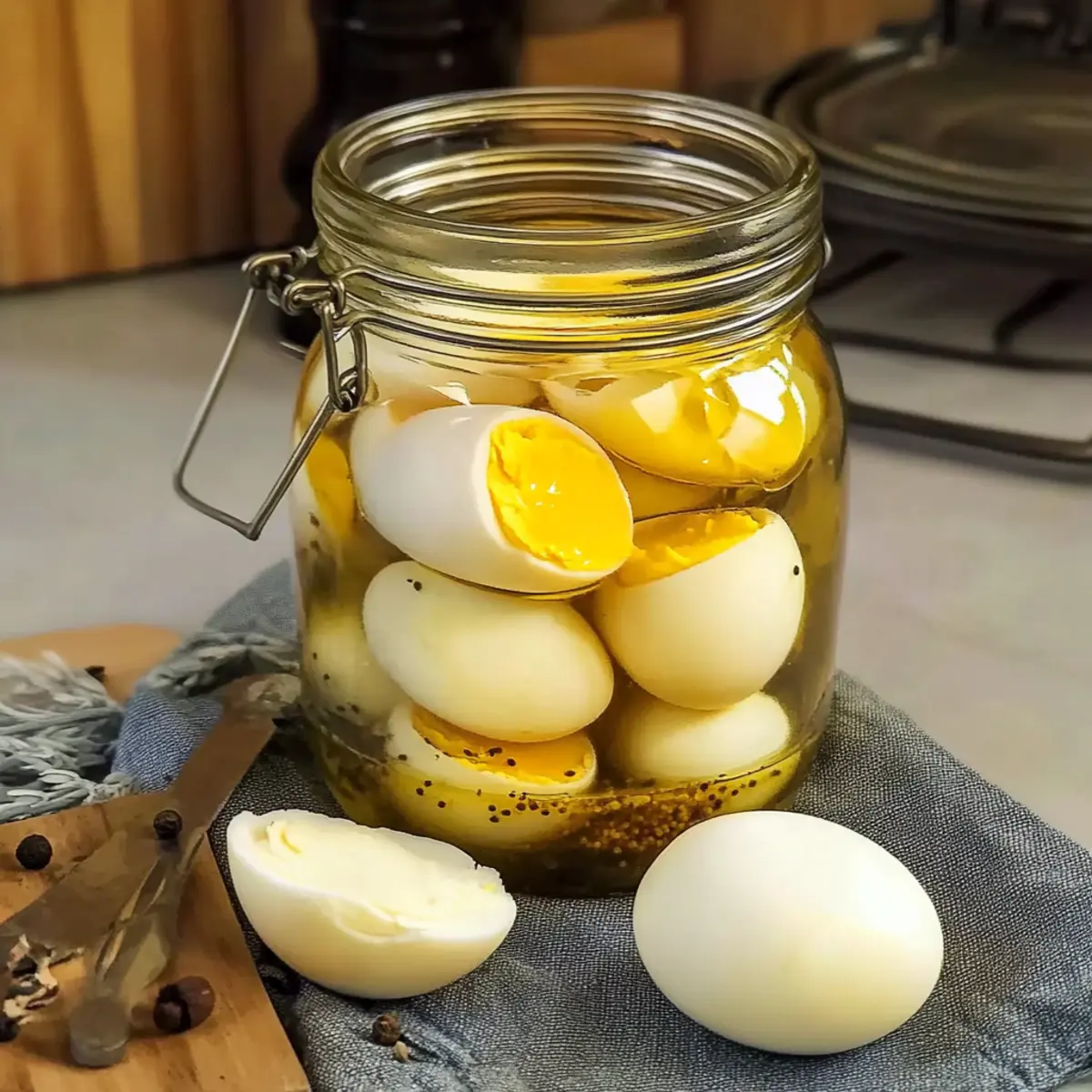
Mouthwatering Pickled Eggs Recipe for a Zesty Snack
Ingredients
Equipment
Method
- Begin by boiling large eggs. Place them in a pot and cover with cold water. Bring it to a gentle boil over medium heat, then reduce to a simmer for 10-12 minutes. Once cooked, transfer the eggs to an ice bath for 5 minutes to stop the cooking process.
- In a medium saucepan, combine 1 cup of apple cider vinegar, 1 cup of water, 2 tablespoons of salt, and 2 tablespoons of a sugar substitute. Heat the mixture over medium heat, stirring gently until the salt and sugar dissolve completely. Once dissolved, add spices like 1 tablespoon of black peppercorns and 1 clove of minced garlic, then bring the brine to a simmer for 5 minutes and remove from heat.
- Carefully peel each egg and place them upright in a clean, sterilized jar. Pour the hot brine over the eggs until they are fully submerged.
- Seal the jar tightly with a lid and allow it to cool to room temperature for about 30 minutes. Once cooled, place it in the refrigerator. Let the pickled eggs sit for at least 24 hours.
- After a day of marinating, your pickled eggs are ready to be enjoyed! Use a clean fork to remove the eggs from the jar whenever you want a tangy snack.