Sitting down to a comforting bowl of savory noodles has a way of melting the day’s stresses away. That’s why I’m excited to share my GLUTEN-FREE SESAME SOBA NOODLES recipe with you! Not only are these noodles a delight to your taste buds, they also come packed with vibrant veggies for added nutrition—proving that healthy eating can truly be enjoyable. This quick meal is perfect for those busy nights when you crave something satisfying yet light. Plus, it’s easily customizable based on what you have in your fridge. Have fun experimenting with different toppings and veggies! Are you ready to take your noodle game to the next level? Let’s get cooking!
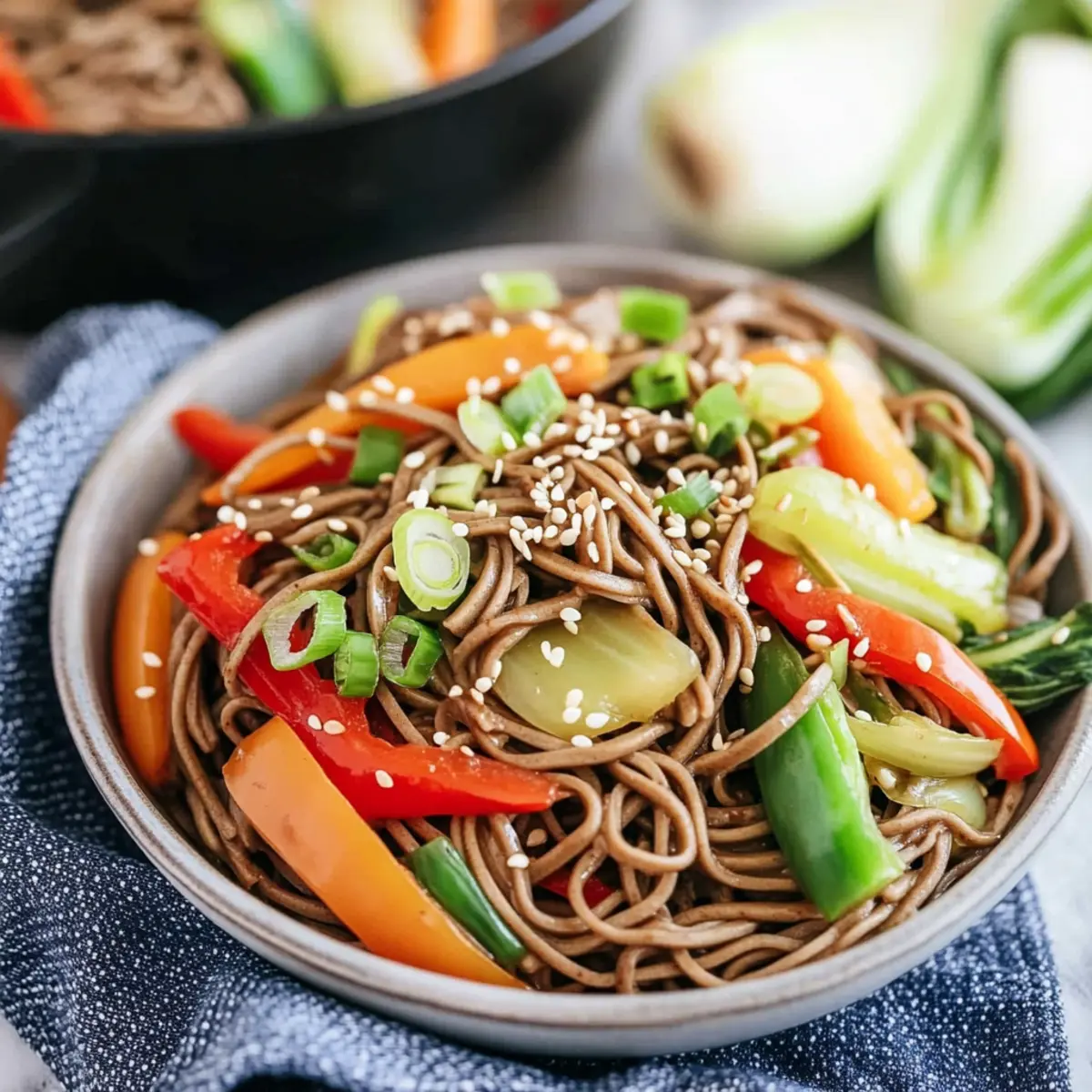
Why Are Sesame Soba Noodles a Must-Try?
Unique Flavor Fusion: This dish beautifully blends earthy soba noodles with savory tamari and a hint of spice, creating a flavor profile that’s hard to resist.
Quick and Easy: Perfect for busy weeknights, this recipe comes together in under 30 minutes, making it a lifesaver for those short on time.
Nutrient-Rich: Packed with vibrant vegetables, this meal elevates your usual stir-fry routine while providing an excellent source of dietary fiber.
Customizable Delight: Use whatever veggies you have on hand, making this a versatile option for cleaning out your fridge. For more inspiration, check out my Cry Baby Noodles recipe!
Great for Meal Prep: Store leftovers in the fridge for up to five days for a quick lunch or dinner option that is still delicious when reheated.
Sesame Soba Noodles Ingredients
For the Noodles
• Soba Noodles – Opt for gluten-free ones made from buckwheat to enjoy a chewy texture and earthy flavor.
For the Sauce
• Tamari – Use this gluten-free alternative to soy sauce for a savory depth of flavor.
• Chili Paste – Add according to your spice tolerance; it brings a warming kick to the dish.
• Rice Vinegar – Provides a tangy balance; feel free to swap in apple cider vinegar if necessary.
• Sesame Oil – This essential ingredient gives the dish its signature taste; olive oil can replace it for a different flavor.
For the Veggies
• Garlic – Fresh garlic is ideal for aromatic richness; minced or crushed works best!
• Ginger – Use freshly grated for warmth, although ground ginger can suffice in a pinch.
• Bell Pepper – Adds a sweet crunch; toss in your favorite stir-fry veggies for variety.
• Carrot – This brings color and a touch of sweetness; zucchini or sugar snap peas can be a great swap.
• Bok Choy – For a delightful crunch; alternatives include spinach or Napa cabbage.
• Green Onion – Use as a fresh garnish; if unavailable, you can leave it out.
For Garnishing
• Sesame Seeds – Sprinkle these on top for delightful crunch and nuttiness.
• Red Pepper Flakes – Add for extra heat; adjust to your liking!
These Sesame Soba Noodles are bursting with flavor and veggies, ensuring your meal is both enjoyable and nutritious!
Step‑by‑Step Instructions for Sesame Soba Noodles
Step 1: Cook Soba Noodles
Begin by boiling a large pot of water over high heat. Once it reaches a rolling boil, add the soba noodles and cook according to package instructions, usually around 4-5 minutes. Stir occasionally to ensure they don’t stick together. When tender yet al dente, drain the noodles in a colander and rinse them under cold water to stop the cooking process, preventing mushiness.
Step 2: Make Sauce
In a small bowl, combine tamari, chili paste, and rice vinegar. Whisk until well blended. Set this flavorful mixture aside so that the ingredients have time to meld together. This sauce will elevate your Sesame Soba Noodles with its rich umami flavor and a hint of spiciness, perfect for coating your veggies and noodles evenly.
Step 3: Cook Veggies
Heat 1 tablespoon of sesame oil in a large pot or wok over medium-high heat. Once hot, sauté minced garlic and freshly grated ginger for about 30 seconds until fragrant. Add chopped bell pepper and sliced carrot to the pan, stirring frequently for 5-7 minutes, or until they soften and begin to caramelize. Toss in the bok choy and stir until wilted, visually checking that the veggies retain their vibrant colors.
Step 4: Combine Everything
Add the cooked soba noodles to the pot with the sautéed veggies. Pour the prepared sauce over the mixture and gently toss everything together for 1-2 minutes, ensuring each noodle is coated and heated through. Look for the flavors to harmonize as the noodles absorb the savory sauce, creating a deliciously appealing dish that showcases the beauty of your Sesame Soba Noodles.
Step 5: Serving
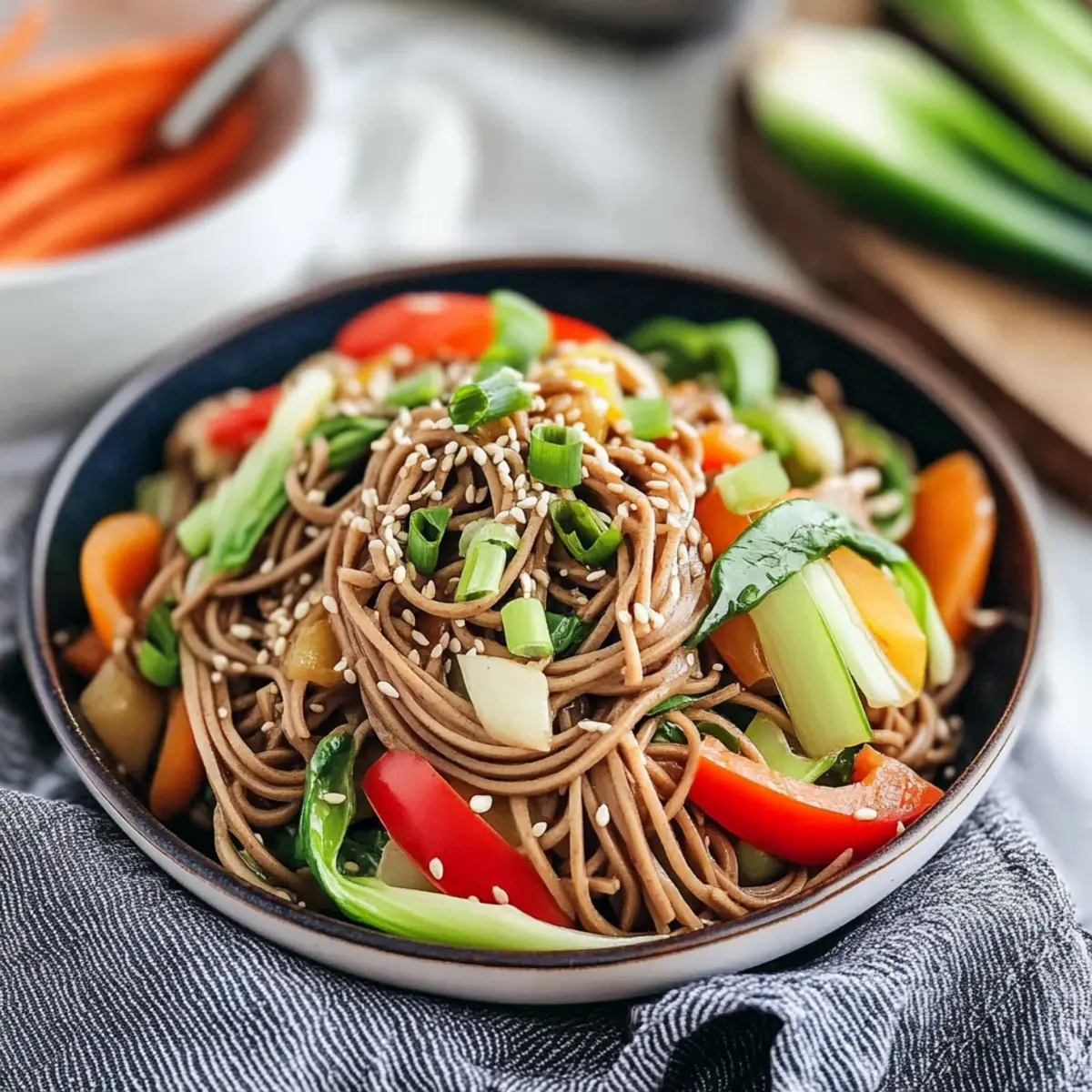
Once everything is well combined and heated, plate the noodles while warm. Garnish with sliced green onions and sprinkle sesame seeds or red pepper flakes for added texture and flavor. You can enjoy your Sesame Soba Noodles warm or refrigerate them for a refreshing cold noodle salad later, perfect for meal prep or a quick meal.
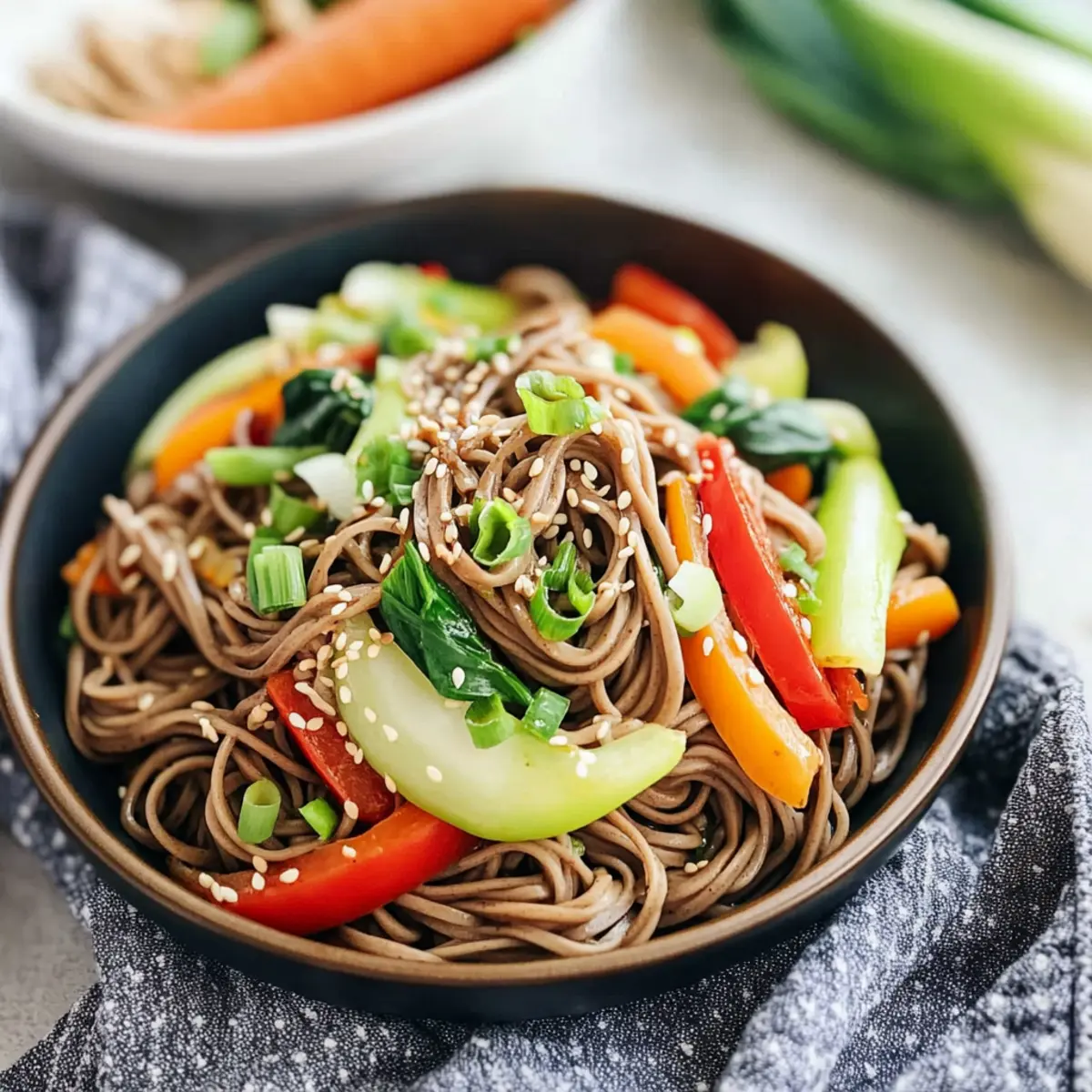
Sesame Soba Noodles Variations & Substitutions
Feel free to get creative and tailor these noodles to your taste and what you have in your kitchen!
-
Noodle Swap: Replace soba noodles with gluten-free ramen or udon for a different yet tasty base.
-
Extra Veggies: Toss in bonus veggies such as broccoli, radishes, or snap peas for added crunch and nutrients. Each vegetable adds its unique flavor and texture, enhancing the dish beautifully.
-
Spice It Up: For more heat, increase the chili paste or add freshly diced jalapeños to the mix. This simple twist can elevate your dish to new spicy heights!
-
Protein Boost: Incorporate cubed tofu, edamame, or leftover chicken to make this dish heartier. The protein will make it even more satisfying and can be easily tailored to fit your dietary needs.
-
Zesty Twist: Squeeze fresh lime or lemon juice over the finished noodles for a vibrant citrus kick. The acidity balances the richness of the sesame oil and enhances the overall flavor!
-
Creamy Addition: Stir in a spoonful of peanut butter or tahini for a silky texture that pairs deliciously with the noodles. It adds a nutty depth that’s utterly divine!
-
Fresh Herbs: Garnish with fresh cilantro or basil for herby flair and brightness. These herbs can transform the dish and add a delightful aromatic touch.
-
Cold Salad Option: Serve chilled for a refreshing noodle salad. Perfect for those hot days when you crave something light yet satisfying. For additional noodle inspiration, don’t miss my Cry Baby Noodles recipe, which delivers a spicy kick that’s hard to ignore!
Make Ahead Options
These Sesame Soba Noodles are perfect for meal prep enthusiasts! You can cook the soba noodles and sauté the vegetables up to 24 hours in advance, then store them separately in airtight containers in the fridge to maintain their texture and crunch. Prepare the sauce ahead as well, keeping it in a jar or small bowl, which will save you valuable time on busy nights. When you’re ready to serve, simply reheat the noodle and veggie mixture on the stove for 2-3 minutes until warmed through, add the sauce, and toss everything together. This way, you’ll enjoy a delicious, quick meal that tastes just as fresh and vibrant as if it were made from scratch!
Expert Tips for Sesame Soba Noodles
-
Don’t Overcook Noodles: Always keep an eye on the cooking time for soba noodles; overcooking can lead to mushiness. Aim for al dente for the perfect chewy texture.
-
Adjust Spice Levels: Don’t be afraid to play with the amount of chili paste. Start small and increase it gradually to find your perfect level of heat in the Sesame Soba Noodles.
-
Fresh Ingredients Matter: Using fresh garlic and ginger enhances the overall flavor. Dried alternatives won’t provide the same aromatic richness.
-
Mix It Up: Feel free to incorporate your favorite seasonal vegetables. This flexibility keeps the dish exciting and allows you to clean out your fridge effectively.
-
Meal Prep Like a Pro: Store your Sesame Soba Noodles in airtight containers for easy reheating. Just remember to reheat gently on the stovetop for the best texture!
Storage Tips for Sesame Soba Noodles
-
Room Temperature: If serving immediately, the Sesame Soba Noodles can be left out for up to 2 hours. Beyond that, it’s best to refrigerate to maintain freshness.
-
Fridge: Store your Sesame Soba Noodles in an airtight container for up to 5 days. This keeps the noodles and veggies fresh while ensuring easy reheating for lunches or dinners.
-
Reheating: For the best texture, reheat on the stovetop over medium heat, adding a splash of water or oil to help loosen the noodles. Avoid microwaving as it can make them soggy.
-
Freezer: It’s not recommended to freeze Sesame Soba Noodles due to the delicate nature of soba noodles, which do not retain their quality after freezing. Enjoy them fresh for the best experience!
What to Serve with Gluten-Free Sesame Soba Noodles
Enjoying a bowl of savory noodles invites a world of delightful pairings that enhance every bite.
-
Crispy Tofu: Provides a protein-packed crunch that complements the chewy noodles while absorbing the savory sauce beautifully. Tofu offers a satisfying texture that balances the dish perfectly.
-
Fresh Cucumber Salad: A refreshing side that adds a crisp, cooling element to counter the warmth of the noodles. Simple to make, just toss thinly sliced cucumbers with rice vinegar and sesame seeds for a tangy lift.
-
Miso Soup: The umami-rich broth enhances the meal with comforting warmth and depth. A soothing option, miso soup is a traditional Japanese accompaniment that pairs beautifully with soba noodles.
-
Edamame Beans: These vibrant green pods bring a fun pop of color and added protein to your meal while maintaining a delightful bite. Their slightly nutty flavor aligns perfectly with the sesame essence of the noodles.
-
Steamed Broccoli: This veggie side packs in nutrients and brings a satisfying crunch. Lightly steamed and tossed with a splash of tamari, they add an earthy depth that resonates with the dish’s flavors.
-
Chilled Green Tea: The lightness of this drink refreshes your palate, balancing the savory and spicy notes of your soba noodles. Serve unsweetened for a truly calming experience.
-
Sesame Garlic Roasted Brussels Sprouts: These crispy bites lend a crunchy texture and nutty flavor that echoes the sesame notes in your noodles. Savor their caramelized sweetness in each bite.
-
Peanut or Almond Sauce: Pour over the noodles for an indulgent touch that adds creaminess and nutty flavor. A drizzle of this sauce can transform your meal into a hearty delight.
Sesame Soba Noodles Recipe FAQs
How do I choose the right soba noodles?
When selecting soba noodles, look for those made primarily from buckwheat for a gluten-free option. Check the ingredients list; true buckwheat soba should contain little to no wheat flour. If you’re not gluten-sensitive, traditional soba, which may contain wheat, still retains its flavor and texture but be mindful of dietary restrictions.
Can I store leftover Sesame Soba Noodles?
Absolutely! Store your Sesame Soba Noodles in an airtight container in the fridge for up to 5 days. This method keeps the noodles and fresh veggies crisp and ready for lunch or dinner. When reheating, do so gently on the stovetop with a splash of water or oil to retain the noodles’ chewiness.
Can I freeze Sesame Soba Noodles?
It’s best to avoid freezing Sesame Soba Noodles, as soba noodles don’t hold up well in the freezer. Freezing can lead to a mushy texture once thawed. Instead, enjoy them fresh or store in the fridge for a delightful meal that’s easy to reheat within days!
What should I do if my noodles stick together?
If your soba noodles clump, it’s often due to overcooking. For the perfect chewy texture, always follow the cooking time on the package and rinse them under cold water after draining. This halts the cooking process. If they still stick, toss them with a tiny bit of sesame oil or a splash of water to separate them gently.
Can I customize the vegetables in my Sesame Soba Noodles?
Very! One of the joys of this recipe is its adaptability. Feel free to swap out any veggies based on what you have at home. Broccoli, zucchini, or snap peas are fantastic alternatives. Simply remember to adjust the cooking time based on the vegetable you choose; softer veggies may need less time, while firmer ones might require a bit longer.
Are Sesame Soba Noodles safe for my pets?
While soba noodles themselves aren’t toxic to pets, it’s best to avoid feeding them to your furry friends, especially if they contain gluten. The sauce components, like garlic and chili paste, can also be harmful to pets. Always prioritize their dietary needs and stick to pet-safe foods!
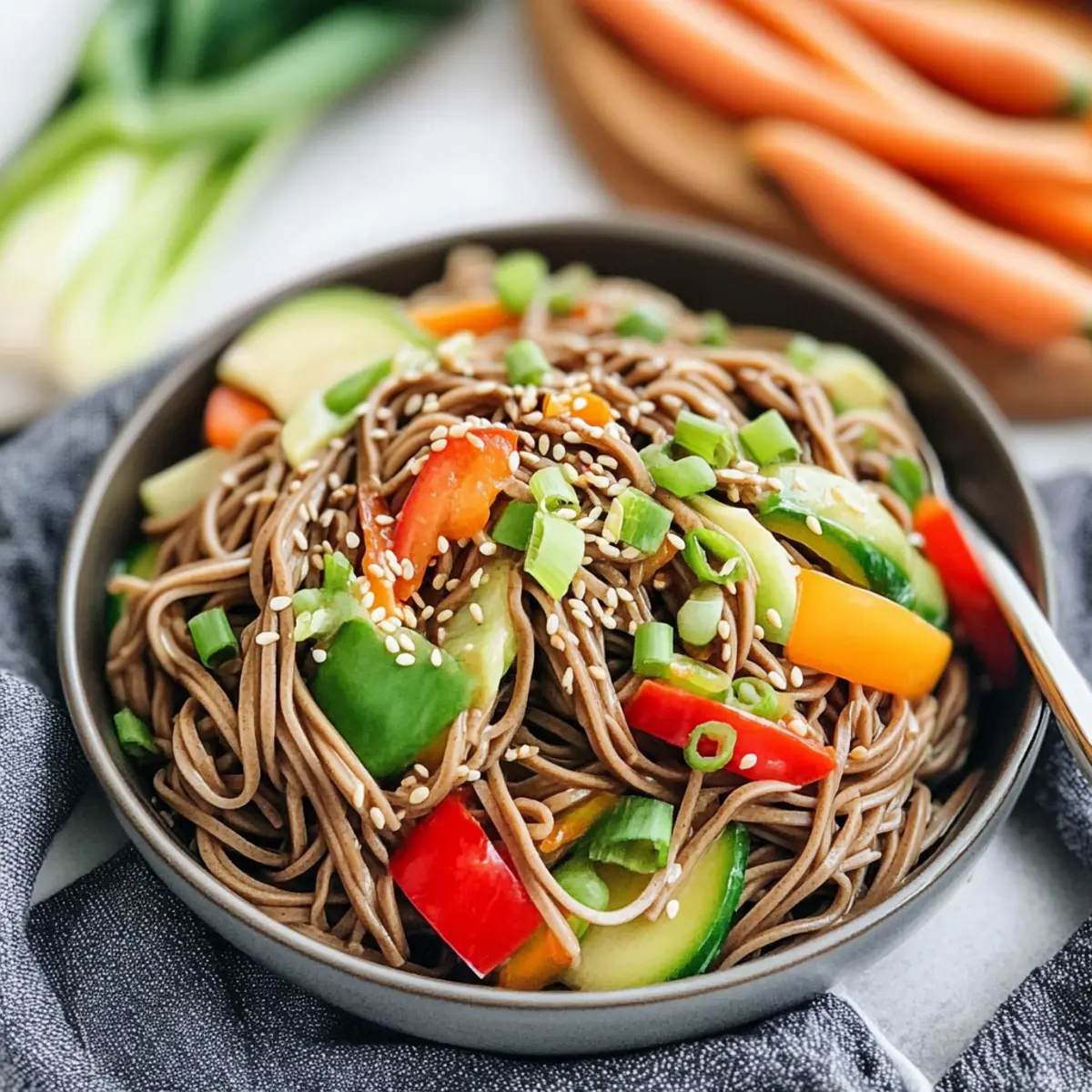
Savory Sesame Soba Noodles Bursting with Fresh Veggies
Ingredients
Equipment
Method
- Cook soba noodles in boiling water according to package instructions, about 4-5 minutes. Drain and rinse under cold water.
- In a small bowl, combine tamari, chili paste, and rice vinegar; whisk and set aside.
- Sauté garlic and ginger in sesame oil for 30 seconds, then add bell pepper and carrot; cook for 5-7 minutes until softened.
- Add bok choy and stir until wilted. It should maintain vibrant colors.
- Combine cooked noodles with veggies and sauce, tossing for 1-2 minutes until heated throughout and well mixed.
- Serve warm, garnished with green onions, sesame seeds, and red pepper flakes.