
As I stood in my kitchen, the golden afternoon sun streaming through the windows, the scent of sautéing garlic filled the air—a comforting embrace that signaled a cooking adventure. Today, I’m excited to share my rendition of Eggplant Caponata, a vibrant Sicilian relish bursting with rich vegetables and tangy flavors. This dish is not only a delightful way to elevate your appetizer game but is also naturally plant-based, dairy-free, and gluten-free, making it perfect for a variety of dietary needs. With quick prep times and the ability to charm even the pickiest eaters, it’s ideal for both casual weeknight dinners and festive gatherings alike. Are you ready to discover how to make this deliciously versatile dish that can be served with crusty bread or tossed over pasta? Let’s dive in!
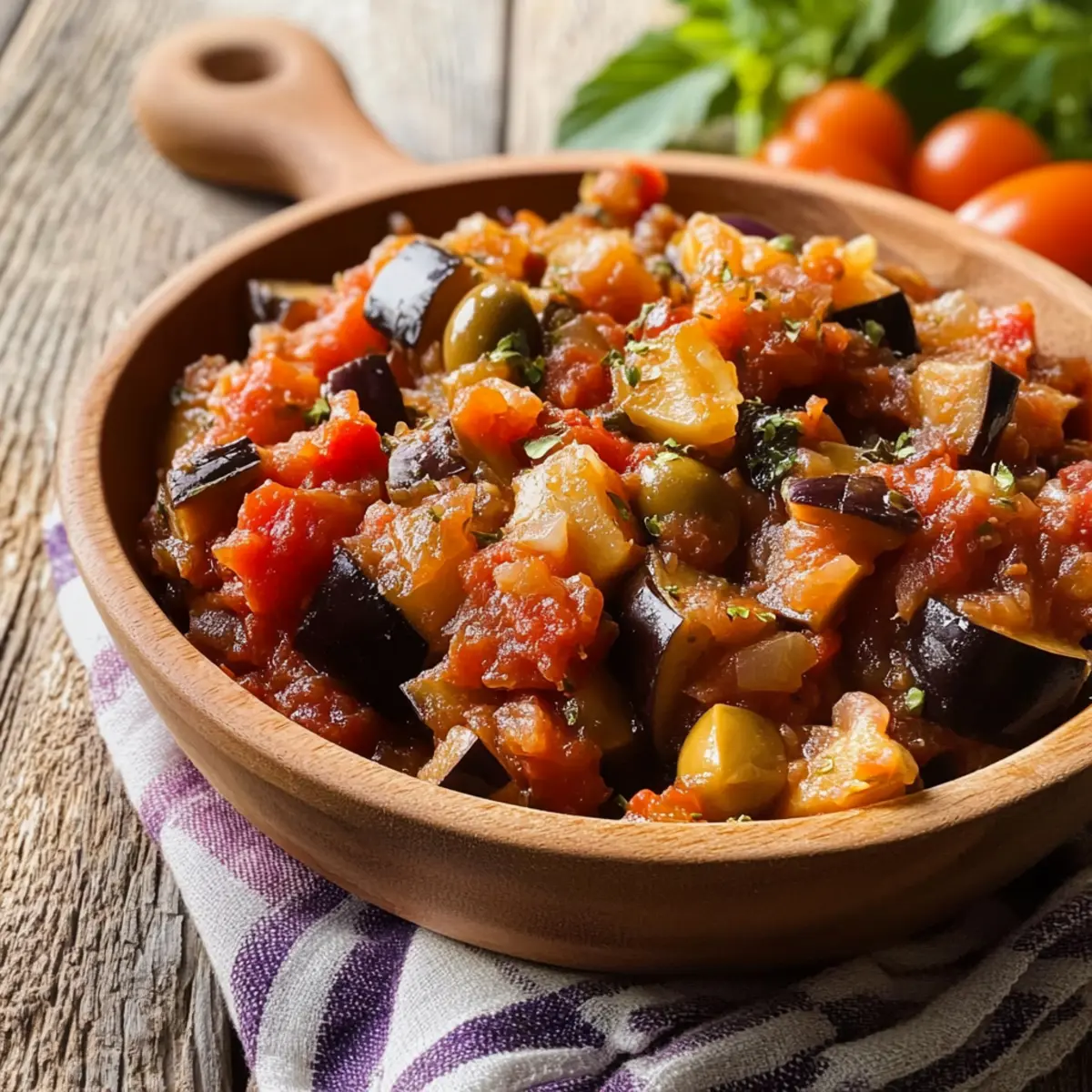
Why is Eggplant Caponata a must-try?
Vibrant flavors: This Sicilian dish showcases a delightful blend of vegetables, creating a burst of tangy goodness in every bite.
Quick to prepare: With minimal cooking time and easy steps, you’ll have a hearty dish ready in no time.
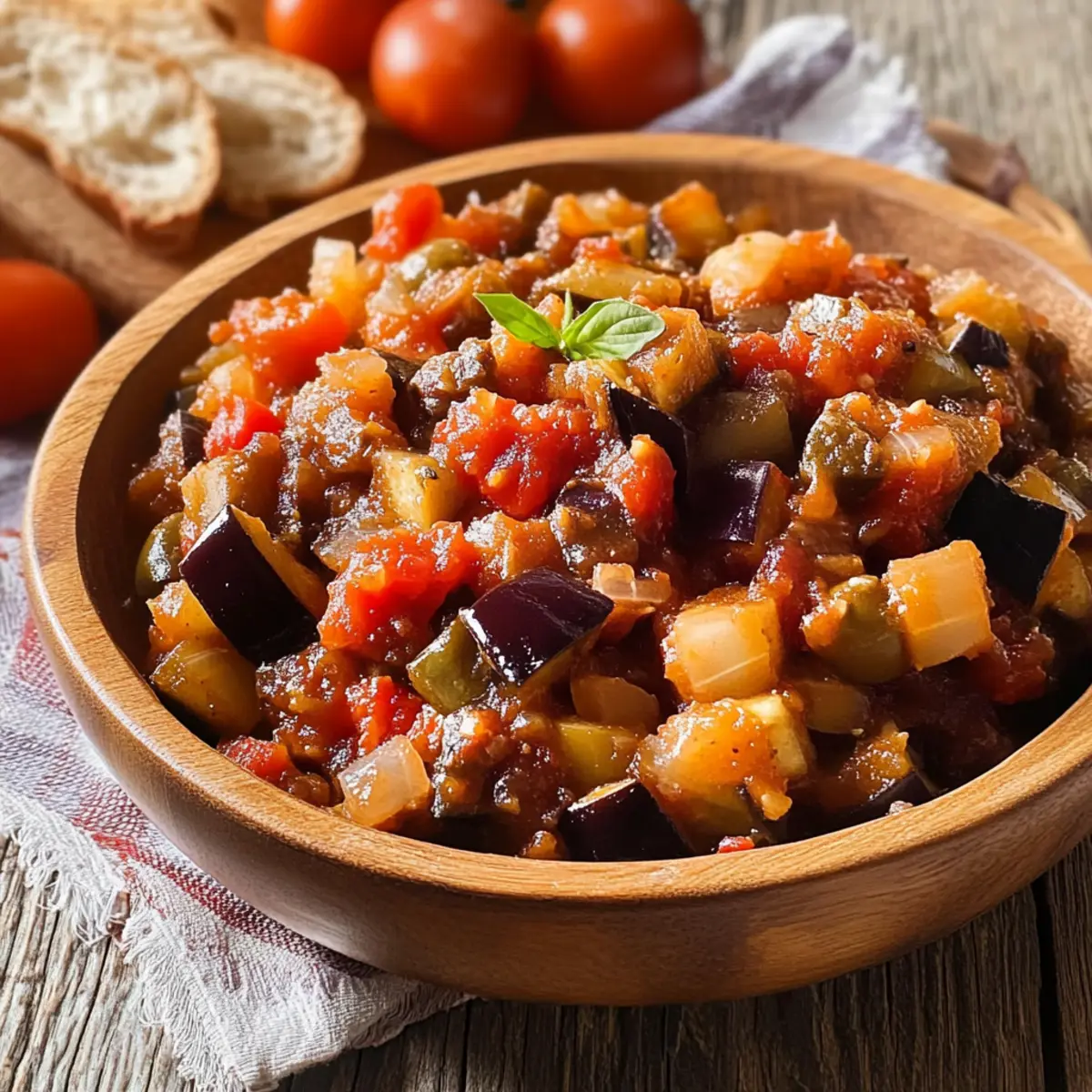
Versatile serving options: Enjoy it as a spread on crusty bread, over pasta, or as a colorful addition to a charcuterie board.
Diet-friendly: Naturally plant-based, dairy-free, and gluten-free, it caters to various dietary needs without sacrificing flavor.
Crowd-pleaser: Perfect for gatherings or family dinners, this relish is guaranteed to impress even the pickiest of eaters. Experience this Eggplant Caponata and elevate your next meal!
Eggplant Caponata Ingredients
For the Base
• Olive Oil – Adds fat and flavor; any neutral oil can work, but fruity oils like avocado are delightful.
• Chopped Celery – Introduces crunch and flavor; substitute with bell peppers for a sweeter twist.
• Chopped Onion – Provides sweetness and depth; shallots can yield a milder taste.
• Garlic (minced) – Elevates aroma and umami; fresh is best, but garlic powder is a useful substitute.
• Medium Eggplant (unpeeled, diced) – The star ingredient for texture and bulk; zucchini can be used, though the taste will vary.
For the Sauce
• Canned Whole Tomatoes (partially drained) – Adds moisture and acidity; fresh tomatoes are a seasonal alternative.
• Sliced Pitted Olives (green or black) – Brings brininess; capers work well for a tangy back note.
• Red Wine Vinegar – Balances with acidity; apple cider vinegar is a great substitute.
• Tomato Paste – Intensifies the tomato flavor and thickens the relish; it’s essential for authenticity.
• Chopped Capers – Contributes a sharp, briny element; omit for mildness or replace with more olives.
For the Finish
• Fresh Basil (chopped or dried) – Infuses herbal freshness; oregano can be an alternative if basil isn’t available.
• Dash of Sugar – Balances out acidity; consider alternatives like maple syrup or honey for sweetness.
• Salt and Black Pepper – Essential for enhancing flavor; adjust to your personal preference.
Step‑by‑Step Instructions for Eggplant Caponata
Step 1: Preheat the Skillet
Begin by heating a large skillet over medium-high heat. Add 2 tablespoons of olive oil to the skillet, allowing it to shimmer for about 1 minute. This step ensures the oil is hot enough to sauté the vegetables, creating a fragrant base for your Eggplant Caponata.
Step 2: Sauté Vegetables
Add the chopped celery, onion, and minced garlic to the skillet. Sauté these aromatic ingredients for about 3 minutes until they soften and become translucent. Stir frequently to prevent sticking, releasing a delightful aroma that fills your kitchen and sets the stage for the caponata.
Step 3: Cook the Eggplant
Incorporate the diced eggplant into the skillet, stirring well to combine with the sautéed vegetables. Cook for an additional 5-7 minutes, allowing the eggplant to become lightly browned and tender. You’ll know it’s ready when it starts to soften, adding a rich texture to your Eggplant Caponata.
Step 4: Add Tomatoes and Flavorings
Reduce the heat to medium, then mix in the partially drained canned tomatoes, sliced olives, red wine vinegar, and tomato paste. Stir in the chopped capers, fresh basil, and a dash of sugar to balance the flavors. Cook for about 2-3 minutes until everything is well combined and bubbling gently.
Step 5: Simmer the Caponata
Cover the skillet and let the mixture simmer for 15-20 minutes, stirring occasionally. As the caponata cooks, the eggplant should become tender and the flavors meld beautifully. You’ll notice the mixture thickening slightly and becoming aromatic, which is a great sign that it’s coming together.
Step 6: Season and Serve
Once the eggplant is tender, season your Eggplant Caponata with salt and black pepper to taste. Remove from heat and allow the dish to cool to room temperature. Serve it as a tasty spread on crusty bread or a delightful topping for pasta, enjoying the rich, tangy flavors that have developed during cooking.
How to Store and Freeze Eggplant Caponata
Fridge: Store leftover Eggplant Caponata in an airtight container for up to 3 days. It’s perfect for meals on-the-go or as a tasty addition to your lunchbox.
Freezer: For longer storage, freeze the caponata in freezer-safe containers for up to 3 months. Thaw in the fridge overnight before reheating.
Reheating: Gently reheat on the stovetop over low heat, stirring occasionally until warm. Avoid microwaving to preserve texture and flavor.
Make-Ahead: Preparing Eggplant Caponata a day or two in advance allows the flavors to meld beautifully, enhancing the overall taste when served.
What to Serve with Eggplant Caponata
The delightful flavors of this Sicilian relish create endless possibilities for pairing, transforming your meal into a culinary experience.
-
Crusty Baguette:
The perfect vessel to scoop up the caponata, offering a satisfying crunch that complements its rich, tangy notes. -
Pasta Primavera:
Tossed with seasonal vegetables, this pasta dish balances the hearty texture of caponata while adding an extra layer of freshness. Enjoy with a sprinkle of parmesan for added depth. -
Grilled Zucchini:
Lightly charred and drizzled with olive oil, grilled zucchini adds a smoky flavor that pairs beautifully with the robust taste of the caponata. -
Quinoa Salad:
This nutty, protein-packed side adds a refreshing touch, while the textures of quinoa mixed with crisp veggies create an inviting contrast to the relish. -
Olive Tapenade:
A spread combining olives and capers creates a Mediterranean vibe, perfect for snacking alongside your eggplant dish during a laid-back gathering with friends. -
Herbed Couscous:
Fluffy and fragrant, herbal couscous works wonderfully to soak up the caponata’s sauce, while its lightness provides a delightful counterpoint to the richness. -
White Wine Spritzer:
Refreshing and light, this drink brings a bubbly element to your meal, cleansing the palate and enhancing the flavors of the caponata. -
Pistachio Baklava:
Bringing a touch of sweetness to the table, this layered dessert contrasts the tangy relish and rounds out the meal with its flaky texture and nutty taste.
These Pairings are sure to impress at your next gathering or cozy dinner!
Expert Tips for Eggplant Caponata
- Choose Fresh Eggplant: Opt for firm and unblemished eggplant to ensure the best texture and flavor in your Eggplant Caponata.
- Keep It Stirred: Remember to stir occasionally while simmering to prevent any sticking or burning at the bottom of the skillet.
- Serve Warm or Room Temp: Enjoy your caponata at room temperature for enhanced flavor, as chilling can dull the taste.
- Flavor Boosters: Experiment with herbs or spices like red pepper flakes for a kick or extra garlic for added depth.
- Storage Tips: Store leftovers in an airtight container in the fridge for up to 3 days; flavors improve after sitting.
Make Ahead Options
Eggplant Caponata is perfect for busy home cooks looking to save time on meal prep! You can prepare the entire dish up to 3 days in advance; the flavors actually improve as it sits. Simply follow the cooking instructions, then allow your caponata to cool to room temperature before transferring it to an airtight container. Store it in the refrigerator, where it will hold its quality wonderfully. When you’re ready to serve, simply take it out and let it reach room temperature or gently reheat it on the stovetop. By prepping this Eggplant Caponata ahead of time, you’ll have a vibrant, delicious relish ready for any occasion, making your meal planning effortless!
Eggplant Caponata Variations & Substitutions
Customize your Eggplant Caponata to suit your taste or dietary needs with these delightful variations that encourage culinary creativity!
-
Vegetable Swap: Replace diced eggplant with zucchini for a lighter flavor or bell peppers for a sweeter twist. Each brings a unique taste to the dish!
-
Protein Boost: Add chickpeas for a heartier texture and additional protein. They blend beautifully, making the caponata even more satisfying!
-
Flavor Upgrade: Introduce red pepper flakes for a gentle kick. A sprinkle can elevate your caponata to a new level of enjoyment.
-
Basil Alternatives: If fresh basil is out of reach, use oregano or even thyme for a unique herbal touch. Both herbs will complement the dish beautifully.
-
Olive Substitutions: Swap out olives for capers or try sun-dried tomatoes for a tangy punch that adds depth to the caponata.
-
Sweetness Balance: If you’re out of sugar, consider maple syrup or agave nectar as natural sweeteners to help balance acidity.
-
Serving Styles: Enjoy this caponata over flatbread or as a vibrant topping for grilled fish to give it a refreshing Mediterranean flair.
For a delicious way to use up leftovers, consider tossing this eggplant caponata with your favorite pasta or serving it as part of a festive platter alongside a selection of garlic herb crackers. Discover more about versatile serving suggestions in our Serving Suggestions section!
Eggplant Caponata Recipe FAQs
How do I select the best eggplant for Caponata?
Absolutely! When choosing an eggplant, look for ones that are firm, smooth, and shiny, without any dark spots or blemishes. The skin should have a rich purple color, which indicates freshness. Smaller eggplants tend to be sweeter and less bitter, making them a fantastic choice for your Eggplant Caponata.
How should I store leftover Eggplant Caponata?
To store your Eggplant Caponata, simply place it in an airtight container and refrigerate it for up to 3 days. If you find yourself with a bit more than you can eat right away, don’t worry! This dish tastes even better the next day as the flavors meld together.
Can I freeze Eggplant Caponata?
Yes, you can! For freezing, pour your cooled Eggplant Caponata into freezer-safe containers. It will maintain its quality for up to 3 months. When you’re ready to enjoy it again, simply thaw it in the refrigerator overnight and gently reheat it on the stovetop over low heat, stirring occasionally to keep the texture nice.
What should I do if my Eggplant Caponata is too bitter?
If you encounter bitterness in your Eggplant Caponata, it might be due to not salting the eggplant before cooking. To avoid this in the future, salt the diced eggplant and let it sit for about 30 minutes. Then, rinse and pat dry before adding it to your recipe. This will help draw out excess moisture and bitterness while improving the overall flavor!
Is this Eggplant Caponata recipe suitable for those with dietary allergies?
Very! This Eggplant Caponata is naturally plant-based, dairy-free, gluten-free, and can easily be made allergy-friendly. If you’re concerned about specific allergies, be mindful to check the labels on canned ingredients like tomatoes or olives and select options free from allergens. Always feel free to substitute with your favorite ingredients to suit your needs!
Can I make Eggplant Caponata ahead of time?
Yes, making your Eggplant Caponata a day in advance is a great idea! Not only will it save you time during meal preparation, but it also allows the flavors to meld beautifully. Just store it in an airtight container in the refrigerator, and it should be ready to serve at a moment’s notice, tasting even more savory and delicious!
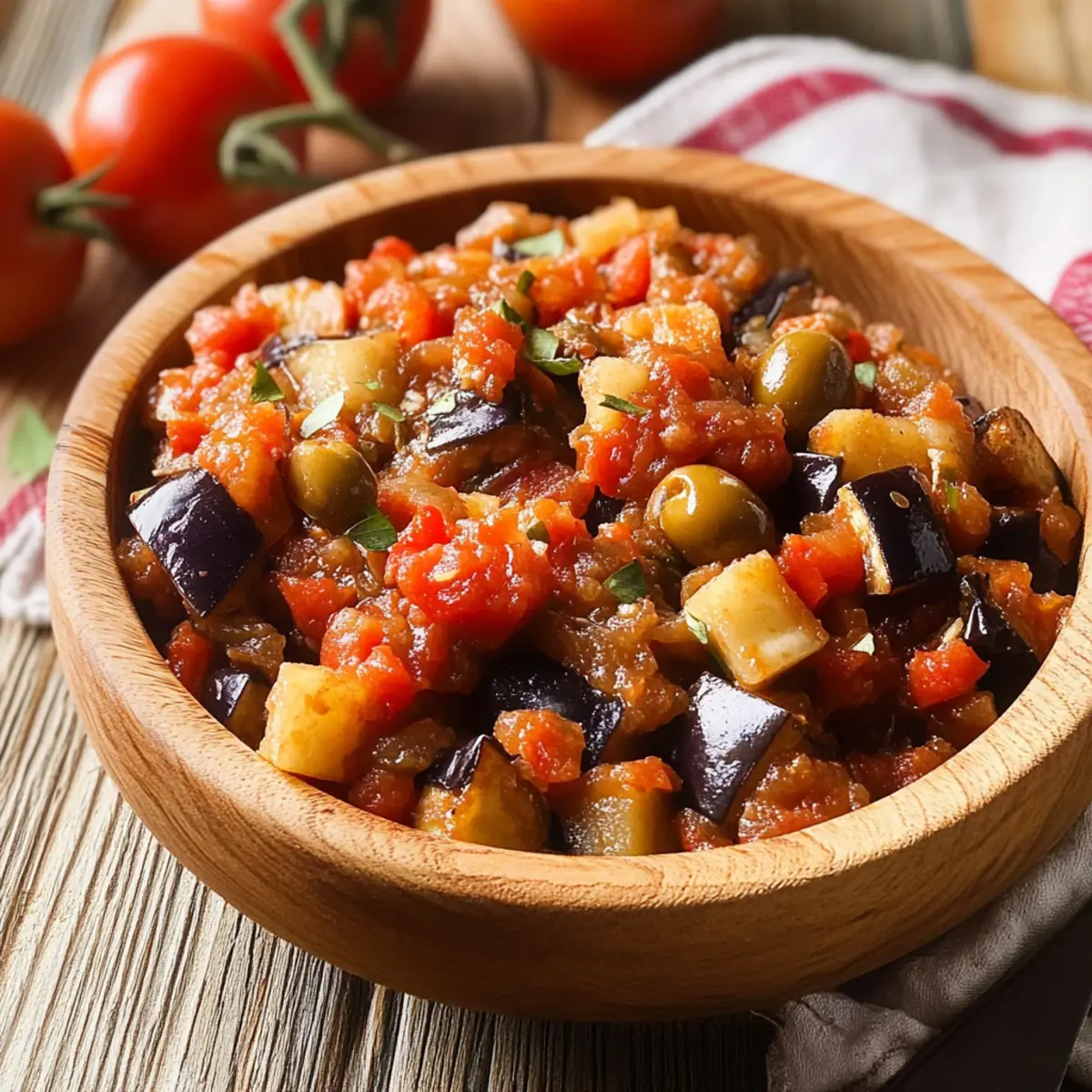
Eggplant Caponata: Dive Into This Vibrant Mediterranean Relish
Ingredients
Equipment
Method
- Preheat a large skillet over medium-high heat. Add 2 tablespoons of olive oil and let it shimmer for about 1 minute.
- Add chopped celery, onion, and minced garlic to the skillet. Sauté for about 3 minutes until softened and translucent.
- Incorporate diced eggplant into the skillet and stir well. Cook for an additional 5-7 minutes until lightly browned and tender.
- Reduce heat to medium, mix in the partially drained canned tomatoes, sliced olives, red wine vinegar, and tomato paste. Stir in chopped capers, fresh basil, and a dash of sugar.
- Cover and let the mixture simmer for 15-20 minutes, stirring occasionally until everything is well combined.
- Season with salt and black pepper to taste, then allow to cool to room temperature before serving.