The aroma of roasted salmon mingling with bright lemon and earthy dill has never felt so invigorating. As I prepared my Mediterranean Salmon Bowl, memories of sun-soaked afternoons along the coast of the Mediterranean flooded my mind. This dish is not only a feast for the senses but a wholesome and quick option for busy weeknights, taking just 45 minutes from start to finish. Imagine flaky salmon resting atop fluffy pearl couscous, surrounded by crunchy vegetables, all generously drizzled with a creamy dill sauce. It strikes the perfect balance between being a hearty meal and a refreshing, healthy choice. Whether you’re looking to impress guests or simply craving a nourishing bowl of goodness, this Mediterranean Salmon Bowl is your answer. Ready to dive into the recipe and elevate your dinner game?
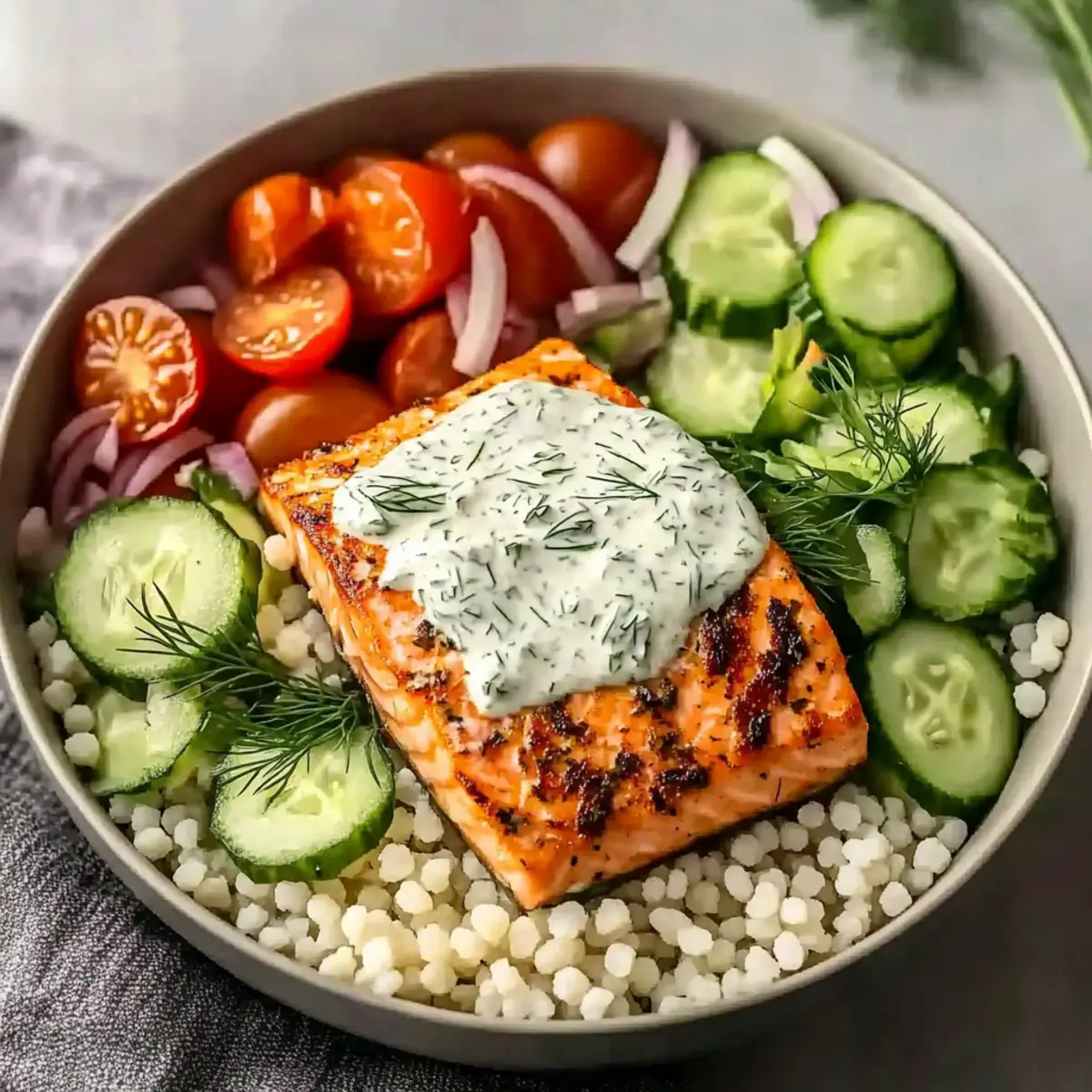
Why is this Mediterranean Salmon Bowl special?
Healthy, Wholesome Ingredients: This Mediterranean Salmon Bowl showcases fresh, vibrant components that nourish and satisfy. Each bite is packed with omega-3s and essential vitamins, making it a guilt-free pleasure.
Quick and Easy Prep: With a total cook time of just 45 minutes, this dish is perfect for busy weeknights or weekend gatherings. It’s a simple yet elegant meal that can easily fit into your schedule.
Versatile and Customizable: Whether you’re gluten-free or looking to add extra veggies, substitutions like quinoa or bell peppers offer endless possibilities.
Bright, Lively Flavors: The combination of zesty lemon, aromatic herbs, and creamy dill sauce creates a symphony of flavors that will have everyone coming back for seconds!
Meal Prep Friendly: Cook the components in advance and assemble fresh when ready to enjoy. Perfect for lunchboxes or dinners! Incorporate this vibrant bowl into your routine like the popular Harvest Bowl Sweetgreen that’s known for its wholesome goodness.
Mediterranean Salmon Bowl Ingredients
For the Couscous Base
• Dry Israeli (Pearl) Couscous – Acts as the base grain providing texture; substitute quinoa for a gluten-free version.
• Olive Oil – Adds richness and enhances flavors during cooking.
• Salt – Enhances flavor throughout the dish.
For the Salmon
• Salmon Fillet – The protein source, providing omega-3 fatty acids; ensure it’s fresh for best results.
• Smoked Paprika – Adds depth and smokiness to the salmon.
• Black Pepper – A common seasoning that enhances overall flavor.
• Oregano – Provides an aromatic, herbal note that complements the Mediterranean theme.
• Lemon Juice – Brightens flavors and adds acidity; use fresh juice for optimal taste.
For the Creamy Dill Sauce
• Plain Greek Yogurt – Forms the creamy base for the sauce, adding protein and tanginess.
• Sour Cream – Contributes creaminess to the sauce; substitute with more yogurt for a lighter option.
• Mayonnaise – Adds richness to the sauce flavor; can be omitted or replaced with yogurt for lighter options.
• Dried Dill – Infuses the sauce with a fresh, herbaceous note.
• Salt – Used to season the sauce for balanced flavor.
• Black Pepper – Complements the sauce with a mild kick.
For the Fresh Vegetables
• Grape Tomatoes – Add freshness and a pop of color; halved for easy eating.
• English Cucumber – Provides crunch and hydration; diced for texture.
• Red Onion – Adds sharpness and crunch; chopped for even distribution.
• Arugula – A peppery green that serves as a bed for the bowl, enhancing overall flavor.
For the Drizzle
• Olive Oil, Red Wine Vinegar, Salt, and Pepper – Enhances the fresh vegetables with a zesty touch.
• Lemon Wedges (for garnish) – Adds a zesty touch when served.
Dive into this delightful Mediterranean Salmon Bowl and experience both the taste and health benefits of each ingredient!
Step‑by‑Step Instructions for Mediterranean Salmon Bowl
Step 1: Cook the Couscous
Bring 3 cups of water to a rolling boil in a medium saucepan. Add 1.5 cups of dry Israeli (pearl) couscous, 1 tablespoon of olive oil, and 0.5 teaspoon of salt. Reduce the heat and cover, letting it simmer for 20 minutes until the water is absorbed. After simmering, fluff the couscous with a fork and let it sit, covered, for 5 minutes to steam.
Step 2: Prepare the Salmon
Preheat the oven to 350°F (175°C). Pat your salmon fillet dry with a paper towel and place it on a baking sheet lined with parchment paper. Drizzle 2 tablespoons of olive oil on top, then season with 2 teaspoons of smoked paprika, 1 teaspoon of salt, 0.5 teaspoon of black pepper, and 0.5 tablespoon of oregano. Bake the salmon for 13–16 minutes until it’s flaky and cooked through, finishing with a squeeze of fresh lemon juice.
Step 3: Make the Creamy Dill Sauce
In a mixing bowl, whisk together 0.5 lemon juice, 0.75 cup of plain Greek yogurt, 0.25 cup of sour cream, and 0.25 cup of mayonnaise. Add 2 teaspoons of dried dill, 0.5 teaspoon of salt, and 0.5 teaspoon of black pepper for flavor. Mix until the sauce is smooth and creamy. Refrigerate it until you’re ready to assemble the Mediterranean Salmon Bowl, allowing the flavors to meld beautifully.
Step 4: Prepare the Fresh Vegetables
While the salmon bakes, wash and prepare the vegetables. Halve 1 pint of grape tomatoes, dice 1 cucumber for crunch, and chop 0.25 cup of red onion to add sharpness. In a bowl, lightly drizzle with olive oil, red wine vinegar, salt, and pepper, tossing gently to coat. This seasoning will enhance the freshness of your vegetables in the Mediterranean Salmon Bowl.
Step 5: Assemble the Bowls
Start building your Mediterranean Salmon Bowl by layering the fluffy couscous at the bottom, followed by a generous handful of arugula for added flavor and texture. Carefully place the baked salmon on top, then add a dollop of the creamy dill sauce. Finally, scatter your seasoned tomatoes, cucumber, and onion around the bowl, creating a vibrant, colorful meal.
Step 6: Serve and Garnish
Before serving, drizzle the assembled Mediterranean Salmon Bowl with a bit more olive oil and red wine vinegar for extra flavor. Garnish each bowl with lemon wedges, providing a fresh zesty touch. Serve immediately to enjoy the harmony of flavors and textures, ensuring a delightful dining experience.
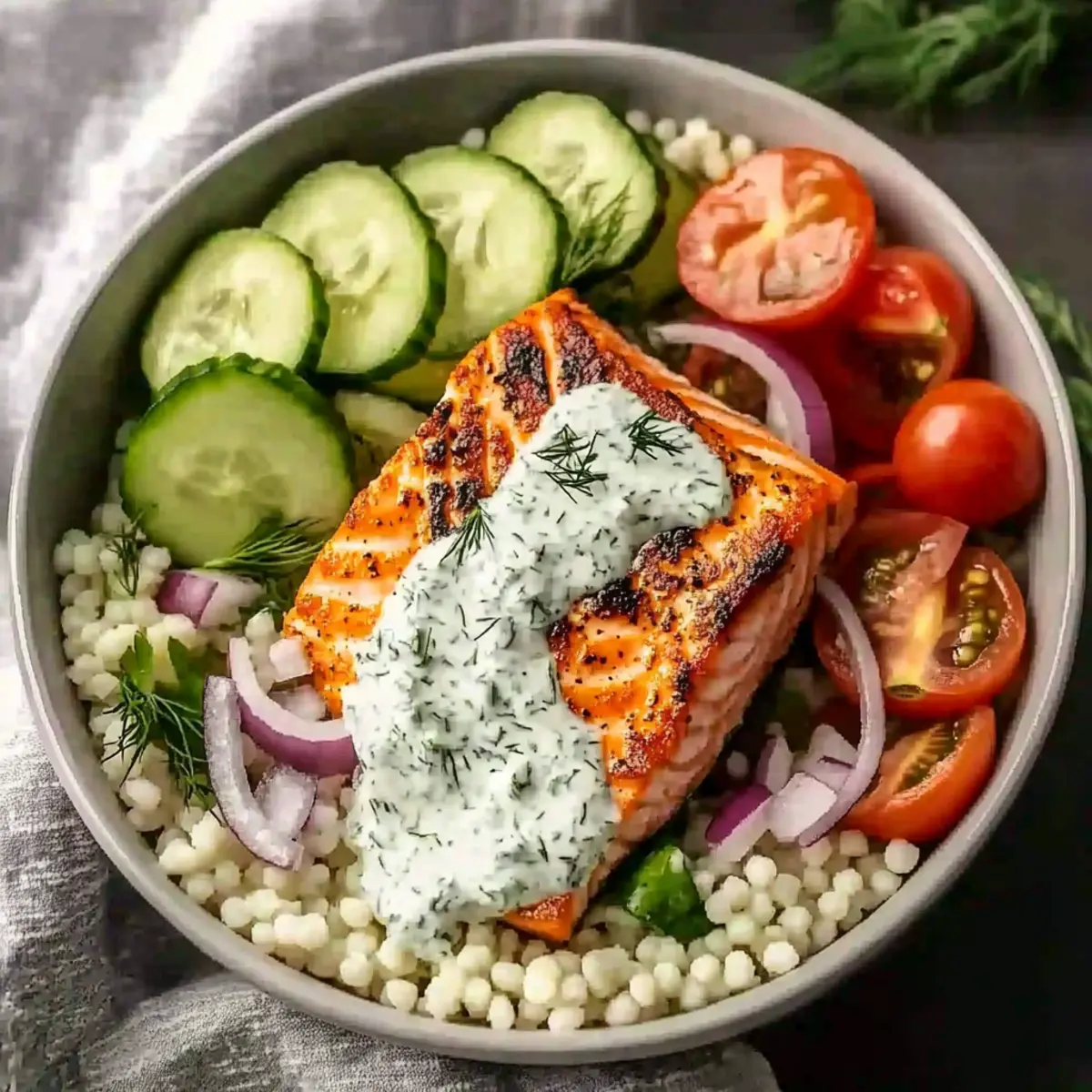
Expert Tips for the Best Mediterranean Salmon Bowl
-
Fresh Salmon: Ensure you start with the freshest salmon available; frozen can work but opt for fresh for the best flavor and texture.
-
Perfectly Cooked Couscous: Avoid mushiness by fluffing the couscous after it steams. Use a fork to separate grains and keep its light texture.
-
Creamy Sauce Adjustments: Customize your creamy dill sauce by adding fresh herbs or spices to elevate its flavor; consider garlic or a hint of lemon zest.
-
Vegetable Preparation: To keep your veggies crisp, wait to dress them until just before serving. This helps prevent sogginess in your Mediterranean Salmon Bowl.
-
Meal Prep-Friendly: Cook the salmon and couscous in advance. Assemble your bowl fresh before mealtime to ensure everything stays vibrant and flavorful.
-
Zesty Finish: Don’t forget the lemon wedges for a citrusy pop right before you dig in; they enhance the dish’s brightness beautifully!
Make Ahead Options
These Mediterranean Salmon Bowls are perfect for meal prep, saving you time during busy weeknights! You can cook the couscous and salmon up to 3 days in advance; simply store them in airtight containers in the refrigerator. The creamy dill sauce can also be prepared ahead and refrigerated, allowing the flavors to deepen. When you’re ready to serve, just reheat the salmon gently in the oven or microwave, and assemble the bowl fresh with the arugula and vegetables to maintain their crunch. Drizzle with the dressing just before serving to keep everything vibrant and delicious. Enjoy your stress-free, nourishing meal!
What to Serve with Mediterranean Salmon Bowl
Elevate your Mediterranean Salmon Bowl experience with these delightful side dishes that bring a symphony of flavors to your table.
- Creamy Mashed Potatoes: Their buttery richness complements the salmon perfectly, providing a comforting contrast to the vibrant flavors.
- Herbed Quinoa Salad: A light and fluffy salad full of fresh herbs and diced veggies adds a refreshing touch to balance the meal. Tossed with lemon vinaigrette, it brightens every bite.
- Roasted Asparagus: The smoky, charred notes of roasted asparagus pair beautifully with the fish, enhancing the bowl’s Mediterranean vibe. Its crisp texture brings a wonderful crunch.
- Greek Tzatziki Dip: Serve this cool and creamy dip alongside pita chips or as an accompaniment for the salmon. Its refreshing yogurt and cucumber notes highlight the dish’s flavors wonderfully.
- Citrus and Feta Salad: A fragrant mix of citrus segments, crunchy greens, and tangy feta brings brightness and lift, enhancing the salmon’s richness in every forkful.
- Soft-Crusted Bread: Offer warm, crusty bread on the side to soak up any remaining creamy dill sauce. Each bite fosters indulgence while the bread’s texture adds satisfying variety.
- Lemonade or Sparkling Water: A bright, zesty lemonade or refreshing sparkling water with a hint of mint provides a delightful thirst-quencher to complement your meal.
- Chilled White Wine: A crisp Sauvignon Blanc or a light Pinot Grigio adds sophistication and pairs well with the tastes of the Mediterranean for an elevated dining experience.
Mediterranean Salmon Bowl Variations
Embrace your creativity and make this Mediterranean Salmon Bowl your own with delightful twists!
-
Gluten-Free: Substitute couscous with quinoa or rice for a gluten-free option that still brings great texture. Quinoa’s nutty flavor pairs wonderfully with the dish.
-
Dairy-Free: Use avocado instead of sour cream and mayonnaise in the sauce for a creamy texture without dairy. You’ll still enjoy that rich creaminess while keeping it light!
-
Extra Veggies: Add colorful bell peppers, olives, or zucchini for a more vibrant bowl bursting with nutrients. The added crunch will elevate your meal to new heights.
-
Spice It Up: For a kick, incorporate red pepper flakes or a drizzle of harissa in the creamy sauce. This adds not just heat but a depth of flavor that will excite your taste buds.
-
Herb Boost: Replace dried dill with fresh herbs like parsley or cilantro for a lively twist. Fresh herbs bring brightness and an aromatic touch to the dish.
-
Citrusy Kick: Mix in some capers or a splash of orange juice for a zesty twist on the traditional flavors. This unexpected zing will create a refreshing contrast.
-
Protein Swap: Instead of salmon, try grilled chicken or shrimp for a change of pace. Each protein brings its own unique flavor profile while keeping the meal high in protein.
-
Meal Prep Mastery: Assemble the components in mason jars for easy grab-and-go meals throughout the week! This makes it super convenient to enjoy your Mediterranean Salmon Bowl anytime.
Feel inspired? Each variation invites you to explore new flavors, just like the beloved Harvest Bowl Sweetgreen—a hearty staple that’s as versatile!
How to Store and Freeze Mediterranean Salmon Bowl
- Room Temperature: Best enjoyed fresh. If necessary, keep out for no more than 2 hours to avoid food safety issues.
- Fridge: Store leftover components separately in airtight containers for up to 3 days to maintain freshness and prevent sogginess.
- Freezer: You can freeze cooked salmon and couscous for up to 2 months. Thaw in the fridge overnight before reheating.
- Reheating: Gently reheat salmon and couscous in the microwave or an oven preheated to 350°F (175°C) until warmed through, then assemble with fresh vegetables and sauce.
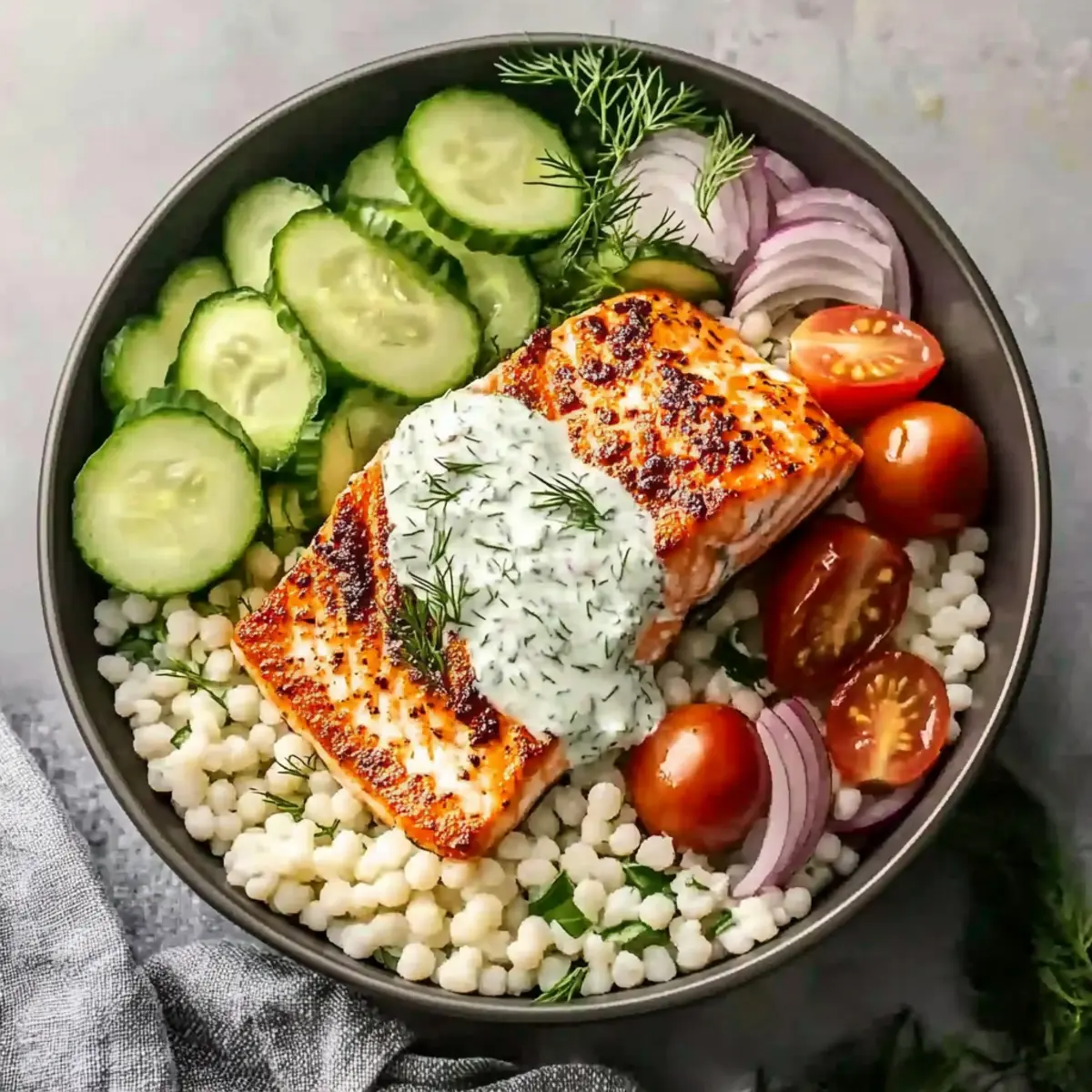
Mediterranean Salmon Bowl Recipe FAQs
How do I select ripe ingredients for my Mediterranean Salmon Bowl?
Absolutely! When choosing salmon, look for vibrant, moist fillets with a fresh, ocean-like smell—avoid any that show dark spots or are overly sticky. For vegetables, opt for firm and bright grape tomatoes, and pick cucumbers that have a smooth skin without blemishes.
How should I store the Mediterranean Salmon Bowl leftovers?
Very! To keep your Mediterranean Salmon Bowl fresh, store the components in separate airtight containers in the fridge. It will last for up to 3 days. Just make sure to keep the sauce and veggies apart from the salmon and couscous until you’re ready to enjoy it again!
Can I freeze the components of the Mediterranean Salmon Bowl?
Of course! To freeze, portion out the cooked salmon and couscous in airtight containers or freezer bags for up to 2 months. When you’re ready to eat, thaw in the fridge overnight, reheat gently, and add your fresh vegetables and sauce just before serving for the best texture.
What should I do if my salmon doesn’t cook evenly?
Sometimes, uneven cooking can happen. If the salmon skin is too thick or it has a larger fillet, make sure to adjust baking time slightly. If parts start to flake but others are undercooked, use a fork to gently pull apart the thicker areas and return them to the oven for a couple more minutes. Always check for a final internal temperature of 145°F for safety!
Can this Mediterranean Salmon Bowl be made gluten-free?
Absolutely! If you’re looking for a gluten-free option, simply swap the dry Israeli (pearl) couscous with quinoa or brown rice. Both will maintain the bowl’s satisfying texture while catering to dietary needs. This way, everyone can enjoy it!
Are there any allergenic ingredients in the Mediterranean Salmon Bowl?
It’s wise to check! Greek yogurt and mayonnaise might be triggers for those with dairy allergies. You can replace these with dairy-free yogurt alternatives to make the creamy dill sauce. Enjoy customizing this dish to fit your dietary preferences!
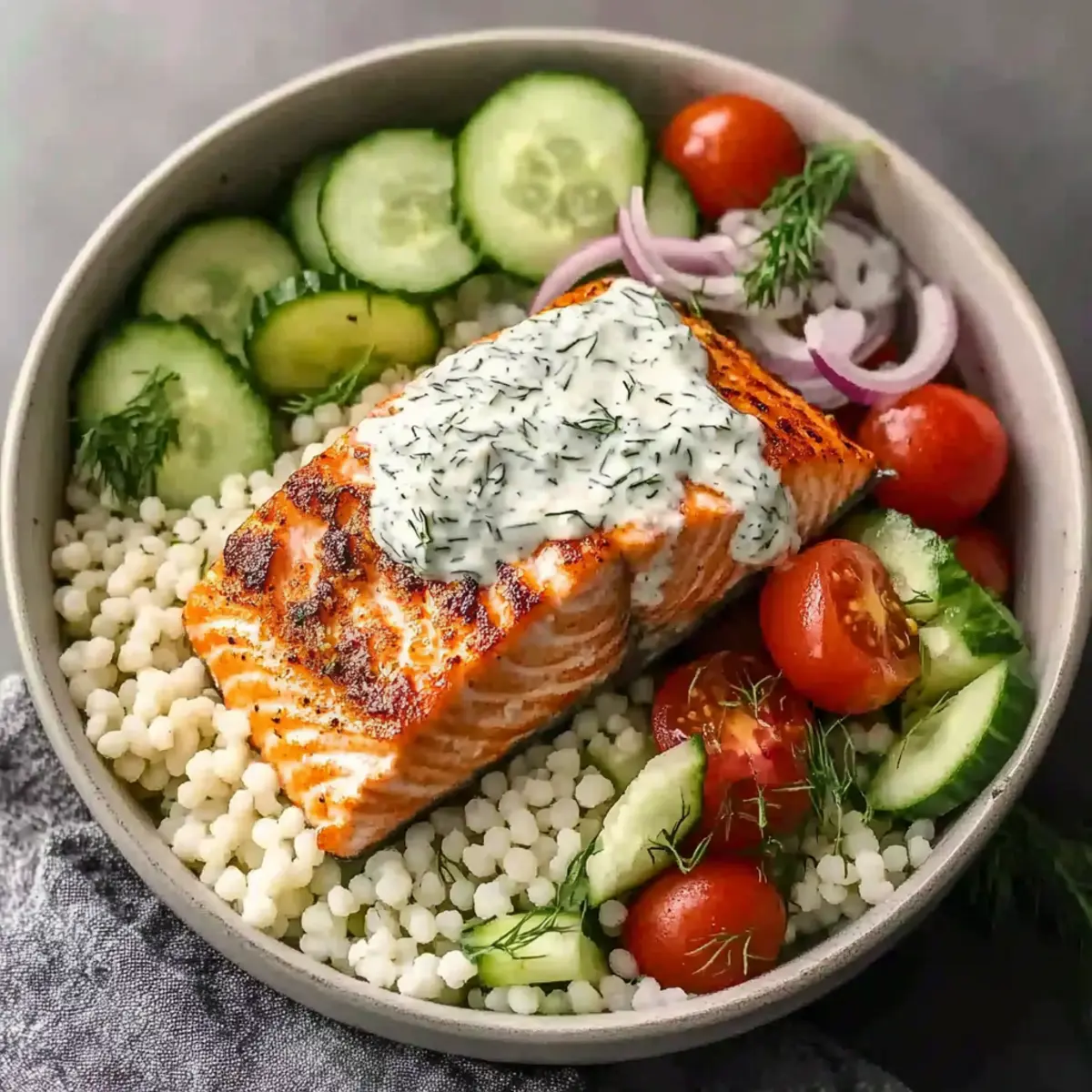
Mediterranean Salmon Bowl: A Flavorful Healthy Delight
Ingredients
Equipment
Method
- Cook the couscous by boiling 3 cups of water, adding 1.5 cups of couscous, 1 tablespoon of olive oil, and 0.5 teaspoon of salt. Simmer for 20 minutes, fluff and let sit covered for 5 minutes.
- Preheat the oven to 350°F. Prepare the salmon on a baking sheet, drizzling with olive oil and seasoning with spices. Bake for 13-16 minutes.
- Make the creamy dill sauce by whisking together lemon juice, Greek yogurt, sour cream, mayonnaise, dill, salt, and pepper until smooth.
- Prepare the fresh vegetables by halving the tomatoes and dicing the cucumber. Toss with olive oil, red wine vinegar, salt, and pepper.
- Assemble the bowls by layering couscous, arugula, baked salmon, creamy dill sauce, and the seasoned vegetables.
- Serve the Mediterranean Salmon Bowl drizzled with additional olive oil and red wine vinegar, garnished with lemon wedges.