
As I stood in my kitchen, the aroma of garlic and zesty lemon filled the air, transporting me to sun-soaked Mediterranean shores. If you’re looking for a quick, elegant dish that turns weeknight dinners into something special, my 20-Minute Creamy Lemon Dill Salmon Pasta is just the answer. In only 20 minutes, you can whip up a delicious meal that features rich salmon in a dreamy, creamy sauce bursting with fresh dill. It’s not only a crowd-pleaser but also makes for a delightful romantic dinner at home. With the perfect blend of flavors and textures, I can’t wait for you to experience this dish that can elevate even the most ordinary evenings. Ready to dive into all that creaminess and zesty goodness?
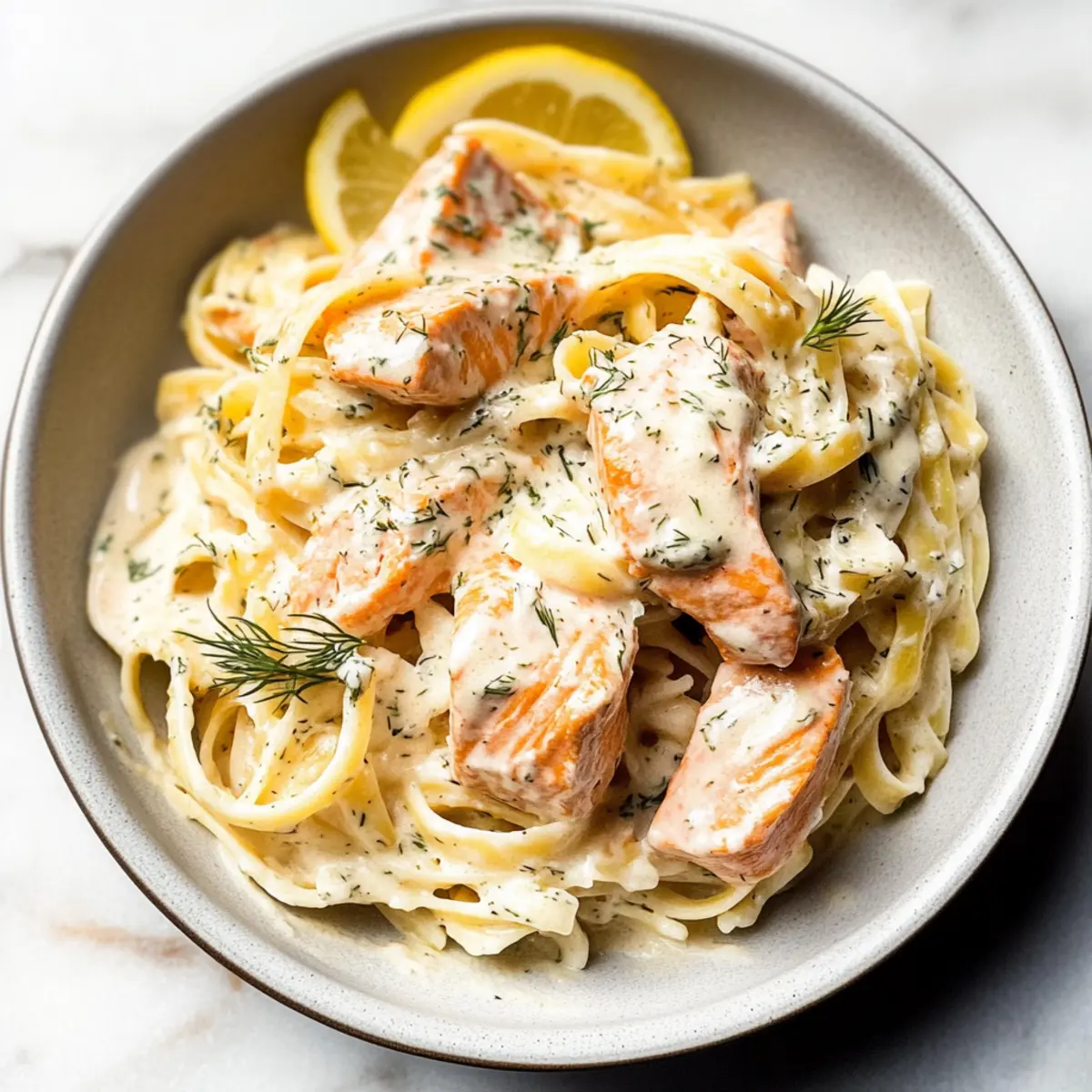
Why is Lemon Dill Salmon Pasta a Winner?
Speedy Preparation: This dish is a lifesaver for busy weeknights, coming together in just 20 minutes. Creamy Delight: The sauce, rich and zesty, elevates the flavors of fresh salmon to new heights. Versatile Substitutions: You can easily swap in different proteins or add veggies, making it perfect for everyone’s tastes. Crowd-Pleasing Appeal: It’s a fantastic dish for both romantic dinners and family gatherings. Fresh Ingredients: The vibrant lemon and dill pair beautifully, offering a taste of summer all year round. When you’re done here, don’t forget to check out my Clear Lemon Meringue for a refreshing dessert to complete your meal!
Lemon Dill Salmon Pasta Ingredients
• Create your delightful dish with these essentials:
For the Pasta
• Pasta – Use uncooked pasta of your choice for the perfect base of this lemon dill salmon pasta.
For the Salmon
• Salmon – Fresh is best for richness; canned can work in a pinch.
• Salt & Pepper – Essential for enhancing the overall flavor; adjust to taste.
• Flour – Helps create a crispy exterior when dredging the salmon before cooking.
For the Sauce
• Olive Oil & Butter – Adds flavor and prevents the salmon from sticking while searing.
• Chicken Broth or Dry White Wine – Provides depth to the creamy sauce; vegetable broth keeps it vegetarian-friendly.
• Lemon Juice – Brightens the dish, balancing the richness of the salmon.
• Garlic – Infuses the sauce with aromatic goodness.
• Heavy Whipping Cream – Creates a luscious creamy texture; non-dairy cream can lighten it up.
• Fresh Dill – The star herb for flavor; dried dill can be used in smaller amounts if needed.
For Garnishing
• Optional Garnish – Fresh parsley and parmesan cheese elevate both flavor and presentation.
Step‑by‑Step Instructions for Lemon Dill Salmon Pasta
Step 1: Boil the Pasta
Start by bringing a large pot of salted water to a rolling boil over high heat. Add your choice of uncooked pasta and cook it according to the package instructions until al dente, usually about 8-10 minutes. This will ensure that your pasta has the perfect bite, ready to soak up the creamy sauce of your lemon dill salmon pasta.
Step 2: Prepare the Salmon
While the pasta cooks, season fresh salmon fillets generously with salt and pepper. Lightly dredge each fillet in flour, coating both sides evenly to create a crispy crust when cooked. This preparation step is key to enhancing the flavor and texture of your lemon dill salmon pasta.
Step 3: Sear the Salmon
In a large skillet, heat 2 tablespoons of olive oil and 1 tablespoon of butter over medium-high heat until shimmering and hot. Carefully place the salmon fillets in the skillet and cook for about 2 minutes on each side, until they are golden brown and cooked through, with a slightly flaky texture. Remove the salmon from the skillet and set it aside on a plate.
Step 4: Create the Sauce
In the same skillet, reduce the heat to medium, adding 1 cup of chicken broth (or dry white wine) along with the juice of 1 lemon and 2 minced garlic cloves. Allow the mixture to bubble for about 30 seconds, scraping any flavorful bits off the bottom of the pan. The mixture should be fragrant and begin to reduce slightly.
Step 5: Combine to Form Creamy Sauce
Lower the heat even more and stir in 1 cup of heavy whipping cream and 2 tablespoons of freshly chopped dill. As the cream warms, return the cooked salmon to the skillet, breaking it into bite-sized pieces. Cook gently until the sauce thickens slightly, becoming rich and creamy, which usually takes about 2-3 minutes.
Step 6: Toss the Pasta
Once the pasta reaches the perfect tenderness, drain it and add directly to the skillet with the creamy lemon dill sauce. Use tongs to toss everything together, ensuring that the pasta is thoroughly coated with the sauce and flakes of salmon are well distributed. This is the moment your lemon dill salmon pasta transforms into a beautiful dish.
Step 7: Serve and Garnish
Dish out generous portions of the creamy pasta into warm bowls, and if desired, garnish with freshly chopped parsley and a sprinkle of parmesan cheese for an extra layer of flavor. Serve immediately to enjoy the delightful combination of flavors and textures, showcasing your homemade lemon dill salmon pasta!
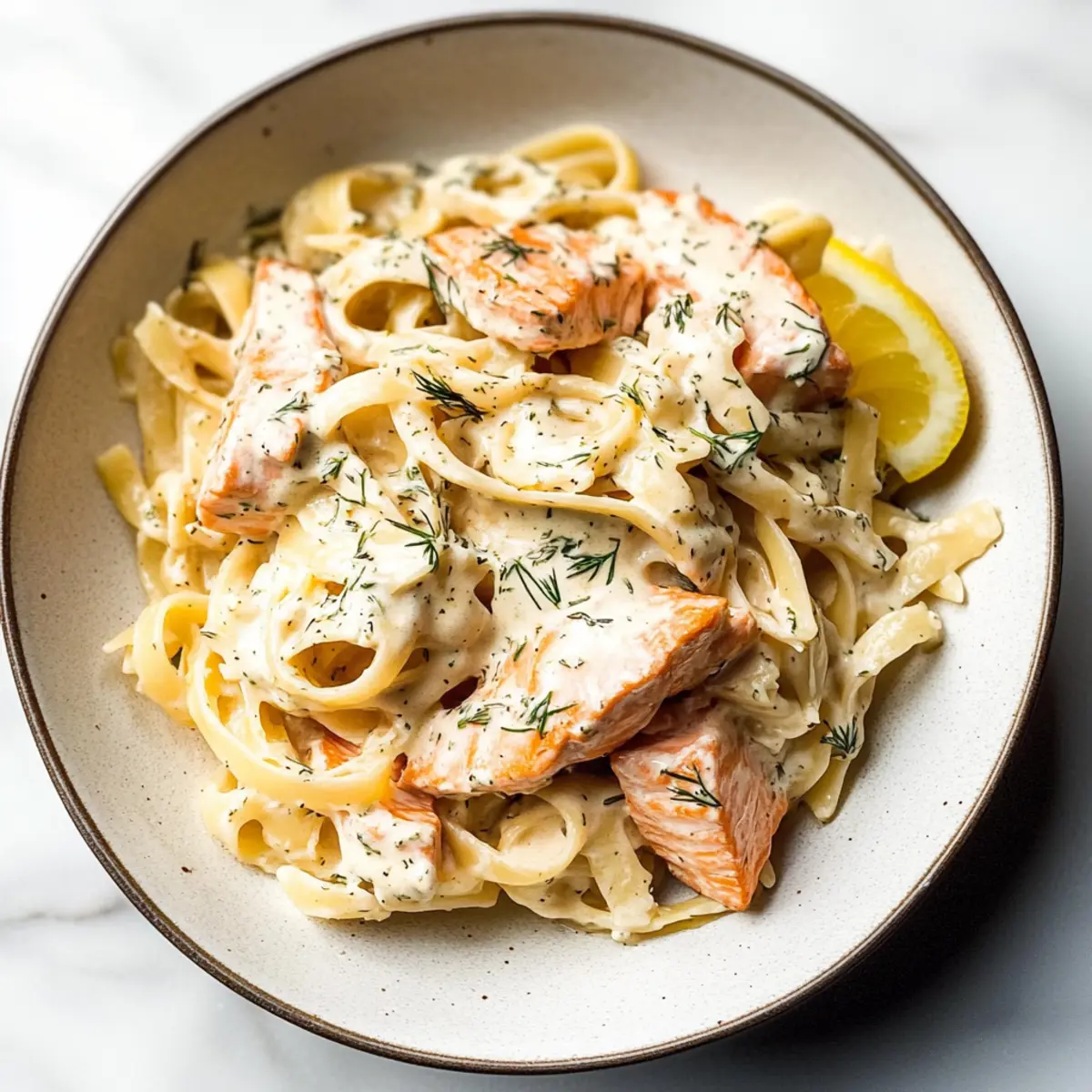
Storage Tips for Lemon Dill Salmon Pasta
- Fridge: Keep leftovers in an airtight container to maintain freshness; they’ll last up to 2 days. Reheat gently on the stovetop or in the microwave, ensuring the salmon stays tender.
- Freezer: For longer storage, place the pasta in a freezer-safe container, separating it into portions. It can be frozen for up to 2 months but may lose some creaminess upon reheating.
- Reheating: When ready to eat, thaw in the refrigerator overnight before reheating. Add a splash of broth or cream to revitalize the sauce and enhance the flavors of your lemon dill salmon pasta.
- Avoid Room Temperature: Do not leave leftovers at room temperature for more than 2 hours to ensure food safety and quality.
Lemon Dill Salmon Pasta Variations
Feel free to make this dish your own by trying out these delightful twists!
-
Seafood Swap: Replace salmon with shrimp or cod for a different seafood flair. Both options cook quickly and add their unique tastes to the creamy sauce.
-
Vegetable Boost: Add fresh spinach or asparagus to enhance the nutritional value and color of the dish. Sauté the veggies just before adding the sauce for a vibrant touch.
-
Lighten Up: For a lighter meal, substitute the heavy cream with Greek yogurt or a plant-based cream alternative. This keeps the creaminess while reducing calories.
-
Herb Infusion: If you’re out of fresh dill, try using tarragon or basil instead. These herbs bring a new dimension to the flavor profile that complements the salmon beautifully.
-
Spice It Up: For a kick of heat, add red pepper flakes or a splash of hot sauce to the sauce. This simple addition will tantalize your taste buds and make the dish pop!
-
Pasta Variety: Use whole wheat or gluten-free pasta to cater to dietary needs while keeping the dish filling and delicious. Both options work wonderfully.
-
Zesty Upgrade: Incorporate lemon zest along with the juice for an intensified citrus flavor. This brightens up each bite and adds a lovely aromatic quality.
If you’re interested in exploring more flavors, you may want to check out my Lemon Blueberry Lasagna for a delicious dessert or perhaps try your hand at Lemon Cake Mix cookies for a sweet treat that complements your savory dish!
What to Serve with Lemon Dill Salmon Pasta
Elevate your meal experience by complementing the vibrant flavors and creamy texture of this dish with delightful sides and drinks.
- Garlic Bread: The crispy, buttery crunch pairs perfectly with the creamy pasta, making it an irresistible combination.
- Fresh Garden Salad: A light, crisp salad tossed with citrus vinaigrette adds a refreshing contrast to the richness of the salmon and sauce.
- Roasted Asparagus: Topped with a sprinkle of lemon juice, these tender stalks enhance the bright flavors in the pasta while adding elegance.
- Creamy Risotto: The luscious texture of risotto mirrors the creamy sauce, creating a comforting, dreamy dining experience.
- Chardonnay: A glass of chilled Chardonnay brings out the buttery notes of the salmon while balancing the zesty lemon flavors beautifully.
- Lemon Sorbet: To cleanse the palate, offer a light, refreshing lemon sorbet that mirrors the main dish’s bright notes, preparing your taste buds for more.
Indulge in these pairings to craft a memorable dining experience that will leave your loved ones asking for more!
Expert Tips for Lemon Dill Salmon Pasta
- Timing is Key: Start the sauce when boiling your pasta to ensure everything finishes at the same time. This keeps the lemon dill salmon pasta hot and fresh.
- Perfect Salmon: Cook salmon just until the flesh is opaque and flakes easily. Overcooking can lead to dryness—aim for moisture and tenderness.
- Creamy Consistency: If the sauce is too thick, add a splash of chicken broth or pasta water to achieve your desired creaminess, enhancing the lemon dill salmon pasta experience.
- Flavor Boost: Consider using a bit of Better than Bouillon chicken flavor in place of broth for an added depth of taste in the sauce.
- Nutritious Additions: Feel free to toss in sautéed veggies like spinach or asparagus for a colorful, nutrient-rich twist on your lemon dill salmon pasta.
Make Ahead Options
These Lemon Dill Salmon Pasta components are perfect for meal prep, making dinner time a breeze! You can season and dredge the salmon up to 24 hours in advance, storing it covered in the refrigerator to maintain freshness. Additionally, you can prepare the creamy sauce (without the salmon and pasta) up to 3 days ahead; just store it in an airtight container. When you’re ready to serve, reheat the sauce gently and add the salmon, finishing it all in just a few minutes. By prepping these elements ahead, you’ll enjoy a flavorful, home-cooked meal that feels just as special as if you’d made it that night.
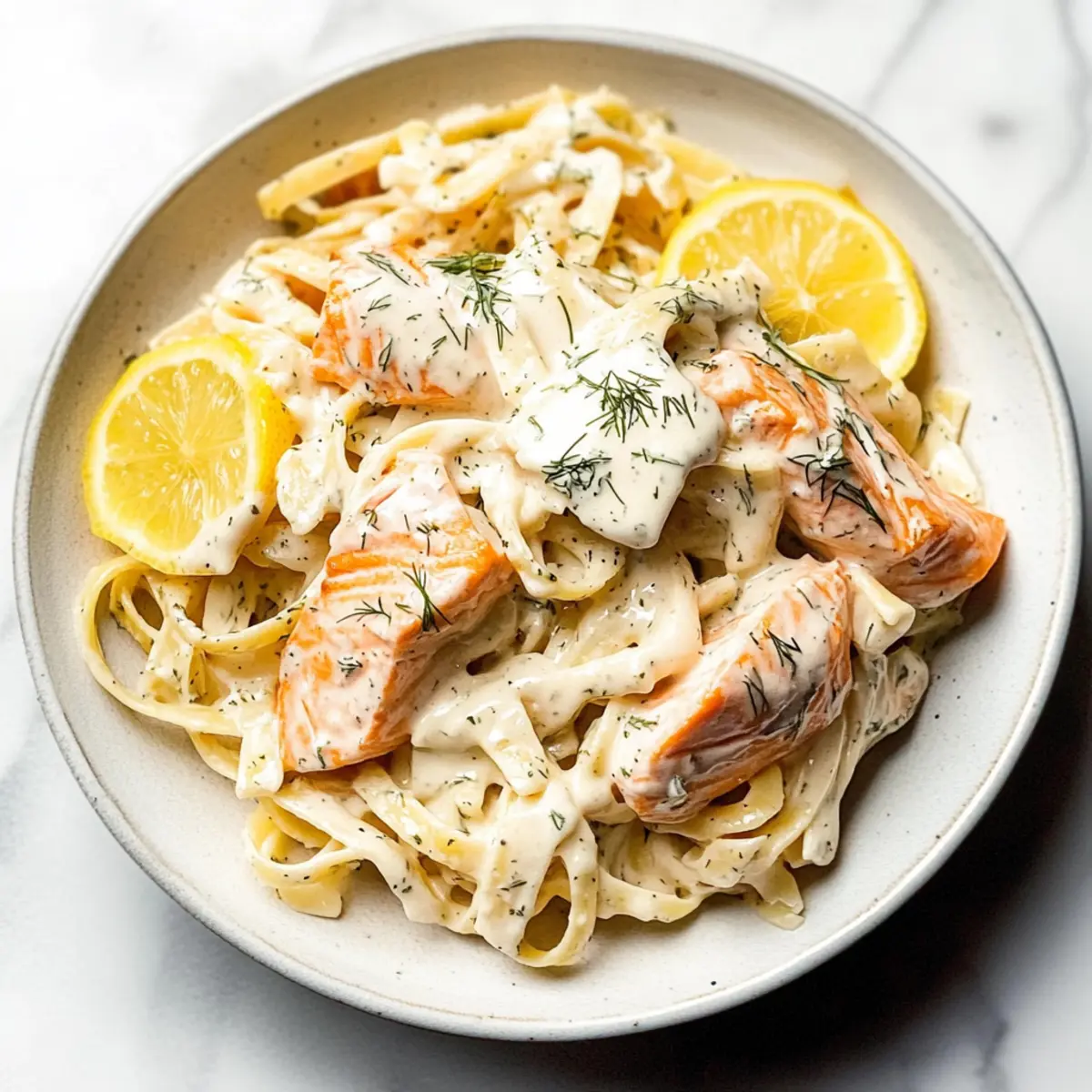
Lemon Dill Salmon Pasta Recipe FAQs
What kind of pasta should I use for the Lemon Dill Salmon Pasta?
You can use any uncooked pasta of your choice, such as fettuccine, penne, or spaghetti. I often prefer fettuccine for its ability to catch the creamy sauce beautifully, but feel free to experiment with what you have on hand!
How do I know when the salmon is properly cooked?
Absolutely! The salmon is cooked perfectly when it’s opaque throughout and flakes easily with a fork. This usually takes about 4 minutes total in the skillet—2 minutes on each side over medium-high heat should do the trick. Be careful not to overcook it, as this can lead to dryness.
How should I store leftover Lemon Dill Salmon Pasta?
For optimal freshness, keep leftovers in an airtight container and refrigerate them for up to 2 days. When reheating, gentle heat is the way to go—either on the stovetop or in a microwave—to ensure the salmon stays tender and the creaminess of the sauce is preserved.
Can I freeze Lemon Dill Salmon Pasta?
Certainly! To freeze this delightful dish, portion it into freezer-safe containers and it can last up to 2 months. Note that the creamy sauce may slightly lose its texture when reheated, so I recommend adding a splash of chicken broth or cream while warming it up to reinvigorate the flavors.
Are there any dietary considerations I should be aware of?
If you’re cooking for someone with dairy allergies or lactose intolerance, consider substituting heavy cream with a non-dairy cream alternative for a lighter version. Additionally, always check for any allergies related to the fresh ingredients, especially with the salmon and any garnishes like cheese.
How can I enhance the flavor of the sauce in my Lemon Dill Salmon Pasta?
For a flavor boost, you can incorporate a tablespoon of Better than Bouillon chicken flavor in place of broth. This step adds a wonderful depth of taste to the sauce. Alternatively, adding sautéed vegetables like spinach or asparagus not only enhances nutrition but also elevates the overall flavor profile of your dish!
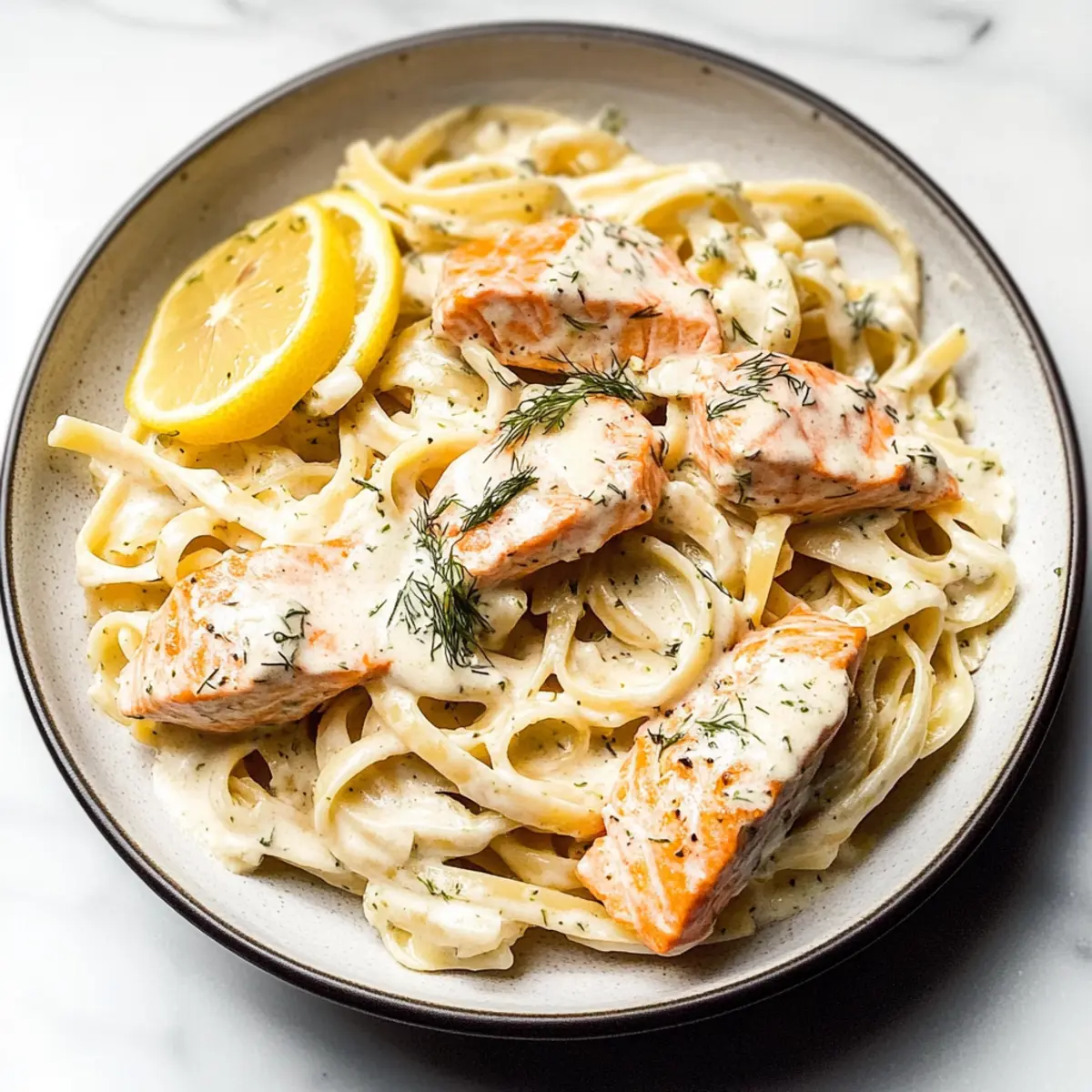
Lemon Dill Salmon Pasta That Will Brighten Your Weeknights
Ingredients
Equipment
Method
- Start by bringing a large pot of salted water to a boil. Add uncooked pasta and cook according to package instructions for 8-10 minutes until al dente.
- While the pasta cooks, season salmon fillets with salt and pepper. Dredge each fillet in flour, coating both sides evenly.
- In a skillet, heat olive oil and butter over medium-high heat. Cook the salmon for about 2 minutes on each side until golden brown.
- In the same skillet, add chicken broth (or wine), lemon juice, and garlic. Let bubble for 30 seconds, scraping flavorful bits from the pan.
- Lower the heat and stir in heavy whipping cream and dill. Add the cooked salmon back, breaking it into pieces and cook until sauce thickens.
- Drain the pasta and add it to the skillet, tossing everything together to coat the pasta well.
- Serve in warm bowls, garnished with parsley and parmesan if desired.