
The aroma of sizzling vegetables fills my kitchen as I whip up one of my go-to dishes: a Mediterranean Breakfast Skillet. In just 30 minutes, I transform humble ingredients like crispy potatoes, vibrant bell peppers, and farm-fresh eggs into a hearty, nourishing meal that wakes up the senses. This vegetarian delight is not only a feast for the eyes but also a low-maintenance recipe, perfect for busy mornings or leisurely brunches with family and friends. The best part? It’s easily customizable, so you can adapt it to suit your taste! Are you ready to elevate your breakfast game? Let’s dive into this colorful Mediterranean masterpiece!
Why is this breakfast so special?
Simplicity and Speed: This dish is a breeze to make, coming together in just 30 minutes. Perfect for any busy morning!
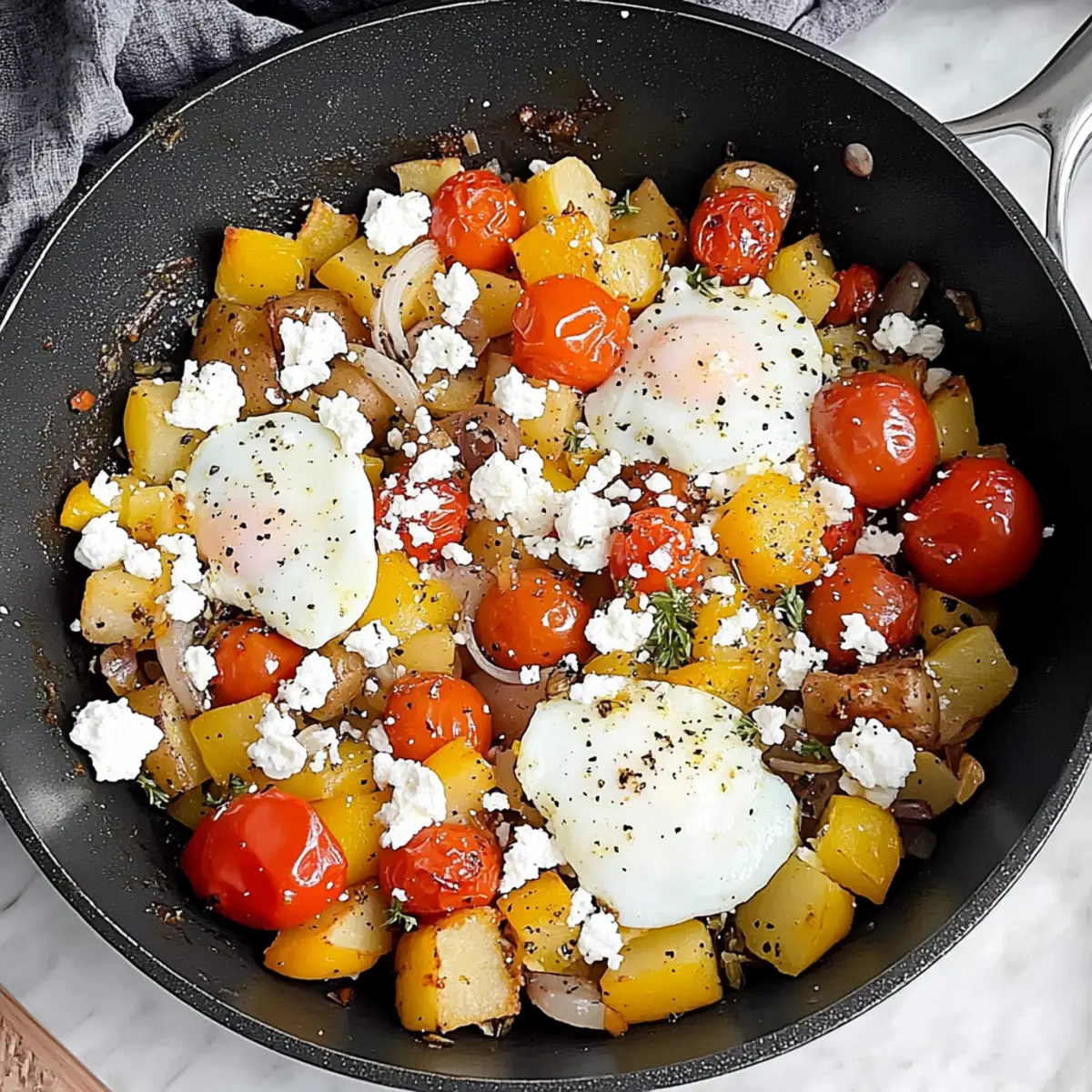
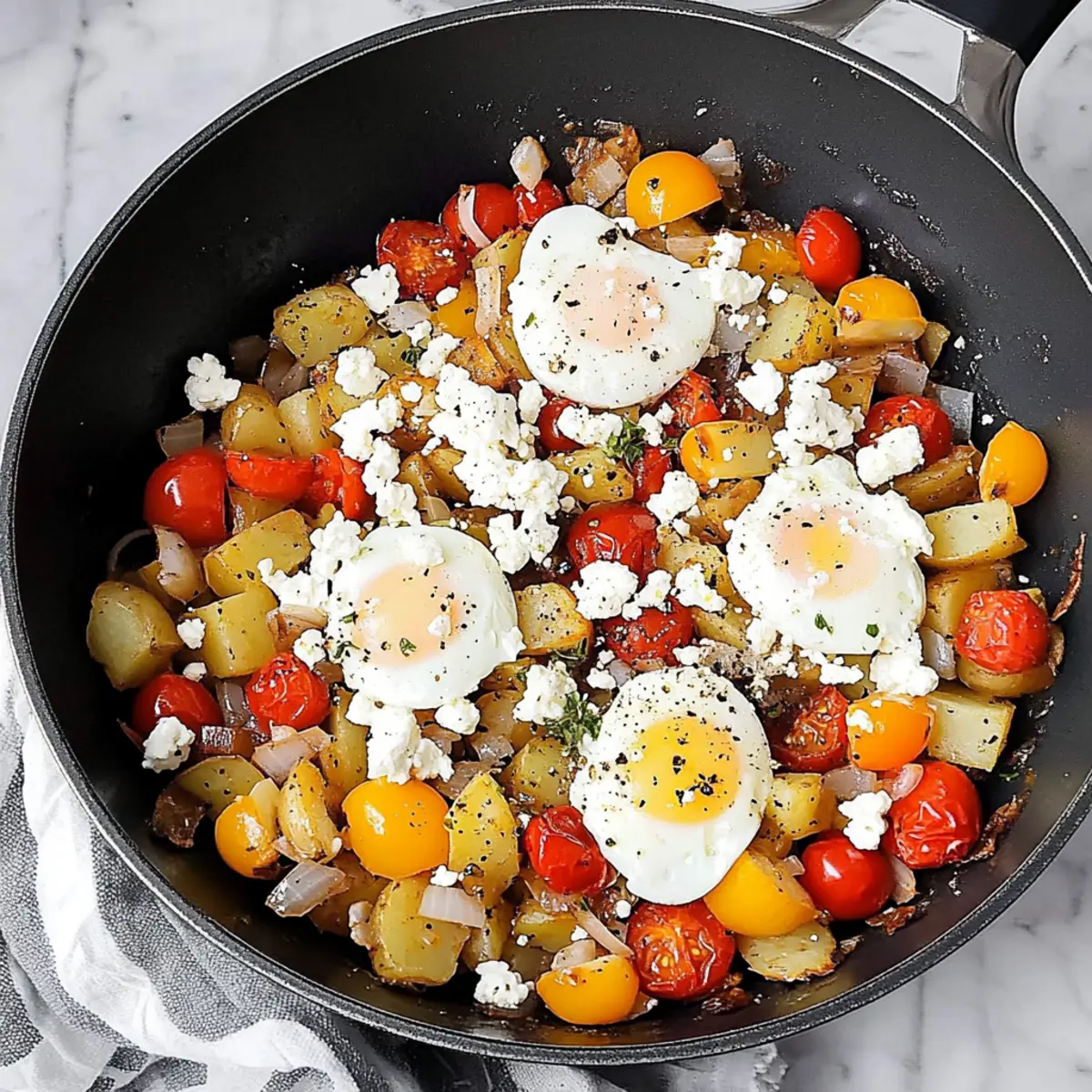
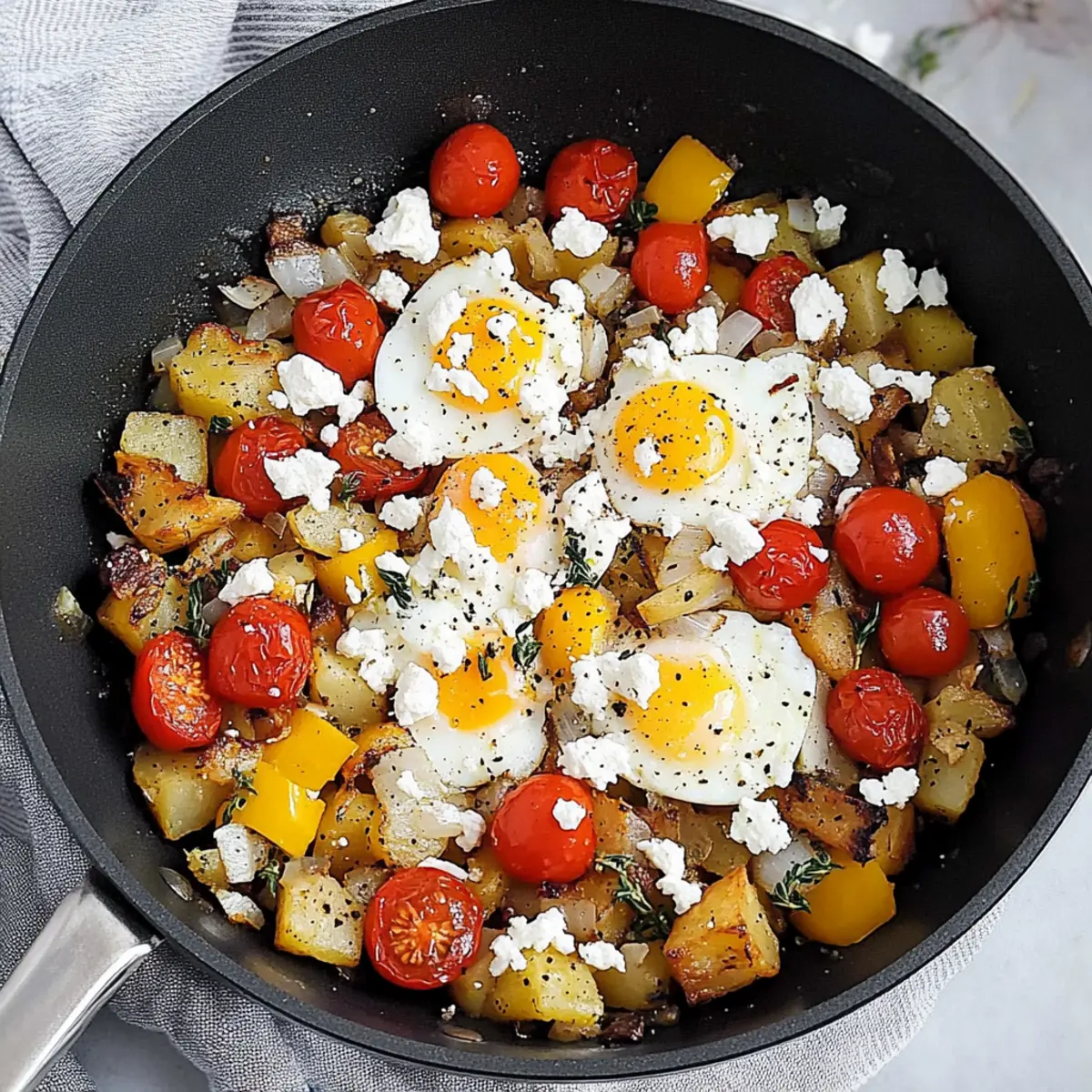
Colorful Presentation: The vibrant colors from the bell peppers, cherry tomatoes, and fresh dill make it an eye-catching centerpiece for your breakfast table.
Hearty Texture: Crispy potatoes combined with soft eggs and creamy feta create a comforting mix of textures you’ll love.
Customizable Flavors: Want to spice things up? Add jalapeños or smoked paprika for an extra kick. The options are endless!
Crowd-Pleaser: This Mediterranean breakfast skillet is perfect for sharing; it’s sure to impress family and friends at your next brunch gathering.
If you’re in the mood for more delightful breakfast ideas, check out my favorite Flour Pancakes Breakfast or discover how to recreate the magic of Behind Mcdonalds Breakfast.
Mediterranean Breakfast Skillet Ingredients
-
For the Base
• Olive Oil – Adds healthy fats and ensures even cooking; avocado oil is a great substitute for high heat.
• Onion (1 small, diced) – Offers aromatic sweetness, enhancing flavor; shallots can be a milder alternative.
• Yellow Bell Pepper (1, diced) – Brings sweetness and bright color; feel free to use any bell pepper or even zucchini.
• Potatoes (3, cubed) – Provides heartiness and texture; sweet potatoes create a different but delightful flavor. -
For Seasoning
• Dried Oregano (1 tsp) – Infuses classic Mediterranean herb flavor; Italian seasoning can replace it if needed.
• Pepper (1 tsp) – Enhances all flavors; adjust to your preference. Consider smoked paprika for an earthy twist. -
For Freshness
• Cherry Tomatoes (1 cup, halved) – Adds a fresh burst and acidity; substitute with diced regular tomatoes if necessary.
• Fresh Dill (1 tsp) – Complements the dish with a fresh herb note; fresh parsley is a fine swap. -
For Protein and Creaminess
• Eggs (3) – The protein-rich star, making this a satisfying meal; tofu or chickpea flour can work for a vegan twist.
• Feta Cheese (¾ cup, crumbled) – Introduces creaminess and tang; goat cheese or omitting it can work for dairy-free options.
The Mediterranean breakfast skillet comes together beautifully with these ingredients, offering a delightful explosion of flavors that will surely brighten your morning!
Step‑by‑Step Instructions for Mediterranean Breakfast Skillet
Step 1: Heat the Oil
In a large skillet, heat 2 tablespoons of olive oil over medium heat. Allow it to shimmer, which indicates it’s hot enough to cook. The right heat ensures that your Mediterranean breakfast skillet comes together beautifully, with ingredients evenly cooked and enhanced flavors.
Step 2: Sauté the Vegetables
Add 1 small diced onion and 1 diced yellow bell pepper to the skillet. Sauté for about 5 minutes, stirring occasionally, until the onions become soft and translucent. This aromatic base adds depth to your dish and sets the stage for the heartiness of the potatoes.
Step 3: Cook the Potatoes
Incorporate 3 cubed potatoes into the skillet, seasoning the mixture with 1 teaspoon of pepper and 1 teaspoon of dried oregano. Cook for 15-20 minutes, stirring occasionally, until the potatoes are tender and golden brown with crispy edges. The potatoes form a delicious, crispy foundation for your Mediterranean breakfast skillet.
Step 4: Add Fresh Elements
Stir in 1 cup of halved cherry tomatoes and half of the crumbled feta cheese (about ⅜ cup). Cook for an additional 3-5 minutes until the tomatoes soften and release their juices. This adds a fresh burst and acidity to balance the richness of the crispy potatoes and feta.
Step 5: Cook the Eggs
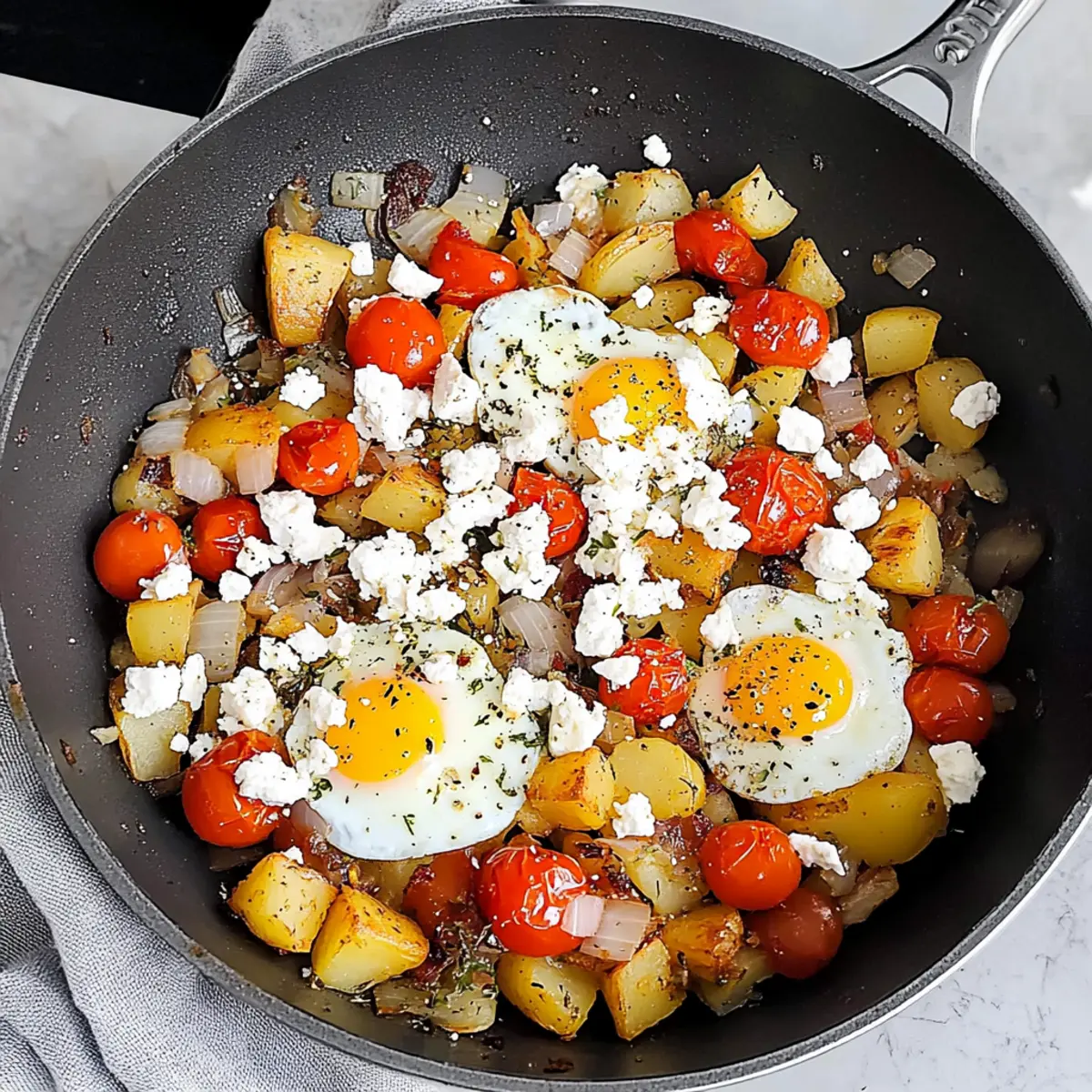
Using a spoon, make three wells in the mixture and crack one egg into each well. Cover the skillet and lower the heat to low, cooking for 5-7 minutes or until the eggs are set to your liking. The covered skillet will create a gentle steam, ensuring perfectly cooked eggs sitting atop your vibrant Mediterranean breakfast skillet.
Step 6: Garnish and Serve
Sprinkle the remaining feta cheese and 1 teaspoon of fresh dill over the top. Serve your Mediterranean breakfast skillet straight from the skillet for a rustic presentation, allowing everyone to enjoy the colorful layers of flavors and inviting aromas right at the breakfast table.
How to Store and Freeze Mediterranean Breakfast Skillet
Refrigerator: Leftover Mediterranean breakfast skillet can be stored in an airtight container for up to 3 days. Allow it to cool before sealing to maintain freshness.
Freezer: If you’re looking to store it longer, freeze the skillet for up to 2 months in a freezer-safe container. Make sure to cool completely before freezing for best results.
Reheating: For best texture, reheat in a skillet over medium heat until warmed through, avoiding the microwave when possible to keep the potatoes crispy.
Customizing Storage: If you plan on saving leftovers, consider storing the eggs separately as they freeze poorly. Keep them fresh to enjoy the delightful mix of flavors!
Expert Tips for Mediterranean Breakfast Skillet
-
Uniform Potato Cuts: Ensure potatoes are cut evenly to promote even cooking. This prevents some pieces from being overcooked while others are still crunchy.
-
Let Them Crisp: For extra crispy edges, avoid stirring the potatoes too frequently. Allow them to sit and develop that golden-brown crust.
-
Egg Monitoring: Keep an eye on the eggs as they cook; cover the skillet lightly to steam them just right without overcooking.
-
Dairy Alternatives: If you’re avoiding dairy, you can easily substitute feta cheese with a dairy-free option or omit it altogether, keeping the Mediterranean breakfast skillet just as delightful.
-
Herb Swaps: Fresh dill adds a vibrant flavor, but if you don’t have any on hand, finely chopped fresh parsley works beautifully as a substitute.
What to Serve with Mediterranean Skillet Breakfast
Elevate your breakfast experience with delightful side dishes that harmonize flavors and textures!
-
Creamy Yogurt: A dollop of Greek yogurt adds a refreshing tang that complements the richness of the skillet, creating a balanced bite.
-
Crusty Bread: Serve with slices of freshly baked baguette or sourdough, perfect for soaking up the flavorful juices and egg yolks, enhancing every mouthful.
-
Mixed Green Salad: A light salad with crisp greens, cucumbers, and a lemon vinaigrette brings brightness and crunch, providing a contrast to the hearty skillet.
-
Sliced Avocado: Creamy avocado offers a smooth texture and richness, making it an ideal pairing that boosts nutritional value and flavor.
-
Fresh Fruit Salad: A refreshing mix of seasonal fruits adds sweetness and a burst of flavor that pairs perfectly with the savory elements of the dish.
-
Coffee or Herbal Tea: A lovely cup of robust coffee or soothing herbal tea enhances the meal, setting a warm, cozy atmosphere.
Add these complementary items to your Mediterranean breakfast skillet for a truly satisfying spread!
Mediterranean Breakfast Skillet Variations
Feel free to put your own spin on this Mediterranean breakfast skillet and make it truly yours!
-
Spicy Kick: Add red pepper flakes or diced jalapeños during vegetable cooking for a fiery twist. Just a touch of spice can transform the whole flavor profile and awaken your palate in the morning!
-
Hearty Additions: Toss in sautéed spinach or kale for added nutrition and a burst of color. This vibrant twist not only enriches the skillet but ups the health factor too!
-
Cheese Swap: Try goat cheese instead of feta for a creamier texture and tangy flair. It’s a beautiful pairing with the crisp potatoes and fresh tomatoes.
-
Vegan Delight: Replace the eggs with a tofu scramble or chickpea flour for a vegan version. This not only substitutes the protein but also adds an exciting new texture that complements the dish perfectly.
-
Extra Freshness: Incorporate roasted red peppers or sun-dried tomatoes for deeper flavor. Their sweetness adds a lovely contrast that complements the other ingredients wonderfully.
-
Flavorful Fats: Use artisan olive oils flavored with herbs, lemon, or garlic when sautéing. A drizzle of something special can elevate the dish and surprise your senses.
-
Serving Styles: To transform this breakfast into a delightful brunch experience, serve it alongside a crusty bread or a light arugula salad. This adds a lovely crunch and a hint of bitterness that balances the savoriness of the skillet beautifully.
-
Global Influence: Sprinkle in some cumin or coriander for a Middle-Eastern twist. These spices bring a whole new level of warmth to the dish!
Embrace your culinary creativity! If you’re looking for more breakfast ideas, check out my favorite Flour Pancakes Breakfast or discover how to recreate the magic of Behind Mcdonalds Breakfast.
Make Ahead Options
These Mediterranean Breakfast Skillets are an excellent choice for meal prep enthusiasts! You can chop the vegetables and cube the potatoes up to 24 hours in advance, storing them in an airtight container in the refrigerator to maintain freshness. For even more convenience, you can cook the potato and veggie base ahead and refrigerate it for up to 3 days. When you’re ready to serve, simply reheat the mixture in a skillet, create wells for the eggs, and crack them in before covering and cooking until the eggs are set. This way, you’ll enjoy a hearty, restaurant-quality breakfast with minimal morning effort, just as delicious as if you made it fresh!
Mediterranean Skillet Breakfast Recipe FAQs
How do I select the best potatoes for the skillet?
Absolutely! When choosing potatoes, look for those that are firm and have smooth skin without any dark spots or sprouts. Yukon Gold or russet potatoes are great choices as they both provide a hearty texture. If you’re in the mood for something sweeter, sweet potatoes can offer a delicious twist!
How should I store leftovers from the Mediterranean breakfast skillet?
Leftovers can be stored in an airtight container in the refrigerator for up to 3 days. Make sure to allow it to cool completely before sealing the container to lock in freshness. If you’re planning to enjoy them later, I recommend reheating gently in a skillet to maintain the crispy texture of the potatoes.
Can I freeze Mediterranean breakfast skillet?
Yes, you can freeze the Mediterranean breakfast skillet! First, let it cool completely, then transfer it to a freezer-safe container. It can be stored for up to 2 months. When ready to eat, simply thaw it in the refrigerator overnight and reheat in a skillet over medium heat until warmed through. Just a note: eggs can be tricky in the freezer, so if you prefer, you can store them separately for optimal taste.
What should I do if my eggs come out overcooked?
Very! To prevent overcooking, keep an eye on the eggs while they’re in the skillet and use low heat. If you want to ensure they’re just the way you like them, cover the skillet lightly to trap some steam, which helps them cook gently. If they do turn out overcooked, don’t worry! You can still enjoy the delicious flavors of the dish. Just consider making a soft scramble next time.
How can I modify the recipe for dietary restrictions?
For those avoiding dairy, simply omit the feta cheese or substitute it with a dairy-free alternative like almond or cashew cheese. If you’re looking for a vegan option, I often replace the eggs with a tofu scramble or chickpea flour mixture to keep that protein-packed goodness. Just sauté the tofu with your favorite spices until it firms up, and you’ll have a delightful twist on this Mediterranean breakfast skillet!
Savor the Day with a Flavor-Packed Mediterranean Breakfast Skillet
Ingredients
Equipment
Method
- Heat the oil in a large skillet over medium heat.
- Add the diced onion and yellow bell pepper, sauté for about 5 minutes until soft.
- Incorporate cubed potatoes, season with pepper and oregano, and cook for 15-20 minutes until tender and golden brown.
- Stir in halved cherry tomatoes and half of the crumbled feta, cooking for an additional 3-5 minutes.
- Make three wells, crack an egg into each, cover and cook for 5-7 minutes until set.
- Garnish with remaining feta and fresh dill before serving.